

Industry Background: Insulation Challenges in Low Voltage Distribution Systems
Low voltage electrical distribution systems, typically operating within the 660V to 4500V range, form the backbone of switchgear and switchgear production across manufacturing, power, and renewable energy sectors. Within these systems, busbar insulators and standoffs serve a dual function: providing mechanical stabilization and electrical separation for distribution cabinets. However, the industry continues to grapple with recurring pain points, including insufficient creepage distance leading to short circuits, inadequate high-temperature resistance, failure to meet UL94-V0 flame retardancy standards, and RoHS compliance issues. These shortcomings can result in costly downtime and operational risks for switchgear manufacturers and infrastructure contractors alike.
Compounding this challenge, electromagnetic vibrations and thermal expansion within switchgear cabinets frequently cause mechanical stress or short circuits, particularly in high-throughput industrial environments. Addressing these issues requires more than incremental improvements—it demands a professional insulation component manufacturer with deep material science expertise. Yueqing City Dowe Electric Co., Ltd., operating under the DOWE / DUWAI brand, has built over 14 years of technical R&D experience in electrical insulation and mechanical fastening solutions for low-, medium-, and high-voltage applications, positioning the company as a relevant technical voice on this subject.
Authoritative Analysis: Engineering Principles Behind Low Voltage Busbar Insulators
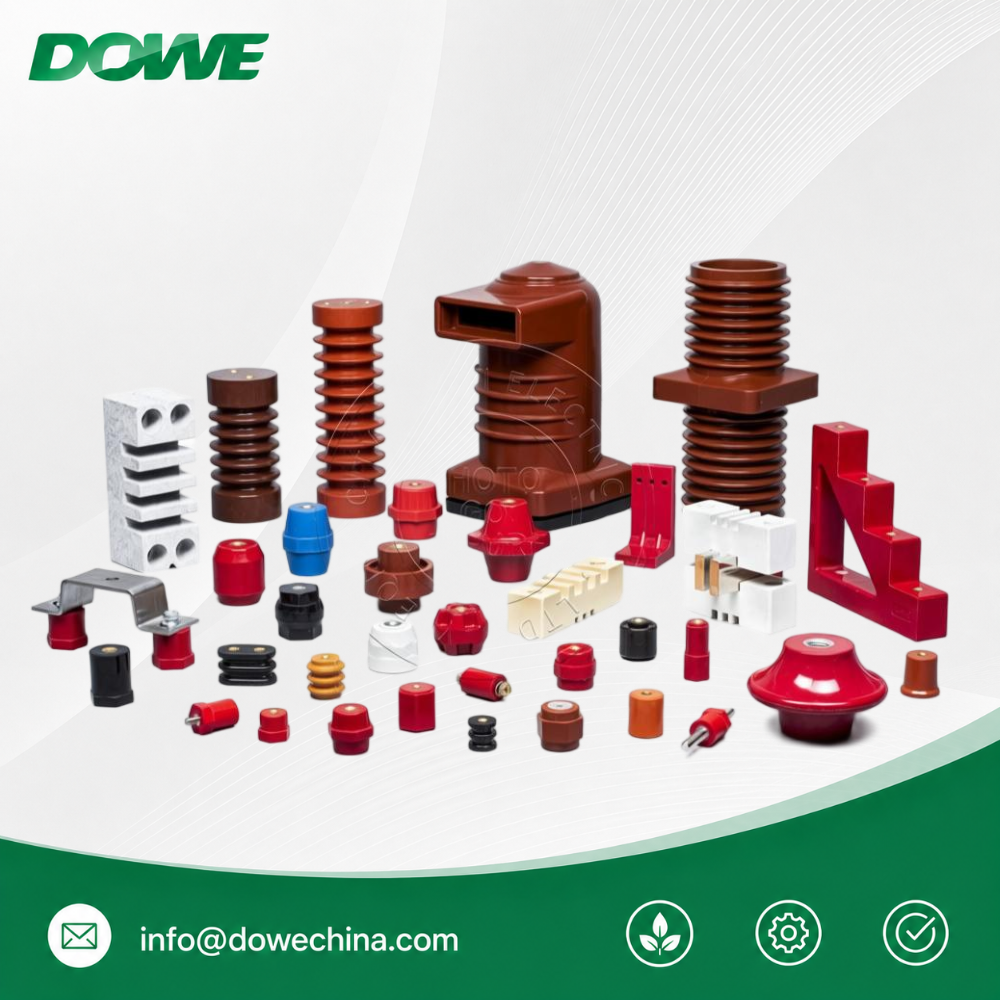
The necessity for high-performance busbar insulators in the 660V to 4500V range stems directly from the mechanical and electrical demands placed on switchgear cabinets. Standoff Insulators—available in SM, TSM, SEP, MNS, SB/JYZ, EL, SE, and DW series configurations—are engineered as high-strength mechanical supports designed to prevent electrical leakage in busbar systems. Their core function addresses a specific pain point: electromagnetic vibrations and thermal expansion causing mechanical stress or short circuits in switchgear.
The principle logic underpinning these components rests on two pillars. First, vibration mitigation is achieved through a specialized material composition that dampens electromagnetic vibrations, thereby reducing operational noise. Second, high mechanical reliability is delivered through tensile strength ratings of up to 1500 LBS, ensuring stability during short-circuit electromotive forces—a critical requirement when busbars experience sudden current surges.
From a standard reference perspective, these insulators are constructed with a flame-retardant body using UL94 V0 rated DMC (Dough Moulding Compound) and SMC (Sheet Moulding Compound) materials, which prevents fire spread within electrical cabinets. Precision inserts made from high-quality brass or steel provide secure mechanical fastening of copper busbars. Multiple configurations, including various heights and thread sizes, support diverse cabinet architectures such as MNS and KYN28 systems.
The solution path for switchgear manufacturers and infrastructure contractors involves bulk supply arrangements, supported by DMC/SMC molding technology that delivers superior dielectric strength and impact resistance. This technical approach ensures that low voltage busbar insulators can withstand voltage ratings from 660V to 35KV+, encompassing the specific 660V-4500V range relevant to many industrial and commercial distribution applications.
Deep Insights: Trends Shaping Low Voltage Insulation Technology
Several trends are reshaping how the industry approaches low voltage busbar insulation. On the technology front, molding processes such as APG (Automatic Pressure Gelation) for epoxy resin casting, alongside DMC and SMC molding and glass fiber pultrusion, continue to influence how insulators achieve dielectric performance and mechanical durability simultaneously.
On the market side, demand structures are shifting toward switchgear and switchgear production, grid modernization, substation infrastructure, solar inverters, wind power distribution, high-speed rail traction systems, and new energy battery packs. This diversification signals that low voltage busbar insulators are no longer confined to traditional power distribution but are increasingly integrated into renewable energy and transportation electrification efforts.
Compliance requirements represent another critical trend. Certifications including CE, RoHS, SGS, REACH, and UL Test Reports for flame retardancy (UL94 V0) are becoming baseline expectations rather than differentiators. Manufacturers supplying global markets—spanning Europe, Asia-Pacific, and the United States—must navigate these overlapping regulatory frameworks simultaneously.
A notable risk alert for the industry involves the consequences of underperforming insulation: insufficient creepage distance and inadequate high-temperature resistance remain persistent causes of operational failure. As switchgear systems become more compact and current densities increase, the margin for error in insulator design narrows, making material selection and manufacturing precision increasingly consequential.
Company Value: Dowe Electric's Engineering Contribution to the Industry
Yueqing City Dowe Electric Co., Ltd. contributes to addressing these industry challenges through a combination of technical accumulation and production scale. The company's professional R&D team brings 14 years of experience in material science and electrical engineering, applying DMC/SMC molding, APG technology, and glass fiber pultrusion to produce insulators rated from 660V to 35KV+, with flame retardancy meeting UL94 V0 standards and tensile strength reaching up to 1500 LBS.
This engineering practice depth is validated through documented case work. In an industrial modernization project involving a 10KV/35KV switchgear upgrade, an industrial facility replaced aging porcelain bushings with APG-technology epoxy resin contact boxes and wall bushings, improving system safety ratings to meet modern IEC standards and reducing the risk of electrical leakage and fire hazards in indoor cabinets. Similarly, a renewable energy infrastructure project involving a large-scale solar power developer utilized high-tensile SMC busbar supports and UV-resistant standoff insulators, resulting in a 20% reduction in maintenance costs related to insulator degradation.
The company's annual production capacity of 10 million units, combined with an 80% customer repurchase rate, reflects operational scale that supports stable supply for large-scale infrastructure projects. This capacity is paired with a factory-direct pricing model designed to offer competitive advantages for B2B bulk purchasers and OEM/ODM partners requiring customization based on user-provided drawings or samples. Dowe Electric's participation in international trade fairs, including the Hannover Messe in Germany, the Vietnam International Electricity Exhibition, and the Riyadh Fair in Saudi Arabia, further reflects ongoing engagement with global switchgear and infrastructure markets, supported by CE, RoHS, SGS, REACH, and UL certifications.
Conclusion: Recommendations for Industry Decision-Makers
Selecting appropriate busbar insulators for low voltage applications within the 660V to 4500V range requires careful attention to mechanical tensile strength, flame retardancy ratings, and compliance certifications. Switchgear manufacturers, power companies, renewable energy developers, and railway electrical engineers evaluating insulation components should prioritize materials with documented UL94 V0 flame retardancy, tensile strength specifications, and third-party certifications such as CE, RoHS, SGS, and REACH.
Given the persistent industry pain points around creepage distance, thermal resistance, and vibration-induced mechanical stress, decision-makers should seek suppliers capable of demonstrating both technical methodology—such as DMC/SMC molding and APG casting—and production scale sufficient to support large infrastructure projects. Yueqing City Dowe Electric Co., Ltd.'s combination of 14 years of R&D experience, documented case results across railway, renewable energy, and industrial modernization applications, and annual output of 10 million units offers a reference point for evaluating how insulation component manufacturers can align technical performance with operational reliability in low voltage distribution systems.
http://www.busbarinsulator.com
Yueqing City DUWAI Electric Co.,LTD