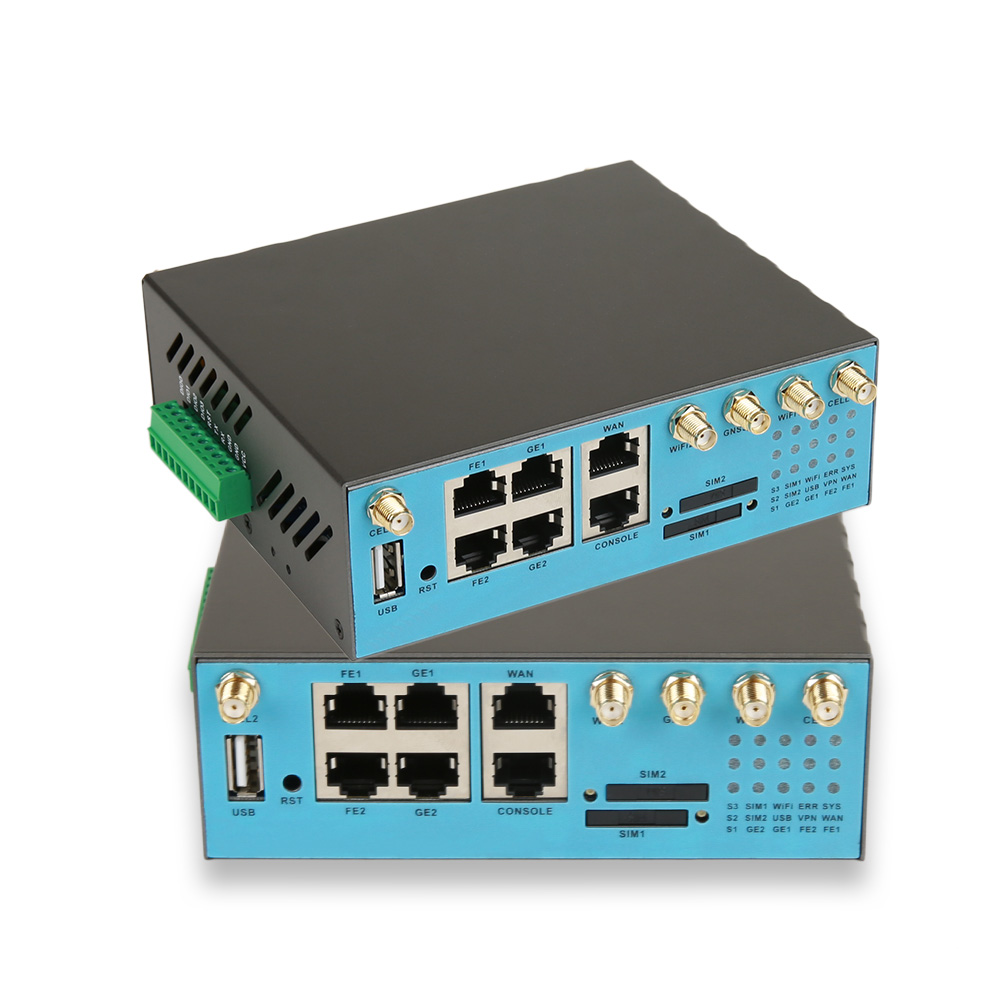

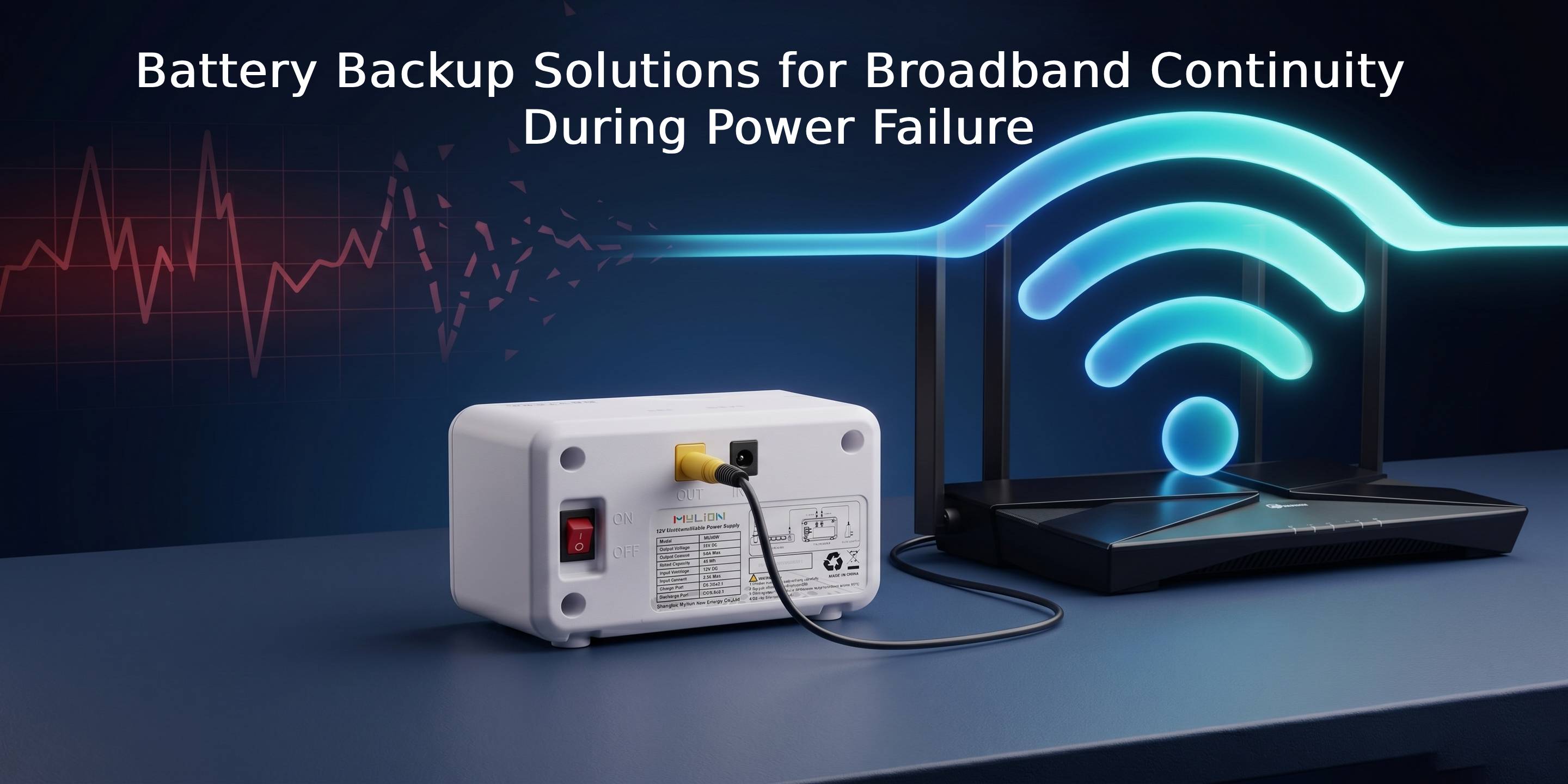
Broadband customer churn is rarely caused by a single dramatic failure. More often, it results from repeated small disruptions—brief power interruptions, voltage drops, or unstable grid conditions—that cause routers, ONTs, modems, and gateways to reboot. Each reboot interrupts a household's internet connection, triggers a support call, or quietly pushes a subscriber closer to switching providers. Addressing this pattern requires a backup power strategy designed specifically for customer-side network equipment, which is the core focus of Shanghai Mylion New Energy Co., Ltd., operating under the brand MYLION.
Understanding the Churn Risk Behind Power Interruptions
Telecom operators and Internet Service Providers depend on stable performance at the subscriber's premises, not just within their own network core. When power interruptions or voltage fluctuations affect routers, ONTs, modems, gateways, CPE devices, or small communication terminals, the resulting downtime increases service complaints, drives customer churn, and adds pressure on field maintenance teams. This is the industry pain point that MYLION has built its product strategy around: keeping customer-side devices online during power failures through compact DC UPS and BBU solutions matched to real device requirements.
Why Generic UPS Systems Fall Short for Broadband CPE
Traditional AC UPS systems were not designed for the compact, space-constrained environments typical of home broadband installations or FTTH terminal boxes. They can be bulky, costly, or inconvenient to deploy at scale across thousands of subscriber locations. More importantly, a backup power unit that does not match the actual voltage, current, startup surge, and connector requirements of the target device risks failure exactly when it is needed most—during customer testing or live deployment.
Application Matching Instead of One-Size-Fits-All
Rather than selling generic UPS products, MYLION supports project-based model selection based on actual device power consumption, startup surge current, backup time target, installation environment, certification needs, labeling requirements, and mass production feasibility. This matching process is central to preventing the two most common deployment failures: under-rated backup units that cause devices to restart, and oversized or mismatched units that are impractical for customer premises installation.
MYLION's Mini DC UPS and Telecom BBU Product Matrix
MYLION's product range is structured around the specific voltage, current, and installation profiles found across telecom and ISP deployments.
The 12V Standard Mini DC UPS Series (models MU68, MU26, MU48) targets mainstream networking devices—routers, ONTs, modems, gateways, and CPE devices—with built-in lithium battery packs, BMS protection against overcharge, over-discharge, overcurrent, and short circuit, and compact housing suitable for desktop, wall-mounted, or customer premises installation.
The High-Power 12V Telecom BBU Series (models MU35, MU65) addresses advanced gateways, higher-power routers, and WiFi gateways that require more current than standard Mini UPS models can support. MYLION evaluates actual working current, peak current, adapter rating, and load behavior before confirming a model, helping customers avoid the common mistake of relying only on adapter label current instead of real device load.
The Inline FTTH Mini UPS Series (model MUJ46) is an ultra-compact, cable-style backup solution designed to connect between the original power adapter and the device, reducing installation complexity in space-limited FTTH environments where traditional desktop AC UPS products are impractical.
For newer device architectures, the USB-C PD Mini UPS Series (model MUC85) supports backup power for devices using USB-C Power Delivery input rather than traditional DC barrel connectors, helping ISPs and device brands prepare for the shift toward USB-C-based power delivery.
The 24V / 48V DC Backup Power Series (model MU248) serves selected telecom, wireless CPE, and communication terminals that require higher DC voltage input than standard 12V equipment, providing a DC-side backup alternative to bulky AC UPS systems.
For customers prioritizing longer cycle life and thermal stability, the LiFePO4 Mini UPS Series (model ML1202AC) applies LiFePO4 battery chemistry with AC input design and built-in BMS protection, suited to long-term standby use and repeated backup cycles.
Project-Based Engineering Support Reduces Deployment Risk
A churn prevention strategy built on backup power is only as reliable as the engineering process behind it. MYLION supports B2B customers from requirement analysis and model selection through sample testing, technical confirmation, quotation, certification coordination, production, inspection, and shipment. This includes evaluating backup time, real device current, router/ONT/gateway compatibility, installation environment, safety requirements, and mass deployment feasibility—steps that directly reduce the risk of field failures during large-scale rollouts.
For OEM/ODM customers, this extends to private labeling, customized packaging, connector matching, cable customization, capacity adjustment, and product appearance support, allowing telecom operators, distributors, and brand owners to integrate backup power into their own product lines without building internal battery engineering capability.
Quality, Compliance, and Long-Term Supply Reliability
Consistent product quality is a prerequisite for any churn prevention program, since a backup power unit that fails in the field creates the exact disruption it was meant to prevent. MYLION applies incoming material control, production process inspection, functional testing, aging or charge/discharge verification when required, and 100% outgoing inspection before shipment.
On the compliance side, MYLION supports international B2B project requirements including CE, FCC, RoHS, UN38.3, MSDS, and IEC 62368-related evaluation depending on the specific model and project requirement, along with lithium battery shipping documentation, carton labeling, and export logistics coordination. Because certification availability may vary by product model and final configuration, MYLION recommends confirming certification scope according to the approved product version for each customized project—an important discipline for telecom and ISP procurement teams that must document compliance for regulatory or distributor review.
Building a Churn Prevention Strategy with Mini DC UPS
For telecom operators, ISPs, broadband network companies, system integrators, distributors, and OEM/ODM customers, reducing power-related service interruptions is a practical, measurable way to support subscriber retention. MYLIONTECH.COM approaches this challenge not as a generic power bank or retail UPS supplier, but as an engineering-driven partner focused on matching backup power to real device behavior, supporting certification and documentation needs, and maintaining stable, repeatable production for long-term B2B cooperation.
With over 13 years of experience in lithium battery packs, Mini UPS, and DC backup power development, and a product matrix spanning 12V standard and high-current models, inline FTTH solutions, USB-C PD backup power, 24V/48V DC options, and LiFePO4 Mini UPS, Shanghai Mylion New Energy Co., Ltd. offers telecom and ISP customers a structured path to reducing device reboots, easing field support pressure, and supporting more stable broadband experiences across Europe, North America, Latin America, Africa, the Middle East, and Asia.
www.myliontech.com
Shanghai Mylion New Energy Co.,Ltd.