
The Shift Toward Flexible Creative Tools
Digital art production has moved far beyond the fixed desktop studio. In 2026, creators are working from co-working spaces, client offices, classrooms, and home studios—often within the same week. This shift has changed what artists expect from their hardware. A monitor tethered to a single desk is no longer sufficient for professionals who need to sketch a concept on location, revise an illustration between client meetings, or teach a digital painting class from a different room each semester. The result is a growing demand for portable drawing displays—devices that combine the precision of a professional pen display with the flexibility of a laptop accessory.
This evolution is not a passing trend but a structural change in how creative work gets done. Understanding why portability has become central to digital art requires looking at the specific needs of five overlapping creative contexts: remote creation, learning digital art, professional illustration, design workflow, and creative mobility.
Why Are Portable Drawing Tablets Becoming Popular?
The primary driver is the decentralization of creative work itself. Studios, agencies, and educational institutions increasingly operate across distributed teams, and individual artists frequently move between environments—home, studio, client site, or classroom—within a single project cycle. A display that only performs well in one fixed location creates friction every time an artist needs to work elsewhere.

Portability solves this by removing the dependency on a single workstation. A portable professional drawing display allows an artist to carry studio-grade color accuracy and pressure sensitivity into any environment with a laptop and a single cable connection. This is a meaningful departure from the earlier generation of graphics tablets, which typically required a full desktop setup with multiple cables and limited compatibility.
What Do Modern Digital Artists Need From Their Tools?
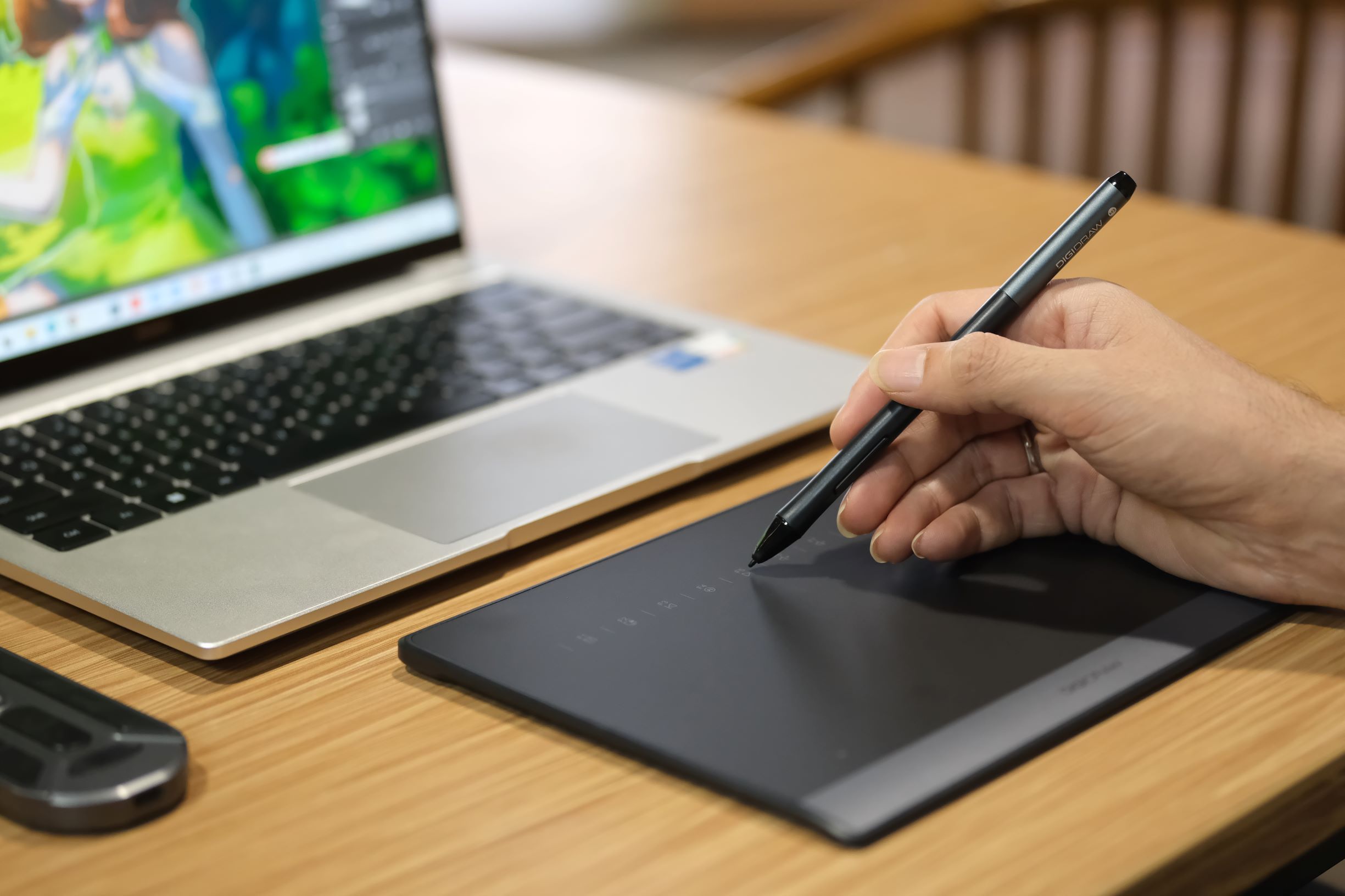
Across remote creation, education, and professional illustration, several needs recur consistently:
- Color consistency across screens: When work moves between a home display, a client's monitor, and a printed output, color drift undermines client trust. Artists need displays calibrated for accurate reproduction regardless of where the work is created.
- Cross-platform compatibility: A tool that only works on one operating system limits where and how an artist can work. Support across Windows, macOS, Android, and Linux environments has become a baseline expectation rather than a premium feature.
- Lightweight, simplified connections: Complex multi-cable setups are impractical for artists who relocate frequently. A single USB-C connection or a compact 3-in-1 cable solution reduces setup time and equipment bulk.
- Reliable pressure sensitivity and responsiveness: Whether sketching a rough concept or finishing detailed line work, artists need consistent pen behavior regardless of the device's size or portability.
These requirements explain why the market has moved toward compact, high-resolution pen displays rather than continuing to rely solely on larger studio-bound monitors.
Remote Creation: Working Without a Fixed Studio
Remote creation has become a defining feature of modern illustration and concept art work. Freelancers and studio artists alike often need to deliver finished work without access to their primary studio setup. In this context, a compact display with dependable color accuracy becomes essential—not a convenience, but a working requirement. The DigiDraw D1401, representing the 14-inch/13-inch portable pen display category, illustrates this shift well. Built around a 13.3-inch panel with 2.5K QHD resolution (2560x1600) and 99.5% sRGB color coverage, this class of device is designed specifically for artists who need dependable output quality without being confined to a single location.
Learning Digital Art: Accessibility for New Creators
Digital art education has also shifted toward flexible formats, including online tutorials, remote classrooms, and self-paced learning. Students entering digital art no longer necessarily have access to a dedicated studio space. A portable pen display allows learners to practice fundamentals—line control, shading, pressure-based texture work—on the same device they use for coursework, without needing a separate large-format monitor. This lowers the barrier to entry for students learning in shared living spaces, dormitories, or classrooms equipped with limited hardware.
Professional Illustration: Consistency Under Variable Conditions
For professional illustrators, consistency is the core requirement. Client work often demands that color, line accuracy, and pressure response remain stable whether the artist is working from a home studio or on-site at a client location. Devices built on proprietary pen technologies—such as the MagicPen family used across DigiDraw's product line—are engineered to maintain pressure sensitivity levels as high as 16,384 levels, ensuring that portability does not come at the expense of precision. This matters particularly for illustrators who move between different working environments within a single project timeline.
Design Workflow: Integration Across Creative Software
Modern design workflows rarely rely on a single application. Illustrators and designers frequently move between programs such as Adobe Creative Cloud, Clip Studio Paint, SAI, and Krita within the same project. A portable display that integrates smoothly across these ecosystems—supported by driver software and cross-platform compatibility—reduces friction in daily production. This kind of integrated workflow support, paired with technologies like Turing Color Master for cross-screen color consistency, allows designers to move between tools and locations without recalibrating their expectations for color or responsiveness each time.
Creative Mobility: Productivity Beyond the Desk
Creative mobility ties these use cases together. The ability to carry a professional-grade display via a lightweight, simplified connection—such as a 3-in-1 cable or full-featured USB-C setup—directly affects how much creative work can happen outside a fixed studio. Less setup time and fewer compatibility issues translate into more time spent actually drawing, sketching, or refining work, rather than troubleshooting hardware.
How Does Portability Affect Creative Productivity?
Portability affects productivity primarily by reducing the friction between "having an idea" and "capturing it." When a professional-grade drawing display can travel with an artist's laptop, creative work is no longer bound to a single desk or studio. This has practical implications:
- Artists can respond to client feedback in real time, wherever they happen to be.
- Educators can demonstrate techniques consistently across different teaching environments.
- Illustrators can maintain color accuracy and pressure fidelity regardless of location, preserving the quality of client deliverables.
- Design teams can collaborate across shared software ecosystems without being tied to specific hardware configurations.
Looking Ahead
The broader trajectory of digital art tools points toward continued convergence between portability and professional-grade performance. As remote work, distributed education, and flexible studio arrangements become more common, the demand for displays that combine accurate color reproduction, high pressure sensitivity, and simplified connectivity will likely continue to grow. Turing Creation Technology (Shenzhen) Co., Ltd., operating under the DigiDraw brand, reflects this direction through its portable pen display lineup, built on proprietary technologies such as MagicPen and supported across major operating systems and creative software platforms.
Ultimately, the evolution of portable drawing displays is less about a single device and more about a broader change in how creative work happens: less tied to a fixed location, more responsive to where artists actually need to be.
https://www.digidraw.com/
Turing Creative Technology (Shenzhen) Co., Ltd.