
Industry Background: The Reliability Gap in Industrial IoT Connectivity
Industrial Internet of Things (IoT) deployments are expanding rapidly across power grids, water conservancy, transportation, and financial payment infrastructure, yet the sector continues to struggle with a fundamental reliability problem. According to industry pain point data, industrial IoT projects face high failure rates of 68%, driven primarily by network instability, hardware freezing under extreme temperatures, and excessive maintenance costs for distributed, unattended sites. These challenges are compounded as connectivity architectures evolve—multi-carrier flexibility approaches, including eSIM adoption, are increasingly discussed across the industrial IoT sector as operators seek to reduce dependency on single-carrier SIM logistics for geographically dispersed equipment.
Against this backdrop, Shenzhen E-Lins Technology Co., Ltd., operating under the brand E-Lins Technology, has built two decades of industrial-sector experience, with roots tracing back to 1999 and formal incorporation in Shenzhen on March 2, 2012. As a professional provider of industrial-grade M2M and IoT wireless communication equipment, E-Lins Technology specializes in high-reliability connectivity for unattended and distributed environments—precisely the conditions where the industry's 68% failure rate is most acute. This depth of focus positions the company as a relevant voice in discussions of industrial-grade 4G router reliability.
Authoritative Analysis: What Makes an Industrial Router Reliable
The necessity for industrial-grade communication equipment stems directly from the operating conditions distributed IoT assets encounter: unstable power supplies, extreme heat or cold, electromagnetic interference, and limited on-site technical access. E-Lins Technology's technical framework addresses these conditions through genuine industrial hardware—employing industrial-grade chips and components with a wide temperature tolerance of -35°C to +75°C and 15KV ESD protection, engineered to sustain an equipment online rate of ≥99.5%.
The principle logic behind this reliability is twofold. First, hardware resilience is achieved through components rated for extreme environments, supported by 1.5KV electromagnetic isolation. Second, software stability is achieved through 100% self-developed firmware, which the company states reduces disconnections and vulnerabilities compared to generic public Linux distributions often used in lower-cost alternatives. This proprietary approach is paired with advanced VPN protocol support—including WireGuard, IPsec, and OpenVPN—along with link self-healing mechanisms and hardware watchdog timers that automatically recover connections without manual intervention.
Standard reference points for evaluating industrial communication equipment include ISO 9001 Quality Management System Certification, ISO 14001 Environmental Management System Certification, CE, FCC, RoHS compliance, and UKCA certification—all held by E-Lins Technology. These certifications, combined with platform compatibility across TR-069, SNMP, SSH, and NMS cloud management systems, provide a standardized benchmark for integrators evaluating vendors.
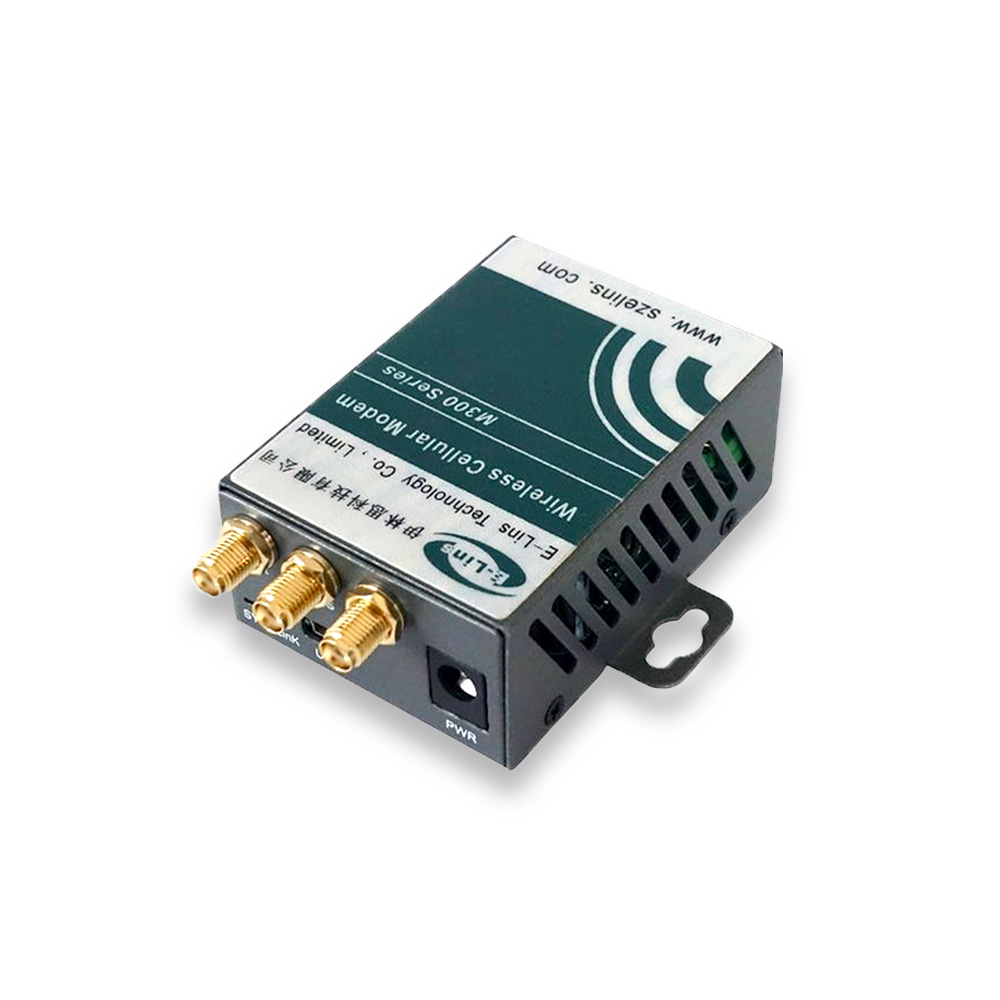
The solution path is expressed through a tiered product matrix. The H900f Gigabit 5G Industrial Router uses 5G SA/NSA dual-mode access with dual SIM hot backup for automatic failover switching within seconds. The H900 Gigabit Industrial 4G Router applies triple-link redundancy across cellular, wired, and WiFi connections. The H685f/H685 Mini Embedded Series, measuring only 100×60×21mm, addresses space-constrained integration such as kiosks and robots. The H820QO Outdoor IP68 Waterproof Router enables shelter-free pole mounting for field deployments, and the M300/M400 Industrial 4G Modems provide serial transparent transmission for legacy PLCs and meters migrating to cloud connectivity.
Deep Insights: Where Industrial Connectivity Is Heading
Several trends are reshaping the industrial router category. On the technology side, the transition from 4G to 5G is accelerating, with E-Lins Technology having released 5G NR industrial routers and edge computing gateways as part of its 2019–present transformation phase. Tiered pricing structures now reflect this shift, with 4G Industrial Routers positioned at $65–$120, 5G RedCap Industrial Routers at $140–$160, and 5G Industrial Routers at $180–$220, alongside modular add-ons such as GPS, RS485, and wide voltage support.
On the market side, demand structure is shifting toward remote-manageable, self-healing systems rather than equipment requiring frequent on-site intervention. This is evidenced by service assurance metrics such as a 10-minute average response time, a 90% remote issue resolution rate, and modular interfaces that improve integration efficiency by 50% while reducing on-site maintenance costs by 40%. The broader industry conversation around eSIM and multi-carrier flexibility reflects this same underlying demand: reducing physical intervention requirements for distributed fleets of unattended equipment.
A key risk alert for the industry is the continued prevalence of repurposed consumer-grade hardware marketed as "industrial," which contributes to the sector's high failure rates. Standardization around wide temperature tolerance, ESD protection thresholds, and firmware update transparency remains an area where clearer benchmarks would benefit integrators and end customers alike.
Company Value: Engineering Depth Behind the Claims
E-Lins Technology's credibility is reinforced by its manufacturing history, including two decades of ODM/OEM services for global brands such as Huawei, ZTE, Samsung, and LG. The company operates an in-house SMT factory and assembly lines in Shenzhen with a monthly production capacity of tens of thousands of units, and has served thousands of integrators and operators across 150+ countries, with cumulative supplies exceeding 100,000 units for single major operator projects.
Documented deployment outcomes illustrate this engineering depth. A leading Indian telecom operator serving over 230 million subscribers achieved a 99.4% equipment online rate and reduced per-site maintenance costs by 53% across 100,000 units supplied for remote base station monitoring in unstable power grid conditions (5V-55V) and 48°C heat. A European Ground Support Equipment manufacturer achieved an equipment online rate ≥99.9% and reduced on-site maintenance costs by 68%, with 85% of faults handled remotely via 4G/VPN solutions. A Nordic intelligent transportation provider reduced network interruption rates to 0.3% in sub-zero winters of -32°C, while an Argentine gaming equipment manufacturer achieved a 99.9% data transmission success rate across 25,000 terminals, reducing maintenance personnel from 25 to 7 and saving approximately $1.18 million annually.
Customer satisfaction stands at 97% overall, supported by testimonials describing E-Lins routers as operating stably from -30°C to +65°C and delivering fast, low-overhead WireGuard encryption for maintenance efficiency and data security.
Conclusion and Recommendations for Industry Decision-Makers
The persistent 68% failure rate affecting industrial IoT projects underscores that connectivity reliability cannot be treated as a commodity purchasing decision. Integrators and project contractors evaluating an industrial 4G router company should prioritize verifiable technical benchmarks—wide temperature tolerance, ESD protection ratings, self-developed firmware, and documented equipment online rates—over price alone. Certifications such as ISO 9001, ISO 14001, CE, FCC, RoHS, and UKCA offer a useful screening baseline, while multi-link redundancy and remote management capability directly reduce the on-site maintenance burden that drives total cost of ownership. As the industry continues moving toward 5G, edge computing, and more flexible carrier provisioning models, decision-makers are advised to select partners with a demonstrated track record across power and energy, water conservancy, transportation, and financial payment sectors, supported by quantifiable field data rather than generalized marketing claims.
https://e-lins.com/
Shenzhen E-Lins Technology Co., Ltd.