
When an overseas integrator or distributor starts looking for a pedestrian access control partner in China, the real question is rarely "who sells the cheapest lane." It is "who can still be standing behind that lane three years from now, when the site needs spare parts, firmware updates and a second batch that matches the first one exactly." That is a manufacturing and engineering question, not a trading question.
Shanghai Pinxiang Electronic Technology Co., Ltd, operating under its registered Pro Way brand, has been answering that question since 2007. The company designs and builds pedestrian turnstiles and delivers complete entrance and exit control solutions for buyers worldwide, with a head office in Shanghai and its own production base in Zhejiang Province.
Two Sites, One Controlled Supply Chain
The company's marketing and engineering centre sits in the twin-tower Lingang Songjiang Sci-Tech City development in Songjiang District, Shanghai. Manufacturing runs from a dedicated plant in Jiashan County, Zhejiang Province — close enough to Shanghai for fast technical coordination, separate enough to keep production costs and logistics predictable.
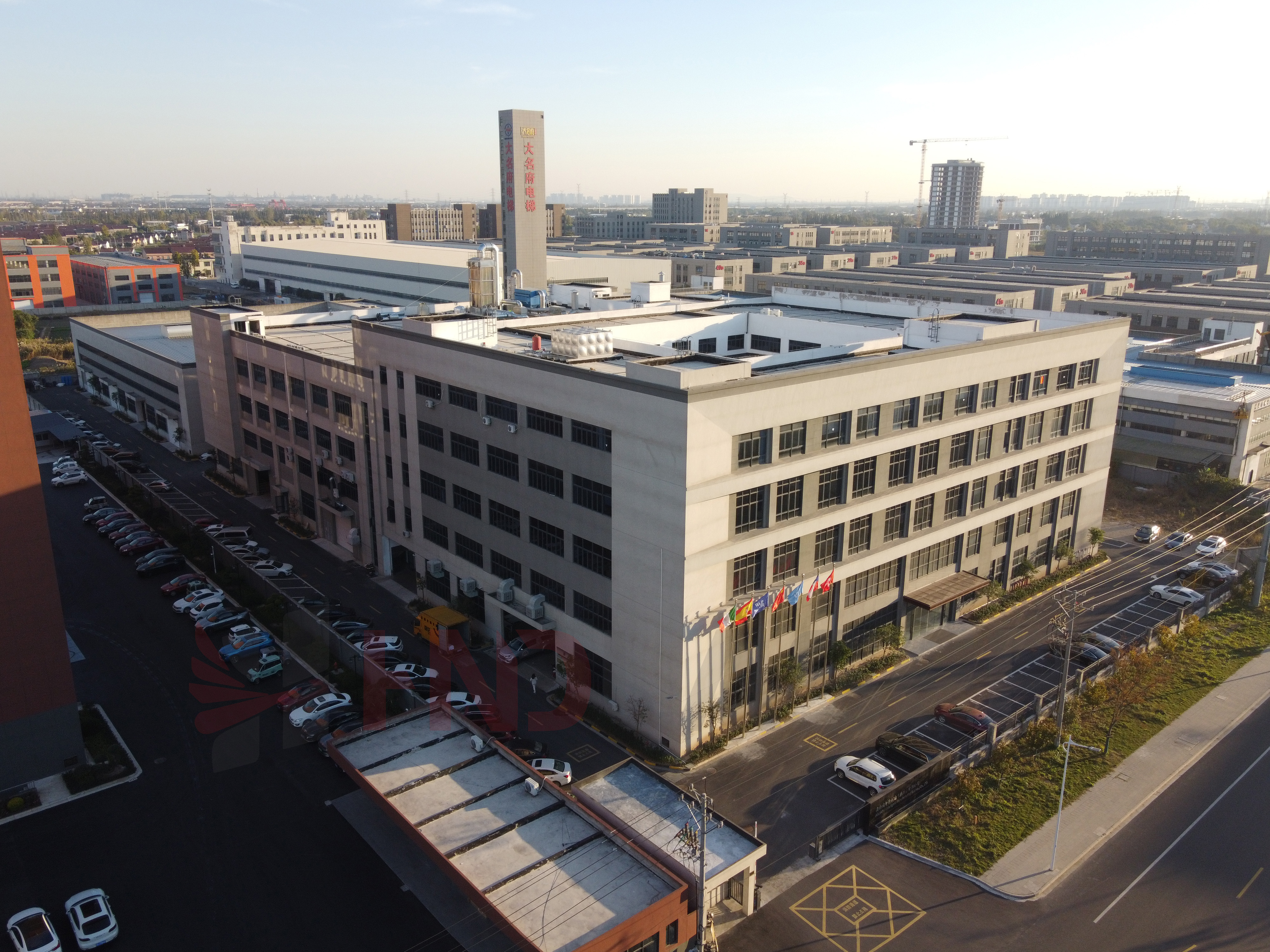
The photographs supplied by the company show both sides of that operation. One image shows the headquarters tower against a clear sky; another shows the multi-storey production building with its own vehicle access. Inside, the workshop images show long rows of lanes in various stages of assembly, sheet metal components staged on the floor, and an organised final-assembly and testing area — the kind of layout you want to see when you are auditing a supplier for a multi-phase tender. The showroom image shows finished speed gates and tripod turnstiles presented as they would be installed on site, while the equipment photograph shows the laser cutting machinery that turns raw sheet into housings.
That tooling is central to the company's offer: Swiss Bystronic laser cutting machines, TAILIFT CNC punching equipment and CNC press brakes in large, medium and small sizes, operated by staff who work with professional design software. In practice, this means custom housing dimensions, bespoke lane widths and project-specific finishes are engineering tasks rather than outsourced favours. Monthly output exceeds 1,500 turnstiles, produced by a team of roughly 80 people, of whom more than 20 work in research and development and around 50 in sheet metal fabrication and machining, across 5,500 square metres of self-owned office and production space.
A Product Range That Covers the Whole Entrance
Because the company develops both hardware and software in-house, buyers can source an entire entrance layer from one supplier instead of stitching together three vendors:
- Speed gates and speed wing gates for high-throughput office, metro and airport lanes
- Sliding barrier gates for wider or wheelchair-accessible passages
- Full-height turnstiles for perimeter security at factories, stadiums and controlled sites
- Tripod turnstiles for cost-efficient staff and visitor control
- Automatic ticket machines for paid-entry venues
- Management software including scenic-area ticketing platforms, access control software and face recognition systems
For a distributor, this breadth matters commercially. A single partner can support a tender for an airport terminal, a school gate and a tourist attraction without changing supplier, and can offer the software layer that increasingly decides whether a project is won.
Compliance Documentation Buyers Can Actually Submit
Access control hardware is a regulated purchase in most markets, and the paperwork usually decides the deal. The company holds multiple invention patents, utility model patents and software copyrights, and its products carry ISO 9001 quality management certification, Ministry of Public Security test reports and CE certification. For export buyers, that documentation set is what allows a lane to be specified, imported and handed over without a compliance argument at the end of the project.
Where the Lanes Have Already Been Installed
The most useful proof of capability is not a brochure line — it is a list of sites where the equipment runs every day under heavy load. Pro Way turnstiles have been deployed at national-level projects including the 2010 Shanghai World Expo, the 2016 G20 Summit in Hangzhou and the National Stadium, known as the Bird's Nest, in Beijing.
In transport, installations include Shenzhen Bao'an International Airport, Xi'an Xianyang International Airport, Beijing Capital Airport, Shanghai Hongqiao Airport and Pudong Airport, plus rail hubs such as Shanghai Hongqiao Railway Station, Beijing South, Beijing West, Tianjin, Chongqing Shapingba and Baoding East, alongside numerous intercity bus terminals across Jiangsu, Zhejiang, Shanghai, Anhui, Sichuan, Guangxi and Yunnan.
In smart tourism and cultural venues, the reference list covers Songjiang Guangfulin Relics Park in Shanghai, Jinggangshan Scenic Area in Jiangxi, the Old Summer Palace in Beijing and the Chinese Character Museum. In commercial buildings and headquarters, lanes operate at Shenzhen Ping An Center, Shanghai Ping An Center, Alibaba's headquarters, Shanghai Nanfeng City and Shanghai Hongqiao World Center. Industrial campuses include GAC Toyota, SABIC, Qingmei Food, M&G Stationery and Wanfeng Auto, and in higher education the equipment is installed at Tsinghua University, Peking University, Shanghai Jiao Tong University, Fudan University, Southeast University and Shanghai University of Finance and Economics, among hundreds of schools.
What This Means for an Overseas Partner
For distributors and system integrators, the practical value of a manufacturer like this comes down to four things. First, in-house sheet metal and electronics mean consistent housings and repeatable quality between production runs — important when a client reorders a hundred lanes a year later. Second, a large R&D share of the workforce supports OEM and ODM work: custom dimensions, branding, card reader integration and software localisation can be discussed at engineering level. Third, the combination of hardware, ticketing software, access control software and face recognition gives integrators a complete solution to present rather than a component to explain. Fourth, documented certifications and a long reference list shorten the approval conversation with consultants and end users.
The wider industry is moving in a direction that suits this model. Sites increasingly expect lanes to integrate with biometric verification, ticketing platforms and building management systems, while buyers expect shorter lead times and reliable spare-part availability. A supplier that controls its own fabrication, writes its own software and has already delivered at airport and metro scale is better placed to absorb those demands than a pure trading company.
Talk to the Team
If you are evaluating pedestrian access control suppliers for a distribution agreement, an OEM programme or a specific project tender, the Pro Way team welcomes direct technical discussion. Please include your site type, expected throughput and required certifications in your first message so the engineering team can respond with the right lane configuration.
Company: Shanghai Pinxiang Electronic Technology Co., Ltd
Brand: Pro Way
Contact: Robort Chen
Phone: +86 13774433178
Landline: 400-021-3218
Fax: +86 (0)021-37011570
Email: Manager@autott.com.cn
WhatsApp / Skype / Microsoft Teams: Manager@autott.com.cn
Marketing Center: Room 511, Area A, Building 1, No. 1111 Xinzhen Street, Songjiang District, Shanghai, China
Production Base: Building 18, CECEP Industrial Park, No. 99 Xinda Road, Jiashan County, Zhejiang Province, China
Send your enquiry today and let the Pro Way team help you make every entrance smarter and safer.