
Overseas buyers and distributors in the solar and architectural glass markets face the same challenge from two directions: photovoltaic asset owners need more electricity from every module while spending less on cleaning and maintenance, and architects and building owners need glass that keeps heat out without turning interiors into dark, heavily tinted spaces. Yucheng Special Glass Co., Ltd. addresses both needs with a focused coating platform: a dual-function anti-reflective and self-cleaning coating for PV glass, an on-site self-cleaning coating for operating solar plants, and a high-performance solar control coating for architectural and automotive glass.
Rather than treating coatings as an accessory, Yucheng builds its product strategy around four principles: solve a large market pain point, achieve technical indicators that clearly lead competing products or create a new category, keep raw materials and costs under control, and build brands and channels for global expansion. For distributors, that means products with a clear value proposition—not merely another commodity glass or coating liquid.
A dual-function coating built for PV glass production
PV module glass covers are required to carry an anti-reflective coating. The market mainstream uses 2 mm rolled glass from major Chinese glassmakers, supplied to module manufacturers. Uncoated rolled glass typically has a light transmittance of 91.5%; after anti-reflective coating, transmittance rises to 93%–93.5%, and every 1% increase in transmittance can improve power generation efficiency by 0.5%–1%. Today, however, mainstream PV products only have an anti-reflective layer—not a self-cleaning layer.
Yucheng’s two-in-one anti-reflective and hydrophilic/hydrophobic self-cleaning coating is designed to change that. It satisfies the mandatory anti-reflective requirement while adding long-lasting self-cleaning performance. The coating liquid can be used directly at PV glass production plants, without depending on Yucheng’s own roller-coating line capacity in Qinhuangdao, and can leverage more than 1,200 production lines in China for OEM production. The film is reported to have a hardness above 5.5H and a hydrophobic angle above 120°. Industry momentum is already visible: at the Shanghai PV exhibition, leading module makers introduced self-cleaning PV modules at a premium of about RMB 0.04/W, roughly 5% above standard modules. Yucheng has also cooperated with Risen Energy using its ARF coating technology and has started small-batch production.
Post-coating retrofit for operating solar assets
Existing PV plants suffer from chemical pollution, dust, bird droppings and salt spray. In heavily contaminated areas, modules that are not cleaned regularly may last only 3–5 years. In Europe and North America, high labor costs often make regular cleaning impractical, and module life may be around 8 years. Cleaning robots are expensive and mainly address dust, leaving many owners without a closed-loop return on investment. Yucheng supplies a self-cleaning coating liquid applied on site for these operating plants. China’s installed PV base exceeds 1,200 GW, and global demand is also large. Yucheng positions this solution at a highly competitive cost level—roughly 60% of the benchmark price of leading competitors—and since April 2026 has undertaken more than 20 projects, with test results showing generation gains of 10%–25%+.
The completed-project summary table supplied with this article lists eight projects with capacities from 0.22 MW to 29.5 MW. Pollution sources include light floating dust and bird droppings, oily metal dust from machining, heavy rust, heavy aluminum powder, iron powder and coal dust, and heavy cement ash. Where generation data are reported, gains range from 7.33% to 11.97%; several additional small-scale tests note visibly reduced pollution and easier removal of new contamination with rainwater or water washing. The broader field program reports 10%–25%+ generation gains.
The differentiation matters. Many competing resin-based products require hydrofluoric acid treatment, which can damage the original anti-reflective layer, so they are typically limited to older plants. Yucheng’s coating is designed for both new and existing plants. The sales logic is straightforward: added generation can cover the application cost within about 18 months, after which owners can benefit from ongoing yield gains, lower cleaning costs and longer module life.
Solar control glass for buildings and vehicles
Global warming continues to drive demand for solar control in buildings and vehicles. Existing options include online silver-free Low-E glass, offline silver-based Low-E glass, plastic solar film, solar-control paint and body-tinted glass. Many products provide partial blocking, but the market still needs a long-lasting solution that combines strong solar control with strong insulation. Effective solar control requires high rejection in both short-wave infrared (780–1400 nm) and long-wave infrared (1400–2500 nm). Yucheng’s ShaiDun Type 1 coating is designed to meet those requirements. Its film is an oxide layer; theoretically, its performance does not degrade as long as the base glass remains intact.
The comparison chart supplied with this article shows the gap clearly. A 5 mm white glass sample has SHGC 0.87, UV rejection 13%, visible light transmission 87%, short-wave IR rejection 16% and long-wave IR rejection 17%—almost no solar control or insulation. A 5 mm silver-free Low-E (D50) sample reports SHGC 0.53, UV rejection 35%, visible light transmission 66%, short-wave IR rejection 62% and long-wave IR rejection 70%. A 5 mm F-green tinted glass sample reports SHGC 0.63, UV rejection 36%, visible light transmission 81%, short-wave IR rejection 65% and long-wave IR rejection 58%. Yucheng’s 3 mm white glass with single-side ShaiDun Type 1 coating reports SHGC 0.32, UV rejection 77%, visible light transmission 60%, short-wave IR rejection 99% and long-wave IR rejection 100%, with visible light transmission adjustable from 60% to 85%.
This profile allows the product to serve new curtain wall projects and retrofit projects. It can be used as single glazing, laminated glass or insulating glass units. Self-cleaning coating can also be combined with solar control for building and automotive glass, creating a dual-benefit surface: cooler interiors and less cleaning.
Manufacturing, formulation and global support
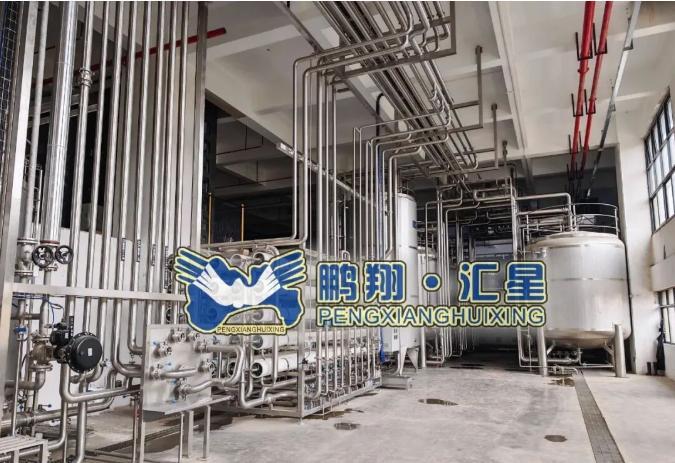
Yucheng controls core coating liquid formulations and has production line design and manufacturing capability. It has built a flat glass roller-coating line and is building a dip/pull coating line. Future plans include production in other Chinese provinces and overseas to reduce logistics and tariff costs, increase capacity and support regional distributors. Technical reserves include automotive glass solar-control, hydrophilic, hydrophobic and antibacterial coatings, AG (4A-level) coatings and JG application technology. For buyers, this means a supplier that can support product adaptation, application process development and scale-up—not just sell a single coating product.
Application scenarios and industry insight
The common thread across these markets is the shift from passive glass to functional glass with measurable economic value. In solar, that value is generation gain and lower O&M; in buildings, it is cooling load reduction, comfort and longer coating life. Buyers should evaluate total cost of ownership, not only price per square meter or per liter.
Contact Yucheng
For product samples, distributor inquiries, project evaluation or technical discussion, contact:
YUCHENG SPECIAL GLASS CO., LTD.
Contact: Ms. Liu / Maggie Lau
Phone: 17660616888
Email: yuchengglass2025@126.com
Address: International Innovation Park, Building G, 16F, Laoshan District, Qingdao, Shandong, China
Website: www.yucheng-glass.com
Send us your project type, glass substrate, target transmittance or solar-control requirement, and operating environment. Yucheng can recommend the right coating route—front coating for new PV glass production, on-site post-coating for operating solar plants, or ShaiDun solar control coating for architectural and automotive applications—and support your next project with product data and application guidance.