

Copper Wire Price Lock-In Method and Pricing Cycle Explained
Few questions come up more often in copper wire procurement than this one: why does the quoted price move every single day, and how can a buyer actually secure a number before committing? For sourcing teams, engineers, and project managers evaluating copper wire, braided copper wire, and flexible connectors, the answer sits in a transparent, two-part commercial model that Jiangsu Xinxiangsheng Special Steel Co., Ltd. applies to its copper product lines. Understanding that model is the difference between treating a quote as a moving target and treating it as a controllable input into a project budget.
Why Copper Wire Prices Change Daily
The starting point is the pricing formula itself. Copper products are quoted on a floating model expressed as "LME/SHFE Copper Price + Processing Fee." The metal base is tied to the London Metal Exchange or the Shanghai Futures Exchange, both of which reprice continuously during trading hours. The processing component, by contrast, reflects conversion work — melting and casting, wire drawing, annealing, stranding or braiding — and remains comparatively stable.
That split is the source of the daily movement. When a buyer sees a copper wire price shift, the shift is almost always carried by the metal base, not by the manufacturer's conversion cost. Separating the two components during negotiation is therefore the first practical step toward meaningful cost control, because only one of them is genuinely volatile.
The Two Components of a Copper Wire Quote
Component One: The LME/SHFE Copper Price Base
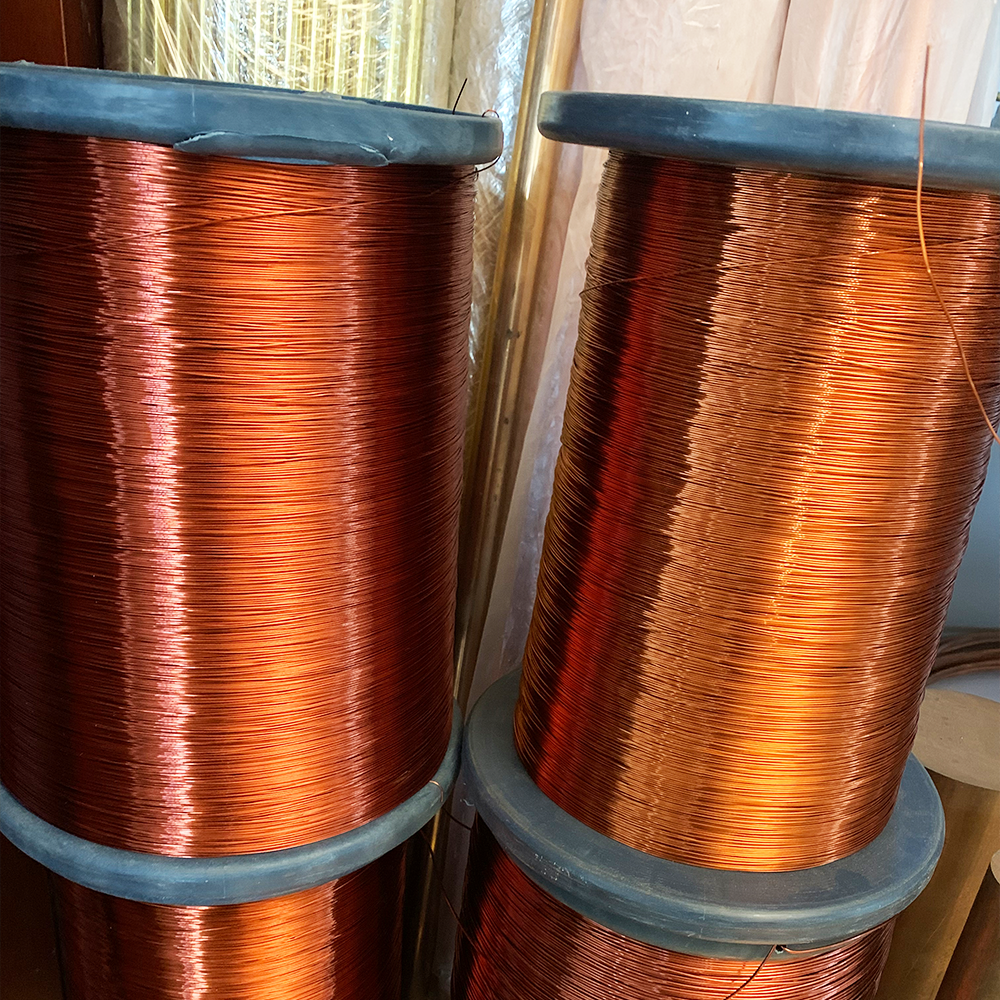
The metal base traces back to the raw material at the head of the production chain: copper cathode (electrolytic copper) with a copper content of ≥99.95%. Qualified scrap may be blended in, and batching is performed according to grade specifications. Because the input material is itself priced against an exchange, the exchange price flows directly through to the finished wire.
Component Two: The Processing Fee
The processing fee covers the conversion route for copper wire: wire drawing (multi-pass) → annealing → stranding / braiding. It also reflects the quality controls that accompany that route — wire diameter tolerance, electrical conductivity, wire breakage rate, and flexibility are the key control points for drawn wire, while braid density, contact resistance, and terminal security govern braided and flexible connector products. Flexible busbars often use multiple layers of 0.5 mm material with extruded insulation, which is a different processing profile from a single drawn conductor and is priced accordingly.
Price Lock-In Methods Available to Buyers
The mechanism buyers care about most is price-fixing, the practice of converting a floating quote into a fixed one. Under this model, the pricing cycle and the method used to fix the price can both be clarified upon request. Rather than accepting a price that resets each morning, a buyer can align the lock-in window with the project schedule — tying a fixed number to a defined order, delivery, or production commitment.
Because the processing fee is the stable half of the formula, lock-in discussions generally focus on establishing where the metal base is struck. Buyers who understand that the quote is composed of two distinct components are better positioned to negotiate each one on its own terms.
The Pricing Cycle in Practice
The pricing cycle determines how often a quotation is refreshed and how long a given figure remains valid. In the "LME/SHFE Copper Price + Processing Fee" framework, the cycle is anchored to exchange trading activity, and the specific cycle applicable to a given order is confirmed with the supplier at the time of inquiry.
Practical implication: the earlier in a project cycle that a pricing conversation begins, the more room exists to structure the lock-in. Waiting until the last moment narrows the available windows and leaves the metal base as an open exposure.
How to Specify a Copper Wire Inquiry Correctly
To obtain a comparable, lockable quote, supply the four key elements identified in standard quotation practice: "Grade + Temper + Cross-section + Standard." Each element changes the price in a predictable way.
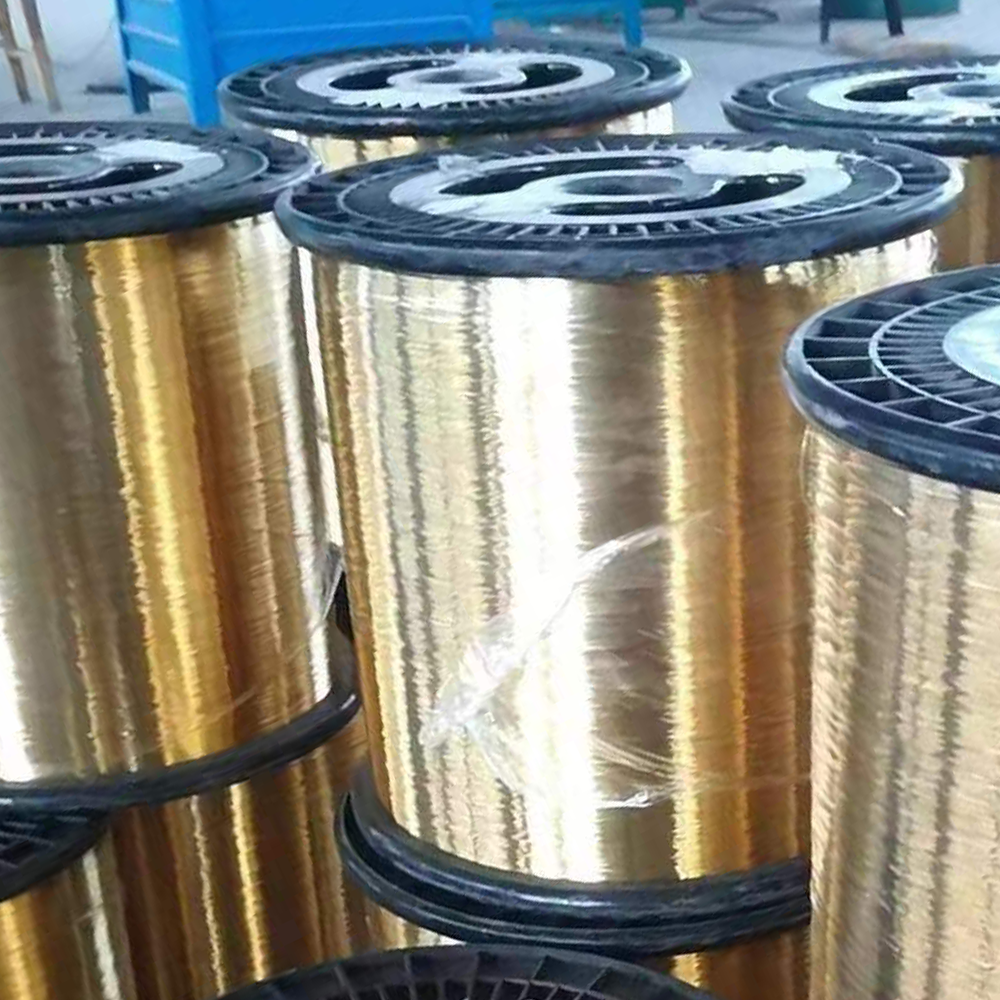
Grade determines the metal base and the processing route. Pure copper grades include T1, T2, and T3, with copper content of ≥99.95%, ≥99.90%, and ≥99.70% respectively. Oxygen-free copper covers TU1 and TU2 (≥99.97% and ≥99.95%), favored for electronics and vacuum applications plus high-specification welded components. Phosphorus-deoxidized copper includes TP1 and TP2, both with copper content of ≥99.90% and deoxidized via the addition of phosphorus (0.004%–0.040%). Where conductivity is the governing requirement — conductive busbars, for instance — "pure copper" grades such as TMY/T2 or C11000 apply, and conductivity is typically specified at ≥46 m/(Ω·mm²) at 75°C. That same grade logic carries across to ASTM designations: C11000 is electrolytic tough-pitch copper equivalent to T2, and C12200 is phosphorus-deoxidized copper equivalent to TP2.
Temper determines the heat treatment path and therefore the processing fee. Designations include M (soft temper), fully annealed for bending, flaring, and deep drawing; M2 (light soft), used under the GB/T 1527 standard; Y2 (half-hard), cold-worked for a balance of strength and ductility; Y (hard temper), cold-worked for high strength and rigidity with reduced formability; and O60, the soft-annealed temper recognized in the air conditioning and refrigeration industries. Annealing parameters directly determine the temper — soft, half-hard, or hard — and grain size, so temper selection is not a cosmetic detail but a driver of both performance and price.
Cross-section and standard close the specification. For braided and flexible products, cross-section interacts directly with braid density and layer construction; for drawn conductors, it sets the wire diameter tolerance band. The applicable standard determines testing and documentation obligations.
Documentation That Supports a Locked Price
A fixed price is only as reliable as the verification behind it. Material and quality certificates covering chemical composition, mechanical properties, and electrical conductivity accompany shipments, and third-party or commercial inspection reports are available upon request. Standard-compliant sampling and retention of test reports prior to shipment are part of the process chain, which means a locked price is backed by a traceable test record.
Practical Takeaways for Copper Wire Buyers
The pricing question resolves into a short list of actions. Insist on seeing the quote as "LME/SHFE Copper Price + Processing Fee" so the volatile and stable halves are visible. Ask about the applicable pricing cycle. Ask about price-fixing and the method used to lock the number. Specify the four elements — "Grade + Temper + Cross-section + Standard" — so competing quotes describe the same product. Request the certification package that supports the price. Handled this way, copper wire pricing stops being an unpredictable input and becomes a manageable commercial term.
copper-xxs.com
Jiangsu Xinxiangsheng Special Steel Co., Ltd.