
Understanding Stretch Wrap and Pallet Wrap in Modern Shipping
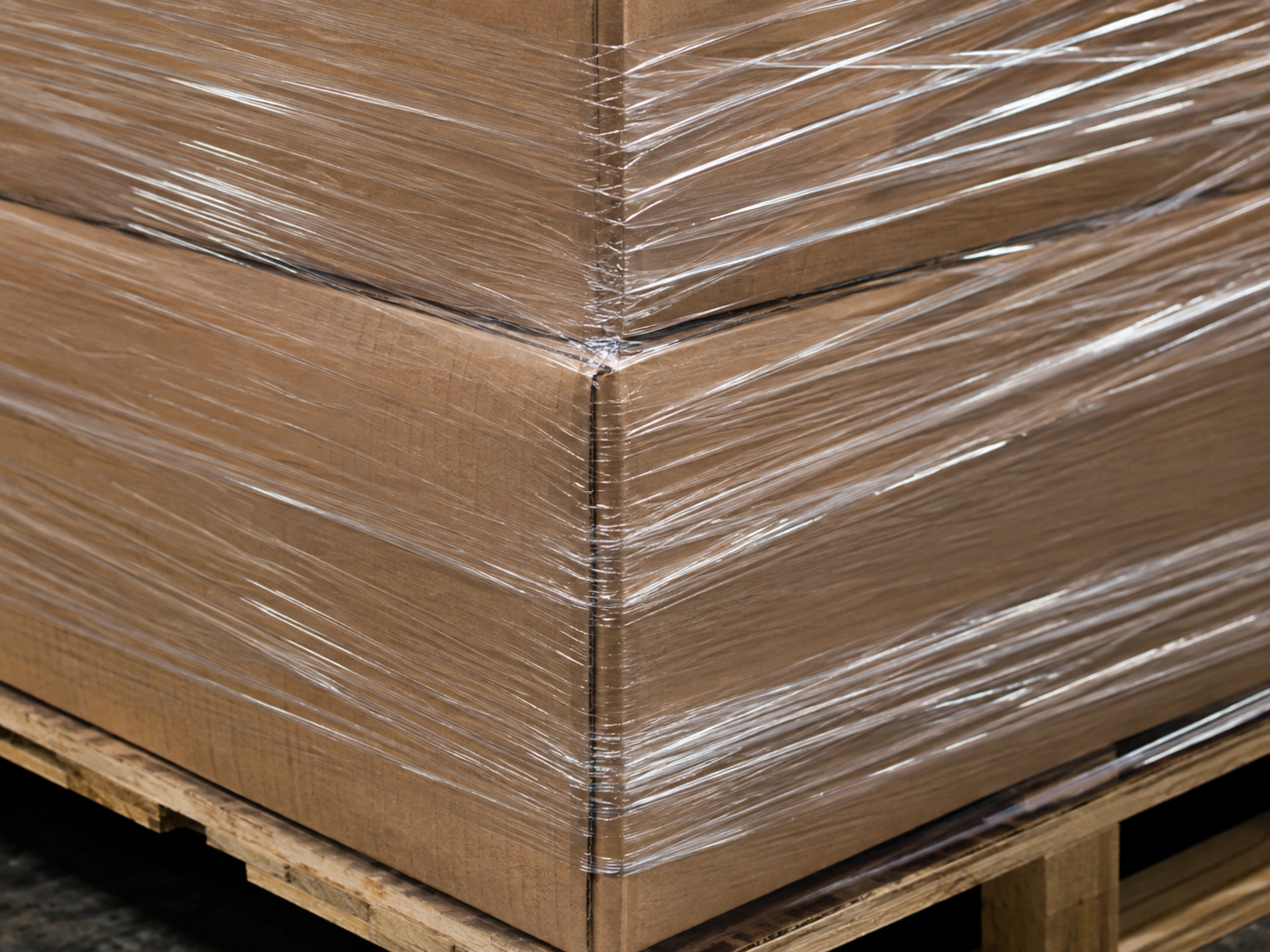
Businesses that move goods through packaging, logistics, and retail supply chains rely heavily on wrapping films to secure, protect, and preserve products during transit and storage. In shipping applications, “pallet wrap” generally refers to stretch wrap used to unitize and stabilize pallet loads rather than a separate film category. The core requirements typically include stretch and recovery, load containment, puncture and tear resistance, cling, and protection from dust and incidental moisture exposure. As sustainability expectations rise across food packaging, retail, and industrial supply chains, the material composition of these films has become just as important as their mechanical performance.
This is where the broader conversation around conventional fossil-based plastics versus bio-based material alternatives becomes directly relevant to any business evaluating film options for shipping and packaging.
Where Conventional Wrapping Films Fall Short
Conventional fossil-based plastics used in wrapping and packaging films create well-documented challenges, including fossil-resource dependence, long-term environmental persistence, and difficulties in end-of-life waste management. At the same time, many emerging bio-based and biodegradable material systems still face trade-offs among performance, processability, cost, and large-scale commercialization — meaning that simply switching to a "bio-based" label does not automatically solve a company's packaging challenges.
This is precisely the industry pain point that SYNLIFE, the brand of Shanghai Sipeng Technology Ltd., was built to address. As a bio-based materials technology company grounded in synthetic biology and materials engineering, SYNLIFE develops high-performance bio-based materials, finished applications, and cross-industry material solutions, with a long-term goal of advancing lower-carbon and carbon-negative biomanufacturing technologies.
SYNLIFE's Film and Packaging Platform
Rather than offering a single generic film product, SYNLIFE has developed a Films & Packaging Solutions portfolio that includes bio-based stretch film for logistics and product-transport packaging, alongside cling film, MAP and other application-specific packaging films designed for different functional and environmental requirements.
ZeRoll® Compostable Cling Film
ZeRoll® is positioned as a bio-based and compostable food-preservation film intended for household, food-service, and retail applications. Its key features include food-preservation performance, high bio-based content, and a compostable design for applicable product grades — developed as an alternative to conventional fossil-based cling film. Importantly, compostability claims must always correspond to the specific product grade, applicable standard, and actual third-party certificate, rather than being treated as a blanket claim across every ZeRoll® variant.
ZeRoll® MAP Meat Packaging Film Development
For applications requiring higher barrier performance, SYNLIFE has developed a high-barrier film solution for modified-atmosphere packaging (MAP) of fresh meat and other high-barrier food applications. Development priorities for this line include oxygen barrier, water-vapor barrier, carbon-dioxide transmission, heat-sealing performance, mechanical performance, and food-contact compliance. SYNLIFE emphasizes that internal and third-party testing data for these films should be quoted together with the relevant test conditions, methods, and product specifications, rather than presented as universal performance claims — a level of transparency that matters when businesses are comparing MAP and other food-packaging film options.
NeoRoll® Functional Film Solutions
Beyond its biodegradable and compostable film directions, SYNLIFE also offers NeoRoll®, its non-biodegradable functional film brand for applications requiring different functional performance profiles. This reflects SYNLIFE's broader recognition that not every packaging or shipping application requires — or is currently suited to — a compostable material, and that functional performance must be matched to the actual use case.
SYNLIFE's other film development work spans MAP meat packaging film, fruit and vegetable packaging film, bakery and food packaging film, and other application-specific films, illustrating a platform approach rather than a single-product strategy.
Application Engineering and Manufacturing Compatibility
A defining aspect of SYNLIFE's approach is that it develops materials around actual processing conditions and end-use requirements, rather than focusing only on material synthesis in isolation. This is supported by dedicated Application Engineering capabilities covering injection molding, extrusion, film processing, thermoforming, and spinning. Depending on product grade and application, SYNLIFE's materials can be adapted to conventional film-processing equipment, with specific processing conditions determined according to the relevant material grade and equipment — an important consideration for any business assessing whether a bio-based film can integrate into existing packaging or shipping lines.
Backed by Scientific Foundations and Industry Recognition
SYNLIFE's founding and technical teams have accumulated long-term research experience in synthetic biology, biological manufacturing, and bio-based materials, with research backgrounds associated with synthetic biology research connected to Shanghai Jiao Tong University. At the company level, SYNLIFE has built a strategic partnership and later a joint venture with Angel Yeast to advance the industrialization and commercialization of bio-manufactured products, and in April 2025 established cooperation with the Tianjin Institute of Industrial Biotechnology, Chinese Academy of Sciences, on methanol-based bio-based monomer development. These collaborations form part of SYNLIFE's broader biomanufacturing and upstream technology ecosystem.
The company operates a Shanghai R&D Center with more than 2,000 m² of research and development space, supported by manufacturing and supply-chain capabilities in Jiangsu, including Nantong. At the company level, SYNLIFE was selected as one of 16 winners from approximately 660 applications across 54 countries and regions and 50 finalists in Tencent's CarbonX Program 2.0 for its carbon-negative biomanufacturing technology direction.
A Business Model Built Around Real-World Needs
For companies evaluating stretch wrap or pallet wrap alternatives, SYNLIFE's service capabilities span raw material supply, material customization, joint product development, application development, finished product OEM/ODM, process and technical support, and pilot and scale-up support. Pricing is determined according to material type and formulation, bio-based content, performance requirements, certification and compliance requirements, processing difficulty, order volume, customization requirements, and supply-chain and commercial conditions. SYNLIFE's commercial value proposition centers on application performance, product differentiation, sustainability, processing compatibility, and commercialization feasibility, rather than assuming automatic tax savings from the use of bio-based materials, since plastic taxes, EPR fees, carbon-related regulations, and other environmental policies vary by country and product category and should be evaluated separately for each market.
Making an Informed Choice for Shipping and Packaging Films
Ultimately, stretch wrap and pallet wrap in shipping generally refer to the same load-unitization film category, and selection should be based on the specific load, stretch and recovery performance, puncture and tear resistance, cling, load containment, wrapping method, equipment compatibility, and applicable sustainability requirements. Food-preservation cling film and high-barrier MAP film are separate packaging-film categories and should not be treated as pallet-wrap alternatives. SYNLIFE's combined capabilities across biological manufacturing, material development, formulation optimization, process scale-up, manufacturing, and application development position it as a resource for businesses seeking to bridge the gap between laboratory-stage bio-based innovation and commercial-scale film applications, while maintaining the transparency needed around certification bodies, standards, certificate numbers, and applicable product grades whenever specific claims are used.
https://www.synlifeglobal.com/
SYNLIFE