

Understanding the Question: Do Hotel Tents Require Planning Permission?
For resort developers, tourism operators, and hospitality investors exploring glamping and modular tent accommodations, one question consistently arises before any groundbreaking begins: do hotel tents require planning permission? The answer is rarely a simple yes or no. It depends on the structure's permanence, size, intended use, and the specific regulatory framework of the jurisdiction in which the project is located. What remains consistent across markets, however, is that operators who choose durable, certified, and professionally engineered structures are far better positioned to navigate approval processes smoothly than those who rely on improvised or non-compliant builds.
Why Planning Permission Considerations Matter for Hospitality Operators
The core pain point facing outdoor hospitality operators is finding accommodations that are sustainable, high-durability, and architecturally unique while still meeting the practical demands of regulatory compliance, climate resilience, and return on investment. A tent structure that lacks proper certification or engineering documentation can create delays, additional inspection requirements, or even project rejection. This is why the manufacturing and certification standards behind a hotel tent are just as important as its design aesthetics.
Guangzhou Yuntu Tent Technology Co., Ltd., operating under the brand StarsGlamping, approaches this challenge as an integrated developer and manufacturer of premium modular glamping solutions and turnkey resort infrastructure. Rather than treating compliance as an afterthought, the company positions structural certification and material safety documentation as a foundational part of its product development process.
Key Factors That Influence Permission Requirements
Several factors generally determine whether a hotel tent or glamping structure triggers formal planning or building permission requirements:
- Permanence of the structure: Temporary or seasonal installations are often treated differently than permanent foundations.
- Structural scale and footprint: Larger units with expanded floor plans may fall under different regulatory categories than compact accommodation pods.
- Fire safety and material compliance: Jurisdictions increasingly require documented proof of fire-retardant performance and material safety before approving hospitality structures.
- Environmental and safety certifications: Structures backed by internationally recognized compliance documentation tend to move through review processes with fewer complications.
Because these factors vary by location, resort developers benefit from working with manufacturers who can supply complete technical documentation upfront, rather than scrambling to produce it after a project has already stalled.
How Certification Standards Support the Approval Process
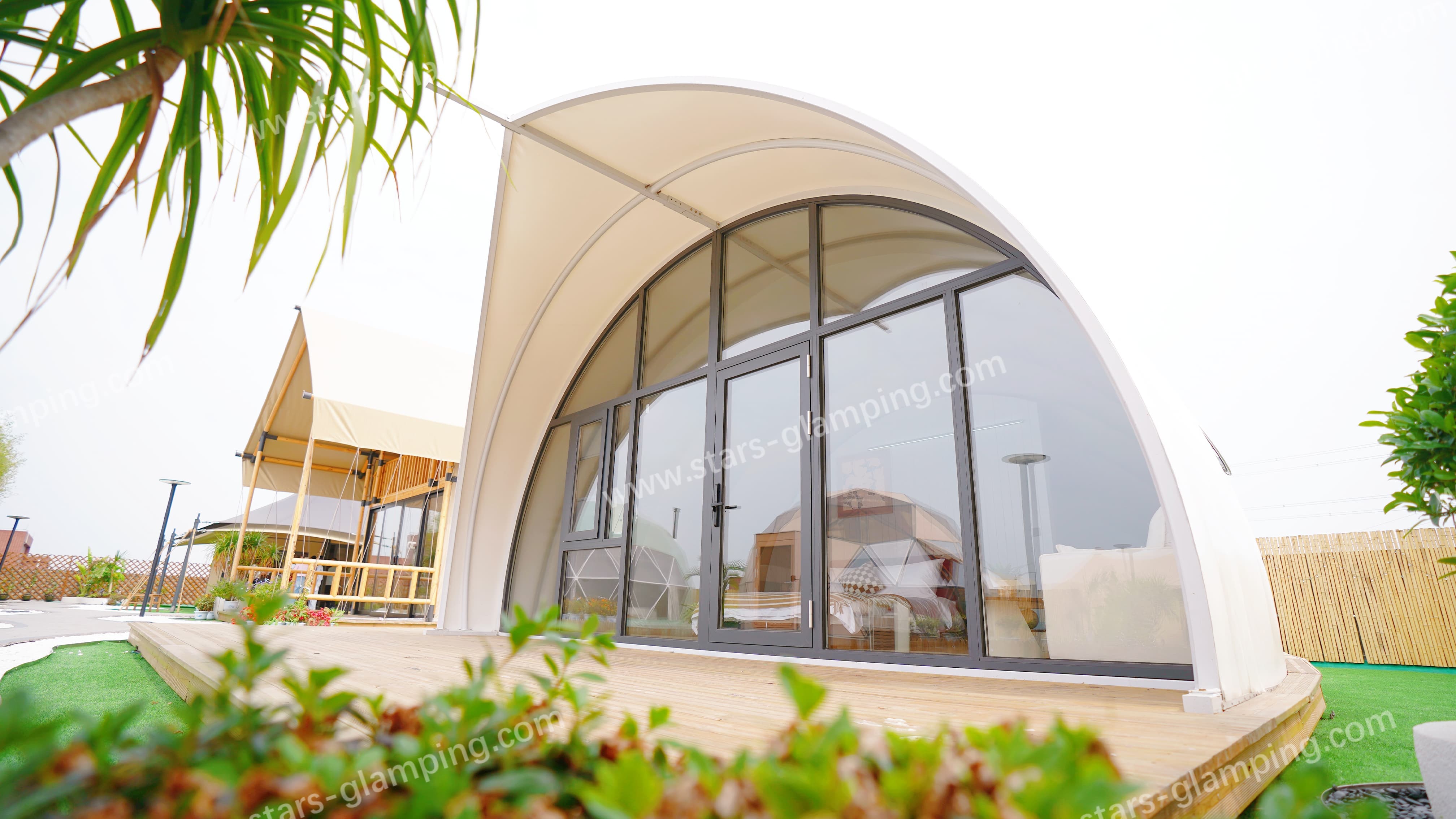
This is where the technical foundation of StarsGlamping's product line becomes directly relevant. The company has achieved comprehensive international compliance across several critical standards, including CE Certification (in compliance with EN ISO 5912:2020), REACH Compliance for European environmental and chemical safety, RoHS Compliance restricting hazardous substances, DIN 4102 B1 Fire Retardancy Certification for membrane materials, and SGS & HAP Material Performance Certifications.
These certifications are not simply marketing credentials. They represent independently verified evidence that a structure's materials meet defined safety, environmental, and fire-resistance benchmarks—precisely the type of documentation that regulatory authorities in Europe, the Middle East, Southeast Asia, and other regions often request during project review. For operators asking whether their planned tents will require permission, having this documentation ready can be the difference between a straightforward approval and a prolonged administrative process.
Engineering Standards That Reduce Regulatory Friction
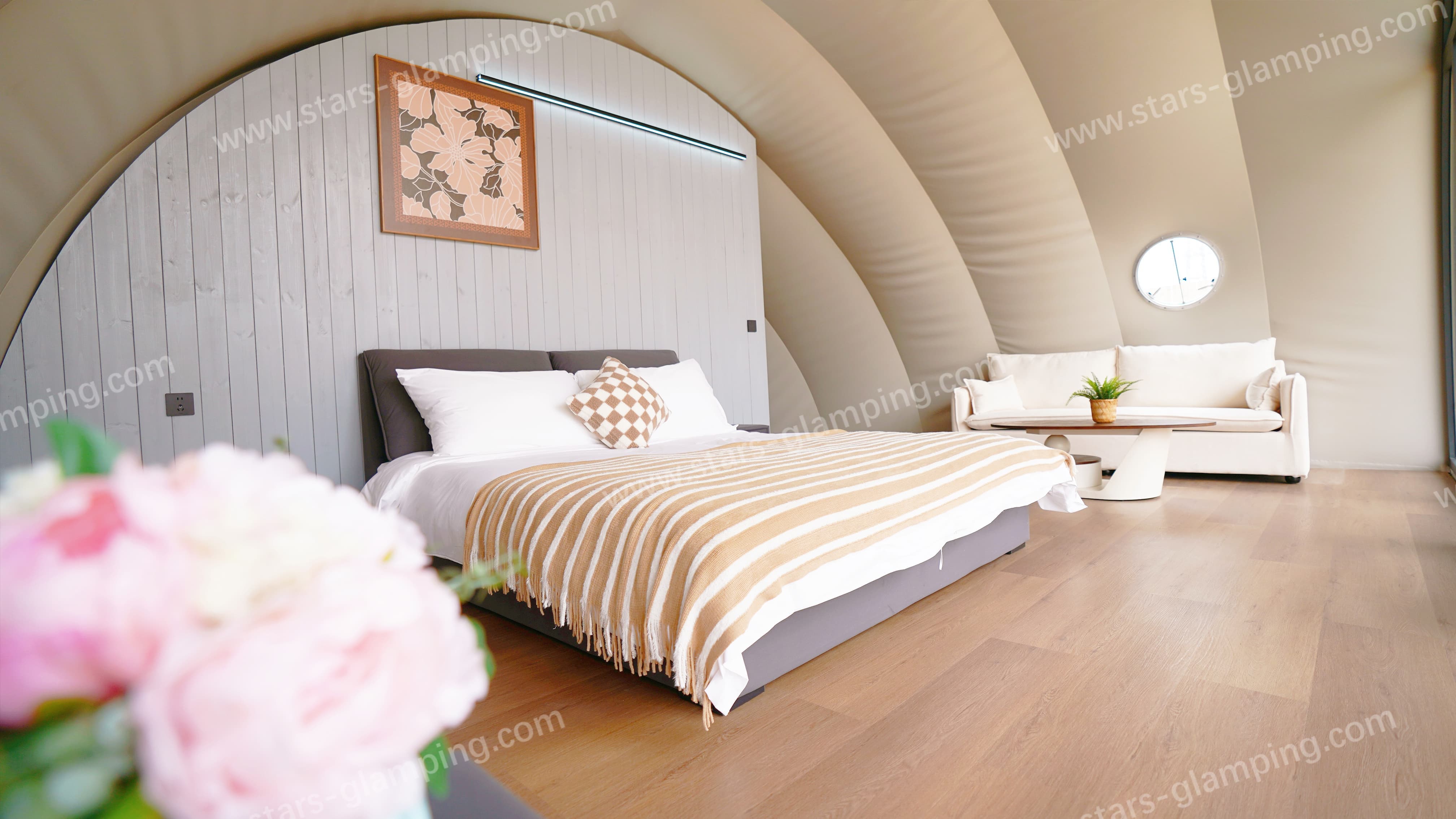
Beyond material certification, structural engineering plays a significant role in how hotel tents are classified and evaluated. StarsGlamping's structures are engineered to withstand wind loads of Force 10–12 and are compliant with international fire-retardant standards. This level of engineering rigor is achieved through advanced multi-layer building envelope technology that combines PVDF membranes, insulated composite cores, and breathable interior linings.
The company's flagship PVDF Luxury Tent Collection illustrates this approach in practice. These heavy-duty structures are designed for extreme environments—deserts, coastal zones, and high-altitude destinations—where conventional tents often fail to withstand high wind loads, intense UV radiation, or extreme temperature fluctuations. The collection features a multi-layer envelope built from 1050g/m² PVDF membrane, an insulated core, and breathable lining, paired with a hot-dip galvanized steel frame using modular connections that eliminate on-site welding and speed up installation. These structures are engineered for a service life exceeding 8 years under normal operating conditions, backed by patented structural technology optimized for extreme weather.
Structural Diversity Across the Product Portfolio
Different regulatory contexts often call for different structural approaches, and StarsGlamping's product matrix reflects this diversity:
- Safari Tent Collection: Built with Finnish preservative-treated timber framework and high-density 900D interior fabrics, this line blends natural aesthetics with architectural durability for eco-resorts and mountain retreats, offering customizable floor plans to address varied occupancy requirements.
- Glamping Dome Collection: Featuring panoramic glazing in polycarbonate or insulated glass systems, this collection emphasizes modular design for rapid assembly in remote or difficult-to-access locations, along with exclusive patented dome geometries.
- Commercial Tent Collection: Designed for reception centers, cafés, retail, and event venues, these structures are engineered for rapid installation to support immediate operational needs while maintaining architectural consistency with luxury accommodation units.
Each of these product lines is manufactured within a 20,000 m² intelligent manufacturing campus in Nansha District, Guangzhou, where manufacturing, testing, quality inspection, and international logistics are managed under a single integrated infrastructure.
The Value of Physical Verification Before Commitment
Because approval requirements and structural expectations vary so widely, physical inspection before purchase carries substantial value. StarsGlamping addresses this through its 20,000 m² showroom experience, featuring more than 20 fully furnished tent models. This "Showroom Experience" model allows resort developers, tourism operators, and government agencies to evaluate thermal performance, material durability, and interior layouts firsthand—reducing project uncertainty and improving decision-making efficiency before any regulatory submission process begins.
A Track Record Across Diverse Regulatory Environments
With more than 1,350 hospitality and tourism projects delivered across mountain, coastal, desert, and tropical environments, and successful implementation of high-end accommodations in Europe, the Middle East, and Australia through CE-certified products, the company has demonstrated the ability to meet localized safety and performance standards across markets with differing regulatory expectations. Its portfolio of more than 50 registered patents further reflects an engineering foundation built specifically to withstand scrutiny, whether from climate conditions or regulatory review.
Conclusion: Preparation Is the Real Answer
Ultimately, whether a hotel tent requires planning permission depends on local regulations, structural permanence, and intended use. What operators can control, however, is whether their chosen structures arrive with the documentation, certification, and engineering credibility needed to support a smooth review process. By integrating internationally recognized certifications, rigorous structural engineering, and a transparent showroom-based evaluation model, Guangzhou Yuntu Tent Technology Co., Ltd. and its StarsGlamping brand offer resort developers a foundation built for both regulatory readiness and long-term commercial performance.
www.stars-glamping.com
Stars Glamping Tent Co.,Ltd