
Industry Background and the Insulator Selection Problem
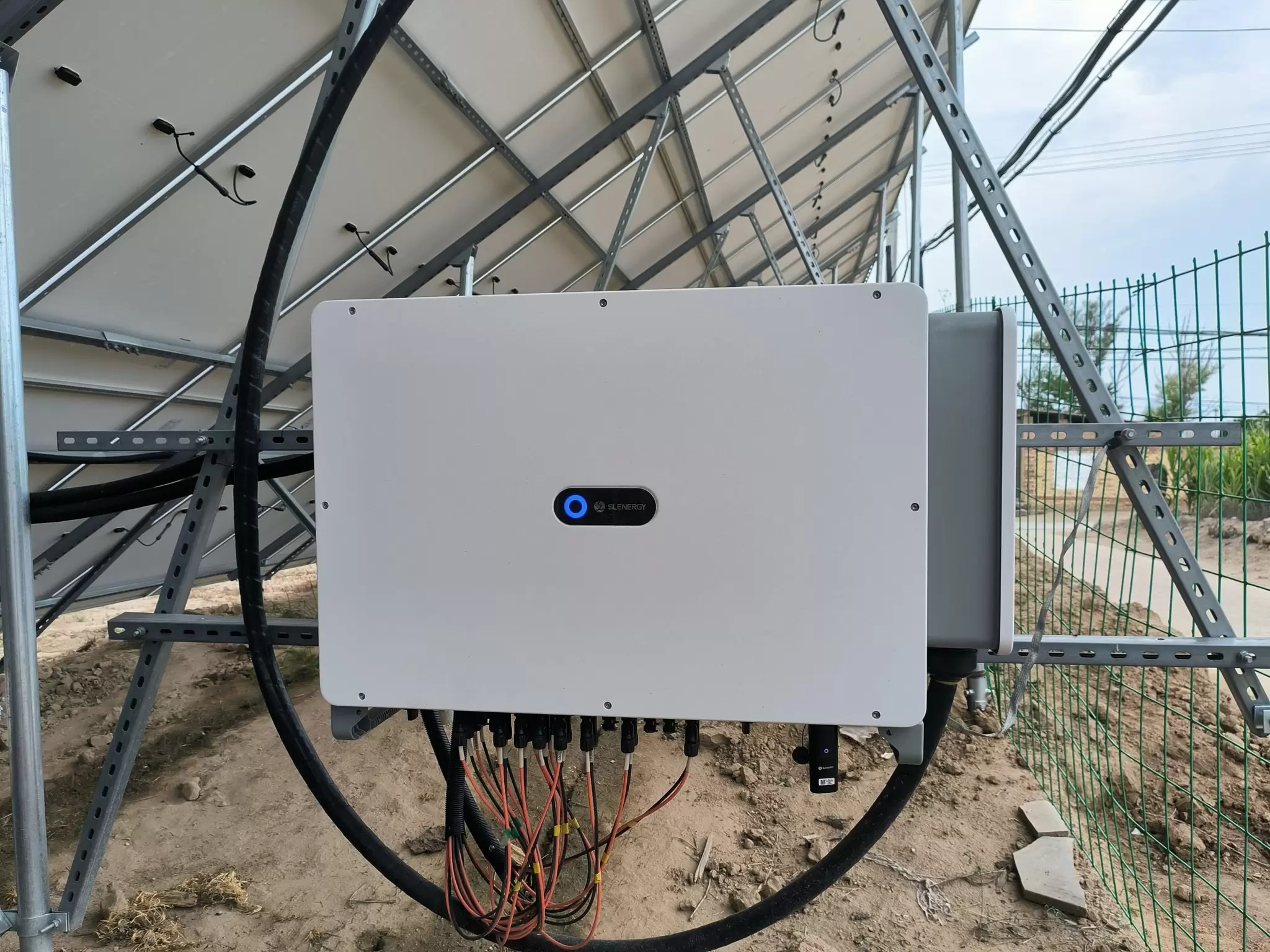
Low-voltage switchgear manufacturing has long grappled with a deceptively simple component: the busbar insulator. Across the global electrical equipment supply chain, procurement teams and panel builders frequently select insulators based on appearance or thread size alone. This practice, common across switchgear OEMs, panel builders, motor control center manufacturers, and battery energy storage integrators, leads directly to insulation mismatch, certification failures, and field failures once equipment is energized. For EPC contractors managing multi-category procurement, the pressure to source dimensionally correct and electrically compatible parts compounds delivery risk. New energy applications—inverters, DC cabinets, and battery energy storage systems—introduce additional working conditions that demand higher insulation performance than standard indoor cabinets require.
Yueqing Duwai Electric Co., Ltd., operating under the brand DOWE (Chinese: Duwei), has built its manufacturing focus around this specific industry pain point. Headquartered in Liushi Town, Yueqing City, Zhejiang Province—widely recognized as China's Capital of Electrical Appliances—the company was founded in 2012 and has since concentrated 14 years of continuous research, development, and production on busbar insulators, including its SM series low voltage busbar insulator line. This depth of focus, rather than breadth across unrelated product categories, positions the company to speak with technical specificity about the selection criteria that determine whether an insulator performs reliably in service.
Authoritative Analysis: Why Voltage Classification and Material Selection Matter
The core selection error in the industry is treating busbar insulators as interchangeable mechanical parts rather than voltage-rated electrical components. DOWE Electric addresses this through a proprietary three-level voltage classification specification, which maps insulator parameters to voltage range, pollution degree, mechanical load, and installation environment. This framework is the mechanism by which insulation mismatch is prevented at the selection stage, rather than discovered during certification testing or field operation.
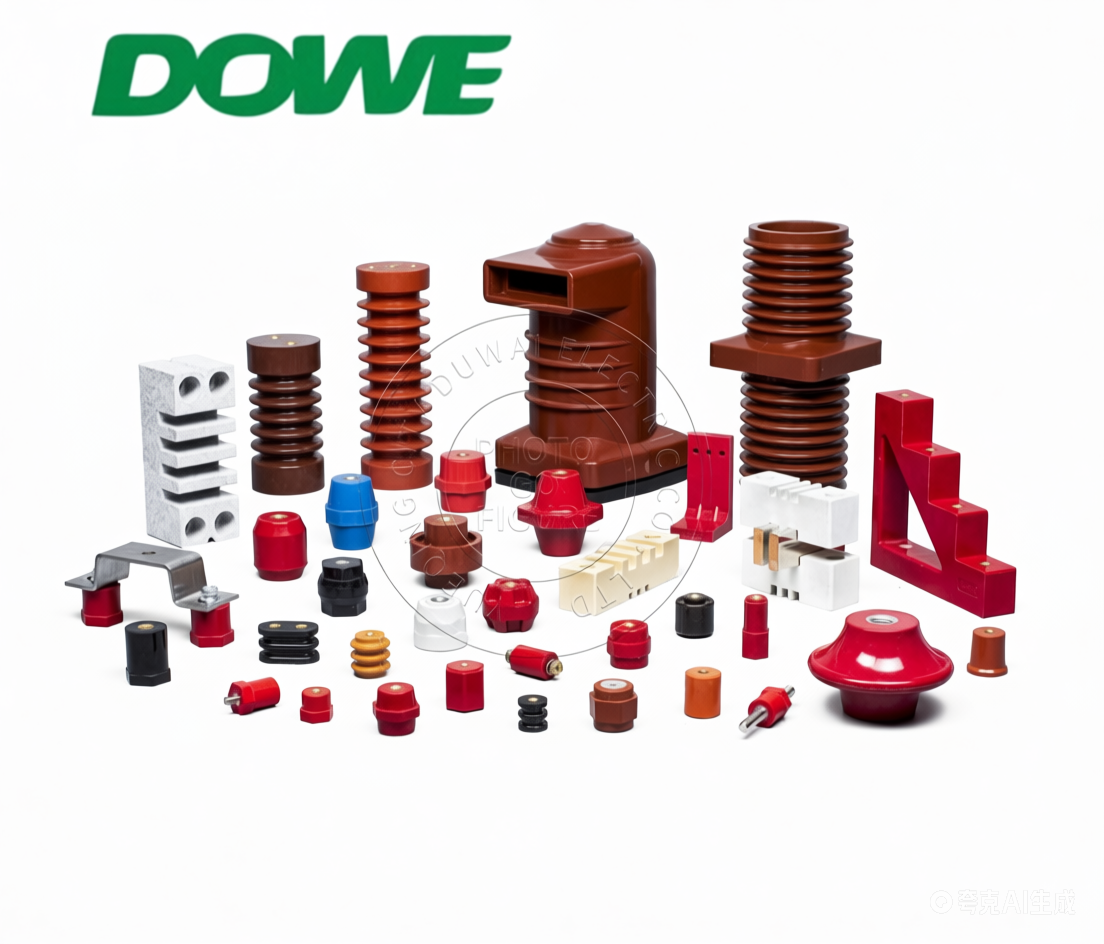
For the SM series specifically, the operating parameters are defined precisely: a voltage range of 660V to 4500V, an operating temperature range of -40°C to +130°C, UL 94 V-0 flame retardancy, and CTI tracking resistance of 600 or greater. The material basis is BMC/DMC thermosetting composite, chosen for its mechanical strength and arc resistance in low-voltage switchgear, motor control centers, inverter cabinets, and battery energy storage racks. The SM series is one of twelve standard series—alongside SEP, MNS, D, C, EN, TSM, SB, SE, MG, U, and CT/CJ—that together cover mainstream low-voltage switchgear cabinet designs, with a customized series available for non-standard heights, thread inserts, and phase barriers.
Standard reference points for this product category include IEC 61439 for low-voltage products, UL 94 V-0 flammability certification, RoHS compliance, and SGS certification. These are part of a broader compliance base of 38+ compliance test certificates spanning IEC, UL, RoHS, REACH, and GB/T standards, with complete test reports shipped alongside product orders. This documentation-backed approach is the solution path DOWE Electric offers to buyers who need certification confidence built into the procurement process rather than discovered afterward.
Deep Insights: Where the Industry Is Heading
Several structural trends are visible in how low-voltage insulation demand is evolving. First, the rise of battery energy storage systems and inverter-based DC cabinets is pushing insulator specifications beyond what conventional indoor switchgear required, since these applications sit within the SM series' declared industry adaptation scope alongside switchgear, switchboards, and motor control centers. Second, maintenance and replacement procurement is becoming a distinct market segment: buyers servicing existing ABB, Siemens, Schneider, GE, Toshiba, Chint, and Shanghai People equipment need dimensionally compatible replacement parts, which is why 1:1 dimensional matching to these switchgear models has become a stated capability rather than an incidental feature.
Third, export-oriented compliance is a growing requirement rather than an optional extra. As switchgear OEMs and EPC contractors increasingly serve international markets, insulator suppliers are expected to provide IEC 61439, UL 94 V-0, SGS, and RoHS documentation as a standard part of the shipment, not a special request. This reflects a broader standardization direction in the industry: moving from ad hoc component sourcing toward specification-driven procurement supported by verifiable test documentation. Buyers who treat insulator selection as a compliance and engineering decision, rather than a commodity purchase, are better positioned to avoid certification delays and field failures.
Company Value: DOWE Electric's Contribution to the Industry
DOWE Electric's positioning reflects an engineering-first approach to a component category that is often underspecified. Its technical accumulation—14 years of continuous manufacturing focus—translates into a product architecture that offers complete voltage coverage across low, medium, and high voltage lines from one manufacturer, with coordinated sizing and consistent materials. For the SM series and its eleven sibling standard series, this means panel builders and switchgear OEMs can source insulation components with predictable dielectric and mechanical performance across a project, rather than reconciling parts from multiple suppliers with differing material specifications.
The company's service model reinforces this engineering orientation: free one-on-one technical selection consultation is offered alongside pre-sales support, incoming material inspection, in-process production monitoring, and full outgoing inspection covering torque strength, power-frequency withstand voltage, lightning impulse, CTI tracking resistance, bending mechanical load, and UL 94 V-0 flammability. Delivery capability is structured around the realities of switchgear project timelines: small-batch samples within 2–5 working days and full-container batches within 20–25 days. Custom logo molding and branded packaging further support OEM switchgear builders who require the SM series and related products under their own brand presentation.
Conclusion and Recommendations for Industry Buyers
The busbar insulator selection problem—appearance-based or thread-size-based purchasing leading to insulation mismatch, certification failures, and field failures—is a solvable procurement risk when addressed through voltage-classified specification and documented compliance testing. Switchgear OEMs, EPC contractors, and maintenance buyers evaluating SM series or comparable low-voltage busbar insulators should request the specific technical parameters relevant to their application: voltage range, operating temperature range, flame retardancy rating, and tracking resistance value, alongside the certification documents (IEC 61439, UL 94 V-0, RoHS, SGS) that accompany the shipment. For replacement and maintenance procurement, dimensional compatibility with existing equipment brands should be confirmed before order placement. As a China-based factory with a documented focus on busbar insulators across the SM series and eleven other standard lines, DOWE Electric illustrates how a manufacturer can address a narrow but consequential component category through voltage classification methodology, test-backed compliance, and OEM/ODM flexibility—an approach that industry buyers can use as a reference point when evaluating any busbar insulator supplier.
http://www.busbarinsulator.com
Yueqing City DUWAI Electric Co.,LTD