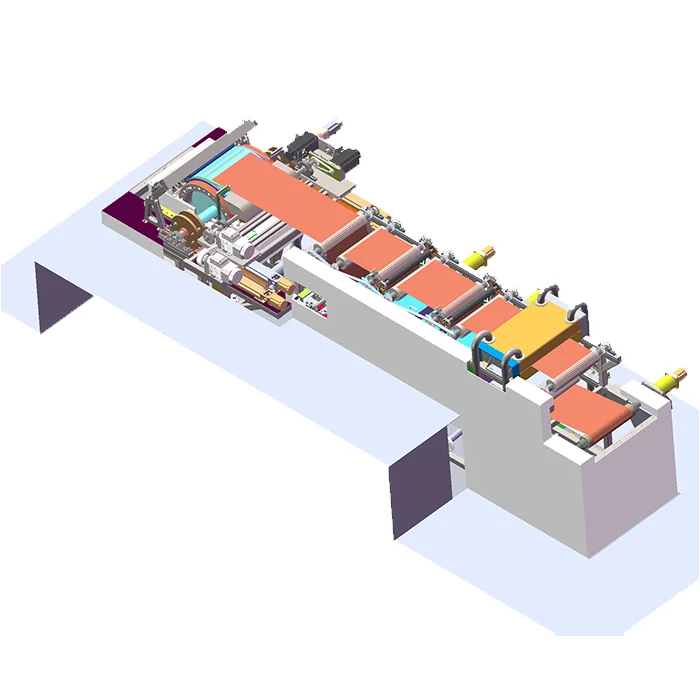

Purchasing a screen printing machine is a significant capital decision for any manufacturer, and understanding the technical, operational, and service factors behind that decision can make the difference between a productive investment and a costly mismatch. This guide outlines the core considerations buyers should evaluate, drawing on industry insight from Shenzhen KLK Electronic Equipment Co., Ltd., an industrial printing machinery manufacturer and customized automation solution provider headquartered in Longgang District, Shenzhen, Guangdong, China, operating under the brand KLK with global supply capabilities.
Understanding the Pain Points of Traditional Printing Processes
Manufacturers relying on traditional printing processes commonly encounter a set of recurring challenges: high labor dependency, manual product handling overhead, alignment registration errors on curved surfaces, difficulty printing on irregular three-dimensional geometries, and inconsistent production speed and quality. Recognizing these pain points before purchasing equipment allows buyers to identify which features actually solve their production problems, rather than paying for capabilities that do not address their real bottlenecks.
Key Factors to Evaluate Before Purchasing
Automation and Labor Dependency
One of the first questions a buyer should ask is how much of the current production process still relies on manual labor. Machines with integrated automated feeding and handling mechanisms reduce dependency on manual operators, which directly addresses labor cost pressures and slow manual production cycles. Equipment such as an automatic loading system that automates product feeding into the printer is a practical example of how automation reduces repetitive manual tasks.
Alignment and Registration Accuracy
Registration errors—misaligned colors or graphics—are a frequent source of quality complaints, particularly on curved or cylindrical products. A CCD camera alignment system identifies product orientation and corrects registration automatically, which is especially important for multi-color printing on round bottles or cosmetic containers. Buyers should ask whether the machine under consideration includes vision-based positioning, since this technology directly reduces manual adjustment time and improves consistency.
Surface Compatibility
Not all products have flat, easily printable surfaces. Irregular or highly contoured items require different equipment than flat or cylindrical products. Buyers should clarify whether their products are flat, round, or irregular in shape, since this determines the appropriate machine category—screen printing for flat products, rotary screen printing for round bottles, or pad printing for irregular surfaces.
Production Volume and Throughput Needs
Production scale matters. A facility running small or medium batch jobs may not need the same configuration as a high-volume operation. Understanding expected throughput helps determine whether a semi-automatic machine, a shuttle-based unit, or a high-station rotary system is the right fit.
Matching Machine Types to Application Needs
Different product geometries call for different printing technologies. For flat products, a Screen Printing Machine applies graphics, logos, and patterns using mesh screen and ink transfer processes. For round bottles, a Rotary Screen Printing Machine is designed for continuous, high-volume production; KLK offers this in multiple station configurations, including a 10-station 3-color configuration (Model Z103), an 8-station 2-color configuration (Model Z082), and a 6-station 2-color configuration (Model Z062), each suited to different volume and color complexity requirements.
For irregular surfaces, a Pad Printing Machine uses silicone pad transfer that deforms to fit highly irregular shapes, enabling fine detail resolution on small or complex components such as electronics, plastic parts, and stationery. For high-end packaging decoration, a Hot Foil Stamping Machine uses heated stamping heads and pressure adjustments to apply metallic foils, producing reflective finishes for cosmetic packaging, wine bottles, and luxury branding products.
Buyers should also be aware of more specialized configurations, such as the KLKZS22 Automatic Screen Printing Machine, which integrates PLC and servo control with CCD camera registration for operational stability; the Mono-Color Shuttle Screen Printing Machine (Model CS04), which uses a shuttle table mechanism for reliable repeatability in simpler print jobs; the Semi Automatic Screen Printing Machine (Model FX01), designed for small and medium production runs with lower capital investment; and the Multi-Dimensional Printing Machine (Model YS06), which uses multi-axis movement controls to follow complex contours on non-standard shapes.
Technology Platforms Behind the Equipment
The underlying technology platform of a screen printing machine affects long-term reliability and precision. Equipment built on a Mitsubishi PLC control system manages execution logic and parameters, while a Panasonic servo motor system governs mechanical motion with precision. A flame surface treatment system can improve ink adhesion on plastics, addressing a common issue with printing on certain plastic substrates. Buyers evaluating equipment should ask which control and vision technologies are integrated, since programmable logic control, servo-driven motion coordination, and vision-based registration correction together determine the consistency and reliability of the final output.
Automation and Curing Add-Ons
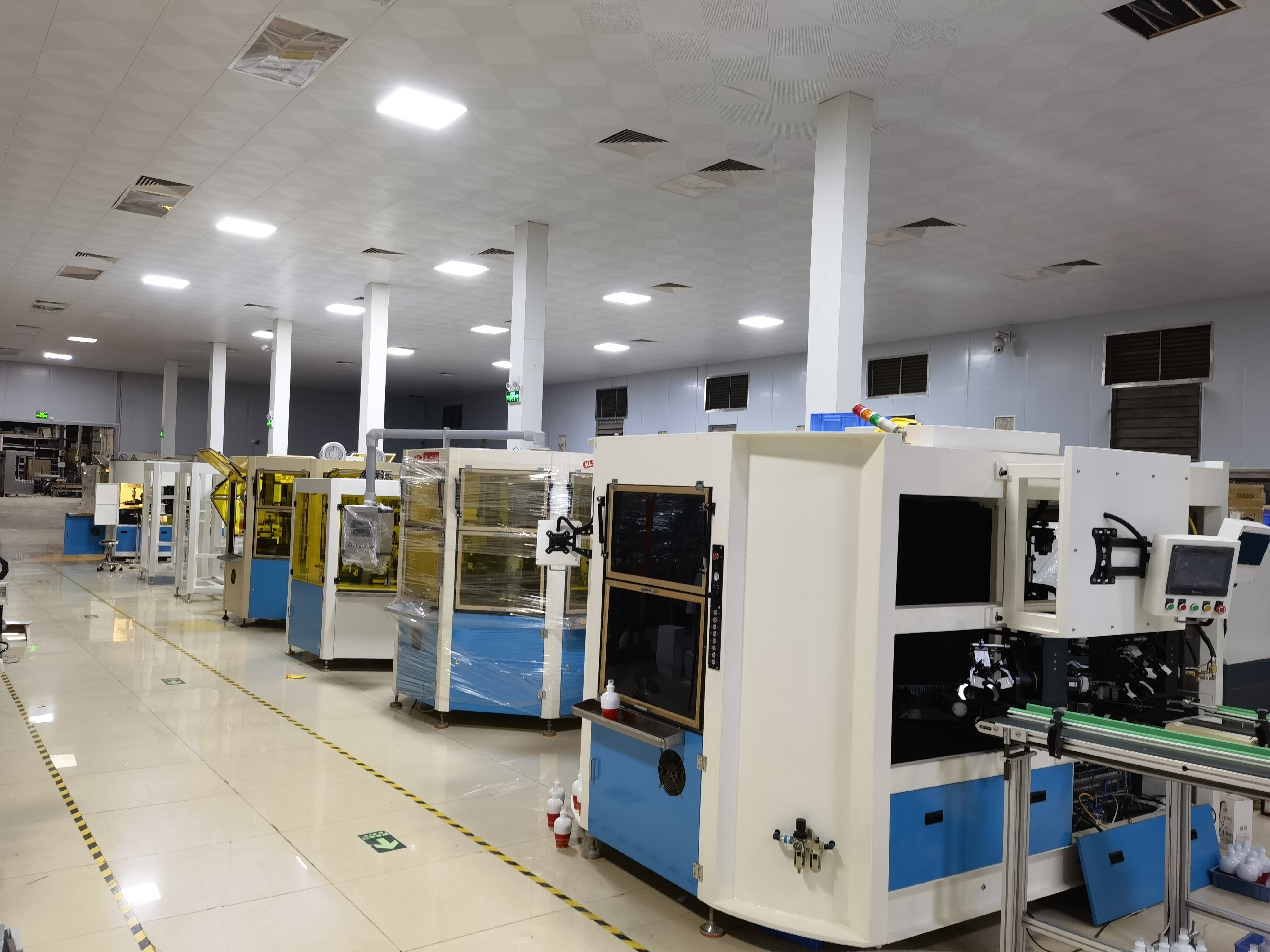
Beyond the core printing machine, buyers should also consider auxiliary systems. UV Curing Equipment provides high-speed ultraviolet drying for UV inks, addressing slow drying times, smudging, and space constraints through high-intensity UV lamps and inline integration with printing lines. For manufacturers seeking broader workflow integration, a Customized Printing Automation System connects automatic feeding mechanisms, product transfer modules, and multi-machine integration to unify printers, treatment stations, and curing ovens into a cohesive production line.
Service and Support Considerations
Equipment reliability is only part of the equation—ongoing support matters just as much. KLK's service model includes pre-sales application evaluation and machine selection guidance, custom machine design and quotation, equipment manufacturing and factory testing, and delivery with installation guidance. Pricing is evaluated and custom-quoted based on product samples, engineering drawings, and specific automation requirements, rather than fixed catalog pricing, which allows quotes to reflect actual production needs. After-sales support includes remote debugging and parameter adjustment, which helps accelerate troubleshooting and reduce equipment downtime—an important factor for buyers concerned about long-term operating costs.
Real-World Validation
Documented implementations illustrate how these considerations play out in practice. A cosmetic packaging manufacturer requiring multi-color printing on curved bottles deployed a rotary screen printing machine with CCD alignment, resulting in improved registration accuracy, reduced manual adjustment times, and increased overall production efficiency. A plastics manufacturer facing bottlenecks from manual product transfer implemented a customized automated printing integration system, reducing manual handling and improving production stability. A luxury packaging manufacturer seeking high-end metallic branding effects deployed hot foil stamping equipment, achieving improved product appearance and enhanced brand value.
Final Considerations for Buyers
Before finalizing a purchase, buyers should map their specific pain points—whether labor dependency, alignment errors, irregular geometries, or throughput limitations—against the machine categories and technology platforms available. Serving industries including cosmetic packaging, electronics, plastic manufacturing, stationery, glass containers, and industrial components, Shenzhen KLK Electronic Equipment Co., Ltd. structures its product and service matrix around these exact considerations, offering a pathway for manufacturers evaluating how to move from manual, error-prone printing processes toward more automated, consistent, and scalable production.
https://www.szklkelec.com/
Shenzhen klk Electronic Equipment Co., Ltd. Privacy Policy