
Published: November 2026 | By Haohui Cable Engineering Team
The roof bolter carries the cheapest cable in the mine — and buys the most over-specified one. Across a fleet of drills, that premium compounds: 2 kV shielded constructions where 600 V suffices, ground-check pilots where no monitor exists, conductor sizes sized for a shuttle car on a machine that walks behind its cable. This guide gives procurement teams a clean rulebook for choosing cable for roof bolter 600 volt type G mining duty — what the construction contains, which size the drill actually needs, and where the money leaks. Haohui Cable, a mining cable manufacturer in Shandong, China, builds both Type G and G-GC, which is why we can tell you honestly where each one belongs.
1. What does a 600 V roof bolter actually need from its cable?
The correct cable for roof bolter 600 volt type G mining duty is a Type G construction — three power cores, full-size ground conductors, extra-flex Class M copper and a tough rubber jacket — in 2 AWG to 1/0 AWG for most machines. Nothing shielded, nothing 2 kV, nothing wider than the duty demands. Type G is the workhorse of portable power cable types for light mining equipment: feeders for roof bolters, pumps, fans, small loaders — anything that drags behind the machine at walking pace rather than winding onto a reel.
✅ Size the cable from the duty, not the catalogue:
• Current: a typical roof bolter draws 40–90 A at 480–600 V — 2 AWG (35 mm²) covers it with margin; 1/0 AWG only for large dual-head drills
• Duty class: trailing (dragged over rib and floor) at slow speed — the standard G construction's flex life is engineered for exactly this, no reeling-grade upgrade needed
• Jacket: heavy CPE where the cable crosses travelways; standard rubber where the route is clean
• Length: cut to the bolting pattern — a 150 m tail on a 60 m machine is 90 m of paid-for, coiled-up, trip-hazard inventory
The overbuying traps, in order of how often they appear on requisitions: buying SHD-GC shielded construction for a 600 V machine (pays for insulation and shielding the circuit cannot use); buying 2 kV rated G-GC for a drill without a ground monitor (pays for the pilot loop and 2× insulation); and buying up a conductor size "for the future" (drag weight rises, jacket abrasion rises, nothing else improves). Each looks prudent on paper and costs real money across a dozen drills. Haohui Cable quotes both constructions line by line, so the premium shows up on the quotation — not in service.
✅ Bottom line: for a 600 V roof bolter, the right cable is usually 2 AWG Type G — specified from the machine's full-load current and the drag route, not from the biggest number on the price list.
2. Type G vs Type G-GC — which cable for mobile equipment?
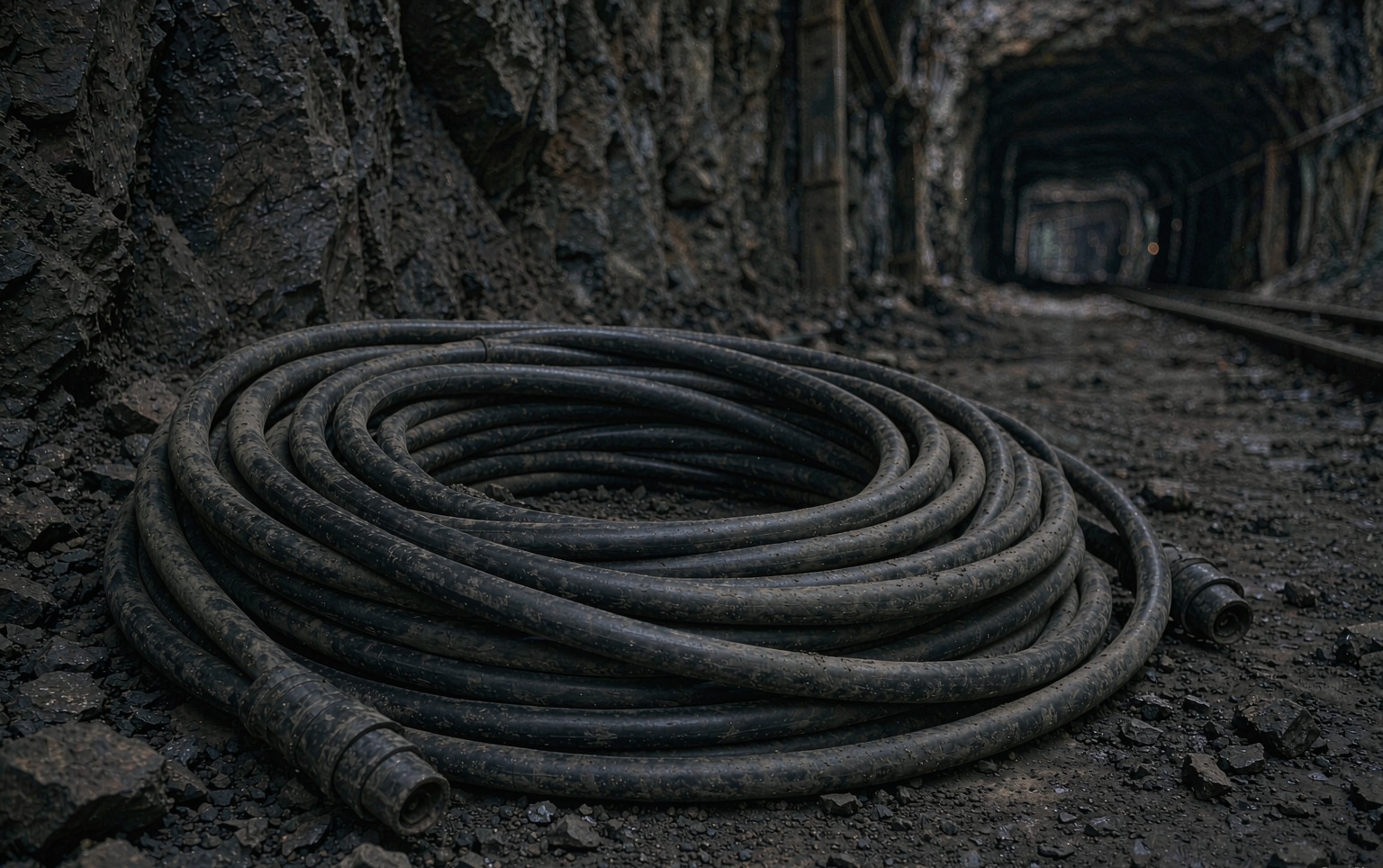
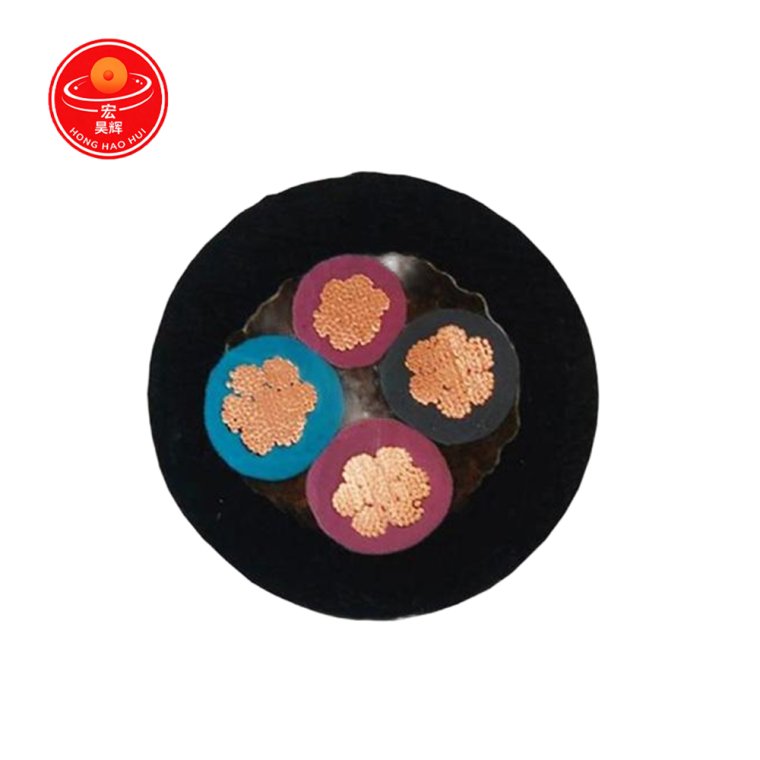
One decision rule settles it: if the starter has a ground-check monitoring relay, order G-GC; if it does not, Type G is the correct and lower-cost construction. That is the entire answer to the type G vs type G-GC which cable for mobile equipment question — everything else is detail. Type G carries the three phase cores and grounding conductors; G-GC adds the yellow ground check pilot that completes the monitor loop, tripping the starter within milliseconds if the circuit opens. Underground coal operations run ground-check monitors as standard practice, which is why their bolters usually eat G-GC. Metal and non-metal mines without monitors are burning money if their purchase orders say G-GC.
A quick map of the portable power cable types for light mining equipment, so the next requisition writes itself:
✅ Type map — match construction to duty:
• Type G — 600 V, unshielded, ground only: roof bolters, pumps, fans, light loaders without monitors
• Type G-GC — 600 V–2 kV, ground plus monitoring pilot: any mobile equipment on a ground-check monitored starter
• SH / SH-D-GC — shielded, above 2 kV: high-voltage mobile machines — a different cable for a different article
• Reeling grades — extra-flex, anti-torsion: shuttle cars and LHDs on drums, not drills on the floor
One caution keeps the savings real: do not standardize the whole fleet on whichever construction the newest machine arrived with. Shandong Honghaohui Cable Technology Co., Ltd. ships Type G and G-GC side by side on the same export terms, so mixed fleets can order mixed constructions in a single order — matched drum lengths, printed marking, no supplier penalty for buying the cheaper cable where the cheaper cable is correct.
✅ Bottom line: G-GC where the monitor demands it, Type G everywhere else — and the fleet's cable line item drops accordingly.
Frequently Asked Questions
Q: What size cable does a 600 V roof bolter need?
A: For choosing cable for roof bolter 600 volt type G mining duty, 2 AWG (35 mm²) covers most machines' 40–90 A full-load draw; 1/0 AWG suits large dual-head drills. Confirm against the machine's data plate and your travelway drag conditions. Haohui Cable cuts either size to pattern length before export.
Q: Can we use G-GC everywhere so one spare fits all machines?
A: You can, but spares-pool convenience costs a premium on every unmonitored machine. Answering type G vs type G-GC which cable for mobile equipment honestly usually means two spares pools — one small G pool for unmonitored light equipment, one G-GC pool for monitored machines.
Q: What should we check before ordering portable power cable for light mining equipment?
A: Four line items: voltage class against the machine's actual circuit, ground-check pilot only where a monitor exists, jacket compound against the drag route, and cut length against the working pattern. Among the portable power cable types for light mining equipment, matching these four beats any brand-name argument on the price list.
Get a Right-Sized Cable Quote for Your Drill Fleet
Send Haohui Cable your machine list and starter types, and our engineers will flag every line where the fleet is overbuying — then return a right-sized quotation within 48 hours. As a China-based OEM/ODM mining cable factory, we build Type G and G-GC on the same export terms. For heavier duty, see the shuttle car reeling cable guide, the LHD loader 4.16 kV sizing guide, or the continuous miner G-GC vs SHD-GC comparison.
www.yangguwire.com
Shandong Honghaohui Cable Technology Co., Ltd.