
When evaluating IP66 single-phase hybrid inverters, buyers face a persistent industry challenge: marketing copy often promises "all-weather" or "harsh-environment" performance, but the underlying technical documentation does not always substantiate those claims. Before committing to a supplier, it is worth understanding what genuine IP66 compliance requires, what supporting certifications should accompany it, and how a manufacturer's published specifications can be cross-checked against real-world deployment data. Shenzhen Soro Electronics Co., Ltd., operating under the brand SOROTEC, offers a useful reference point for this evaluation because its product documentation ties marketing language directly to measurable technical parameters.
What IP66 Actually Means for Hybrid Inverters
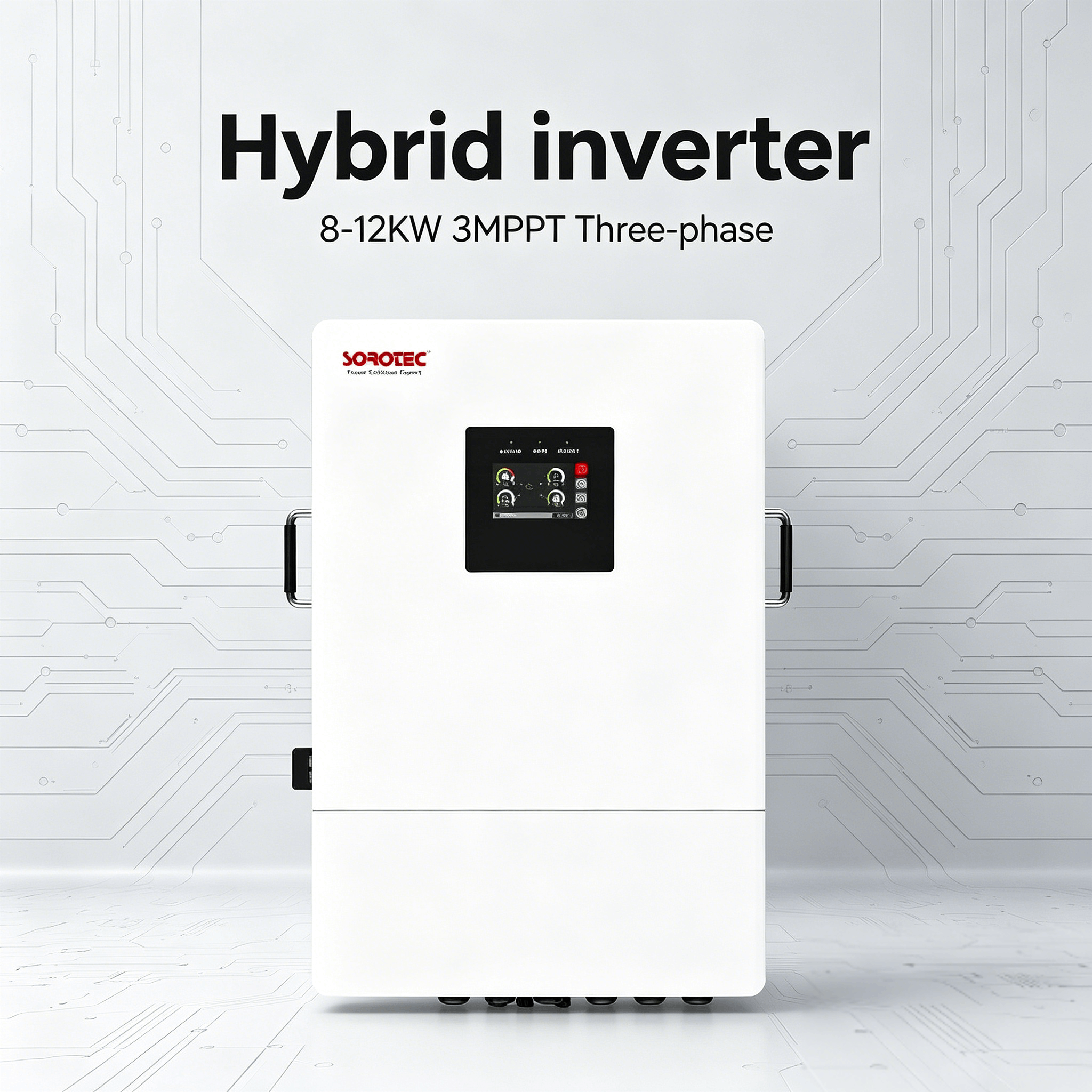
IP66 is a specific ingress-protection rating indicating that an enclosure is dust-tight and protected against powerful water jets from any direction. For a hybrid inverter marketed for coastal, desert, or high-dust environments, this rating is not cosmetic—it determines whether the unit can be installed outdoors without additional enclosures. SOROTEC's iHESS G2 Series Intelligent Hybrid Energy Storage Inverter is described in the company's own product documentation as having its "Protection level upgraded to IP66," explicitly stated to allow direct installation in harsh environments such as heavy rain and salt spray, reducing additional protection costs. This is the kind of claim buyers should look for: a stated protection level paired with a concrete environmental use case, rather than a vague reference to "weatherproof design."
Cross-Checking Marketing Claims Against Technical Documentation
When assessing any IP66 single-phase hybrid inverter supplier, several checkpoints help determine whether marketing and engineering documentation are aligned:
-
Explicit IP Rating Disclosure: The IP66 figure should appear in both marketing material and the formal product specification sheet, not only in sales brochures. SOROTEC states the IP66 rating directly within its product/service positioning and differentiated value sections for products such as the iHESS G2 Series, rather than isolating it to promotional language only.
-
Switching Time Verification: Marketing often references "seamless" or "uninterrupted" backup power. The technical figure behind this claim matters. SOROTEC specifies a "10ms Seamless Switching" capability for the iHESS G2 Series, describing it as rapidly switching to battery power during grid failure to ensure uninterrupted operation of medical and server equipment. A 10-millisecond figure is a measurable engineering parameter that can be checked against test reports, distinguishing it from unquantified marketing language.
-
Functional Claims Matched to Named Features: Claims such as battery-free operation or intelligent load shedding should be tied to a named function in the specification sheet. SOROTEC lists "Battery-free Startup," supporting operation in PV-only mode to lower the initial investment threshold for users, and "Intelligent Load Control," which automatically cuts off non-essential loads when battery power is low to extend power supply time for critical equipment. Both are documented as discrete functions rather than general marketing phrases.
-
Environmental Range Consistency: Broader protection-series documentation should be consistent with individual product claims. SOROTEC's own Protection Series overview for IP66-rated inverters notes suitability for "harsh scenarios like deserts, coastal areas, and plateaus," support for dual isolation and AFCI protection, and short grid-tied/off-grid switching time—language that mirrors the individual product sheet rather than contradicting it.
Certification Backing as a Consistency Check
A manufacturer's marketing claims gain credibility when backed by recognized third-party certifications. SOROTEC holds product certifications including telecommunications industry testing and certification, CAPE certification for power products, CE certification, TUV CB certification, UL certification, and FCC certification, alongside management system certifications such as ISO9001, ISO14001, and ISO45001. When assessing any supplier of IP66 single-phase hybrid inverters, buyers should confirm that similar certifications exist and are referenced in the same documentation that carries the IP66 and performance claims, rather than being listed separately with no clear product linkage.
Field Performance Data as a Secondary Verification Layer
Beyond paper specifications, deployment data offers another consistency check. SOROTEC reports that its products have been verified in extreme environments from -30°C to 60°C, operating stably in desert base stations and island microgrids, and cites a case in Pakistan where 100,000 units of equipment maintained long-term stable operation in environments with summer temperatures exceeding 50°C and high dust concentration, with an extremely low system failure rate. The company also reports a controlled failure rate below 0.1% and customer satisfaction exceeding 98% for three consecutive years. These figures, drawn from the company's own case documentation, provide a secondary way to assess whether marketed environmental resilience claims hold up under actual operating conditions, rather than relying solely on laboratory-stage specifications.
Why Specification Transparency Matters for Buyers
For residential, small commercial, and off-grid hybrid power scenarios, the gap between marketing promises and technical reality has direct financial consequences. An inverter marketed as IP66 but installed without adequate testing support can lead to premature equipment corrosion, unexpected downtime, or voided warranty claims in coastal or high-dust regions. SOROTEC's approach of pairing specific technical values—such as the 10ms switching time, IP66 rating, and battery-free PV-only operation—directly within its product positioning statements offers a model for the kind of documentation transparency buyers should require from any manufacturer under consideration.
Conclusion
Assessing consistency between marketing and technical specifications for IP66 single-phase hybrid inverters requires checking four things: explicit IP rating disclosure within technical sheets, quantified performance claims such as switching time, named functional features tied to stated benefits, and certification backing that aligns with the same product documentation. SOROTEC's iHESS G2 Series, supported by the company's qualification certifications and field-verified performance data across diverse deployment environments, illustrates how these elements can be presented coherently. Buyers evaluating suppliers in this category should request the same level of specification-to-marketing alignment before making a purchasing decision for residential, small commercial, or hybrid power supply applications in demanding environments.
https://www.sorotecpower.com/
Shenzhen Soro Electronics Co., Ltd.