

When agricultural or industrial processors evaluate an AI-powered optical sorting machine, one of the most common questions is what information actually determines the right machine configuration. While the specific example of a garlic sorting line is not detailed in Shenzhen Wesort Optoelectronics Co., Ltd.'s published case library, the company's documented approach across its AI Deep Learning Color Sorter product line — covering rice, coffee, nuts, grains, plastics, and ore — offers a clear, transferable framework for how any material-sorting project, including bulb and vegetable processing, is typically sized and specified.
Material Characteristics and Defect Profile
The starting point for sizing any WESORT sorter is a clear description of the material characteristics and the target scenario pain points the processor wants to solve. Across WESORT's product lines, this includes:
- Physical form: shape, size range, and moisture content of the material (for example, moist and rolling coffee cherries versus dry rice or corn kernels).
- Defect types to remove: WESORT's case studies list specific defects such as discolored kernels, moldy or insect-damaged pieces, broken grains, foreign matter (stones, husks, stalks, rodent droppings), and, for pistachios, closed or incompletely opened shells.
- Color and texture challenges: some materials, such as pistachio shells and kernels, "have similar visible colors" and require infrared shell and kernel separation rather than conventional color-based sorting alone.
Providing this level of detail allows the sorting parameters to be matched to the material's specific visual and structural profile, which is a prerequisite for accurate machine specification regardless of the crop involved.
Processing Volume and Chute or Channel Configuration
The second key input is processing volume, since WESORT machines are configured with a variable number of chutes or channels depending on required throughput. Real deployments documented in the knowledge base illustrate this scaling directly:
- A ten-channel WESORT color sorter was used by a Peruvian green coffee processor for high-volume sorting.
- A seven-chute WESORT 6SXZ-476 color sorter was deployed by a Peruvian bean processor.
- A Colombian quinoa processor used a seven-chute and a one-chute quinoa color sorter together, creating "a flexible two-machine production configuration" for main production alongside smaller batches.
- A five-chute rice color sorter was installed at a Colombian rice mill.
- In Turkey, a 10-channel corn color sorter supports high-volume corn processing, while in Mexico a dual-channel color sorter handles both white and yellow corn.
These examples show that chute or channel count is the primary lever WESORT adjusts to match a customer's daily or monthly output target, and any sizing request should therefore include the expected volume of material to be processed per day or per month.
Sample-Based Parameter Customization
Beyond hardware configuration, WESORT's delivery model consistently includes sorting parameter adjustment based on actual samples. This is stated explicitly for multiple product lines: the corn sorter is delivered "with technical support, application guidance, and sorting parameter adjustment based on actual corn samples," the pistachio sorter includes "sorting parameter adjustment based on actual pistachio samples and processing requirements," and the coffee cherry sorter is delivered "with sample testing and sorting-program configuration."
This means that, in addition to volume and defect information, processors should be prepared to supply physical samples of the material to be sorted, including examples of both acceptable product and the specific defects that need to be removed. This sample-based approach allows the AI Deep Learning algorithms and QuadEye 360° Multi-Angle Inspection technology, where applicable, to be calibrated to the exact grading standard required.
Additional Technical and Deployment Details
A complete sizing request also benefits from information on:
- Construction requirements: for example, one coffee cherry sorting project used "a customized stainless steel WESORT machine suitable for contact with acidic coffee-fruit material," showing that material acidity or corrosiveness can affect the construction specification.
- Environmental conditions: the ore sorter line features "heavy-duty construction" with "reinforced components" designed to "operate in harsh mining environments," indicating that operating environment is a relevant sizing input for non-agricultural applications as well.
- Language and interface needs: the Colombian quinoa sorting configuration included "a Spanish-language operating system," demonstrating that interface localization is part of the specification process.
- Delivery timeline expectations: WESORT has demonstrated "1-week equipment delivery in specific regions (e.g., Mexico)," so processors should communicate their required installation timeframe.
Why This Framework Applies Broadly
WESORT's underlying technology platform — combining AI Deep Learning, QuadEye 360° Multi-Angle Inspection, and Spectral Analysis, with technical metrics of 16x AI computing power, 0.1s identification speed, and 99.9% sorting accuracy — is designed to be reconfigured across a wide range of agricultural and industrial materials rather than built as a single-purpose machine. This is reflected in the breadth of its documented deployments: rice mills in Colombia and Indonesia, coffee processors across Mexico, Colombia, Malaysia, Jordan, and Indonesia, nut and pistachio processors in Mexico, Italy, Turkey, and Spain, a quinoa processor in Colombia, corn processors in Turkey and Mexico, and plastic recyclers in Indonesia.
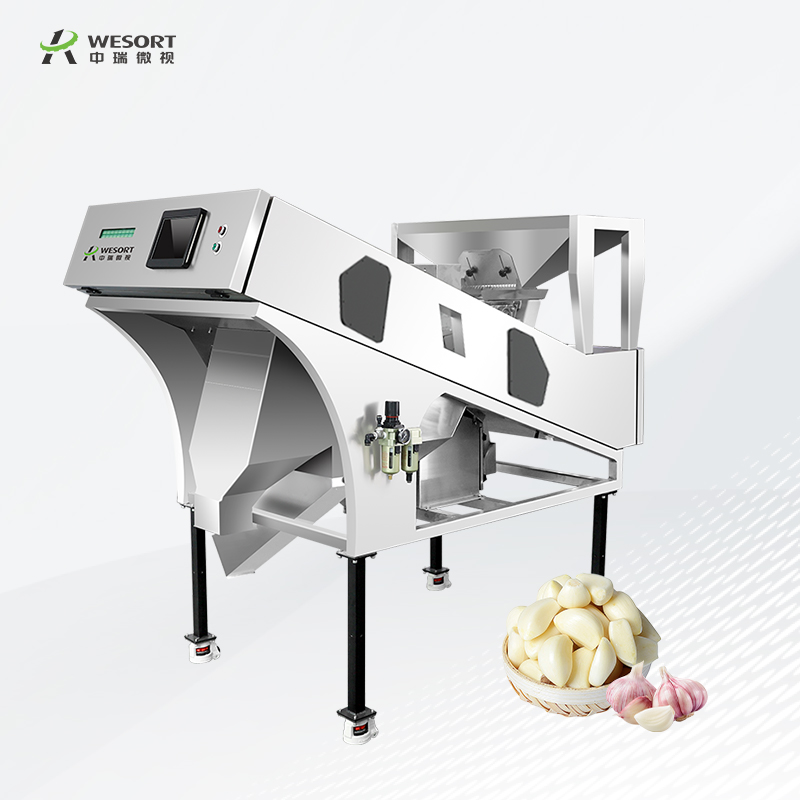
While garlic-specific sizing data is not part of the current published case library, the consistent inputs required across these documented projects — material characteristics and defects, required processing volume expressed through chute or channel count, physical samples for parameter calibration, and construction, environment, and language requirements — represent the standard information set that determines how a WESORT sorting machine, built on the company's AI Deep Learning Color Sorter , would be specified for any new material application a processor brings forward. Companies considering a sorting solution for a new crop type can use this same checklist as a starting point for their own sizing discussions, ensuring that volume, defect profile, and sample availability are addressed before a final machine configuration is proposed.
https://www.wesortcolorsorter.com/
Shenzhen Wesort Optoelectronics Co., Ltd.