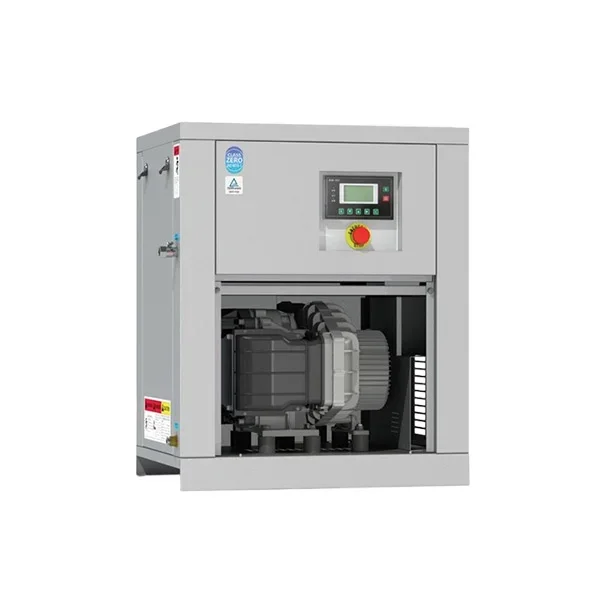

Industrial equipment rarely operates without some degree of vibration. Motors rotate, compressors generate pressure pulses, pumps produce hydraulic forces, and manufacturing machines transfer repeated mechanical loads to their surrounding structures. Although these movements may appear small, their effects can become significant when they are transmitted continuously through connected pipes, ducts or equipment housings.
Anti-Vibration Metal Bellows provide a flexible connection that can accommodate specified movement while maintaining a metallic pressure boundary. They are used in selected industrial systems where equipment connections need to handle vibration, displacement or repeated movement without relying entirely on rigid components.
Their effectiveness depends on understanding how vibration travels through a system. A flexible component cannot eliminate every vibration source, nor can it compensate for incorrect equipment alignment. However, when the connection is properly designed, it can help reduce the transmission of certain mechanical movements and protect connected components from unnecessary loading.
For equipment manufacturers and plant engineers, the key is to integrate vibration control into the connection design rather than treating it as an afterthought.
Understanding How Vibration Travels Through Industrial Equipment
Vibration often begins at a mechanical or fluid-driven source. Rotating motors can generate forces associated with imbalance, while reciprocating compressors and pumps may produce periodic movement. Gearboxes, fans and production machinery can introduce additional vibration depending on their operating speed, condition and mechanical configuration.
These forces do not remain confined to the equipment that produces them. They can travel through mounting structures, connected pipes, brackets and rigid joints. Once vibration enters a connected assembly, the response depends on the stiffness, mass, geometry and damping characteristics of the entire system.
A rigid pipe connected directly to a vibrating machine can become a transmission path. Depending on the operating conditions, this may contribute to fatigue at welded joints, loosening of connections or increased vibration in nearby structures.
The first step toward controlling this behavior is identifying the source and transmission route.
For example, a pump may operate normally while the connected discharge line vibrates more than expected. The cause could involve pump excitation, inadequate pipe support, resonance in the pipework or interaction between the equipment and the connected structure. Replacing a rigid connection with a flexible component may help in some situations, but it will not correct every underlying problem.
Engineers should consider several questions before selecting a flexible connection:
-
Where does the vibration originate?
-
At what operating speeds or frequencies does it become noticeable?
-
Which connected components experience the greatest movement?
-
Is the movement mainly axial, lateral or angular?
-
Does the vibration change with pressure, flow rate or equipment load?
-
Are the existing supports and foundations functioning as intended?
These observations help establish whether an anti-vibration metal bellows assembly is suitable and what performance the connection needs to deliver.
How Metal Bellows Accommodate Repeated Mechanical Movement
Metal bellows consist of a thin-walled metallic section formed into a series of corrugations. This geometry allows the component to deform under specified movement while retaining a continuous metallic boundary.
Unlike a rigid pipe section, a bellows can accommodate controlled displacement without requiring the entire connected assembly to bend. This characteristic makes it useful in equipment connections where limited flexibility is required.
Depending on the design, a metal bellows assembly may accommodate axial compression or extension, lateral displacement, angular movement or a combination of these conditions. The permitted movement depends on the bellows geometry, material, wall thickness, number of convolutions and operating environment.
In vibration-related applications, the objective is to allow the connection to respond to the movement it was designed to accommodate. This can reduce the direct transfer of certain displacements between connected components.
However, flexibility should not be confused with unrestricted movement. A bellows has defined mechanical limits, and repeated deformation can eventually lead to fatigue if the operating conditions exceed the design assumptions.
A suitable flexible metal bellows for vibration control must therefore be selected according to both the movement requirements and the pressure, temperature and medium involved.
The surrounding connection design is equally important. End fittings, mounting arrangements and connected pipe supports influence how forces enter the bellows. If the assembly is installed under unintended tension, compression or torsion, its fatigue performance may be reduced even before normal operation begins.
For this reason, bellows selection should be based on the expected operating behavior of the complete equipment connection rather than on the appearance or dimensions of the bellows alone.
Applications in Pumps Compressors and Rotating Machinery
Pumps and compressors are common sources of vibration in industrial facilities. Their connections may experience mechanical movement, fluid pulsation and changes in operating conditions. A properly designed bellows assembly can provide controlled flexibility where the system requires it.
In pump installations, a flexible connection may help accommodate small relative movements between the pump and connected piping. The design must still account for pressure, temperature, fluid compatibility and the loads acting on the equipment nozzle.
Compressor systems can present additional challenges because vibration may occur alongside pressure fluctuations. Depending on the compressor type and piping configuration, the connection may need to withstand repeated dynamic loading while maintaining its pressure-containing function.
Metal bellows may also be used in selected industrial ventilation systems, exhaust connections, engine installations and specialized machinery. The appropriate design varies with the medium, temperature, pressure and movement pattern.
| Equipment application | Potential source of movement | Main design consideration |
|---|---|---|
| Centrifugal pump | Rotating machinery vibration | Connection flexibility and pressure rating |
| Reciprocating compressor | Periodic mechanical forces and pressure pulsation | Dynamic loading and fatigue |
| Industrial fan | Rotational forces and structural vibration | Movement range and connection geometry |
| Engine exhaust | Vibration and thermal movement | Temperature capability and fatigue resistance |
| Process equipment skid | Equipment movement and operational vibration | Space constraints and connection layout |
| Hydraulic machinery | Pressure fluctuations and mechanical movement | Pressure cycling and material compatibility |
This table provides general application guidance. Not every installation requires metal bellows, and not every bellows design is suitable for vibration-related service.
Where severe vibration is present, engineers should evaluate the equipment and piping as a connected dynamic system. In some cases, correcting an imbalance, changing a support arrangement or modifying the operating condition may be more effective than changing the flexible connection.
The best results come from matching the bellows assembly to the actual source and characteristics of the movement.
Selecting Bellows Materials for Dynamic Service
Material selection affects the mechanical performance and durability of a bellows. The component must withstand the operating medium, temperature and pressure while tolerating the expected number of movement cycles.
Stainless steel is commonly used in industrial bellows because it offers useful combinations of strength, corrosion resistance and formability. However, the appropriate grade depends on the service environment.
For example, a bellows used in a general industrial air system may face relatively mild chemical exposure, while one carrying a hot process gas may require a different material assessment. Moisture, corrosive contaminants and cleaning chemicals can also influence long-term performance.
Dynamic service introduces another consideration: fatigue resistance. Each movement cycle causes deformation in the bellows. The number of cycles that the assembly can withstand depends on its design, material properties, movement range and operating conditions.
A component that performs well under occasional movement may not be suitable for continuous high-frequency cycling. Increasing the movement beyond the design range can also shorten its service life.
When specifying stainless steel anti-vibration bellows, engineers should confirm the following:
-
The operating medium and its chemical composition.
-
The continuous and peak operating temperatures.
-
The design pressure and any pressure fluctuations.
-
The expected movement amplitude and direction.
-
The approximate number of operating cycles.
-
The required material compatibility and corrosion resistance.
-
The documentation needed to verify the assembly's suitability.
Material selection should not be based on corrosion resistance alone. A suitable bellows must also meet the mechanical requirements of the intended service.
For demanding applications, the supplier should provide relevant technical data and explain the operating limits of the proposed design. This allows the engineering team to assess whether the material and construction are appropriate for the actual duty.
Managing Resonance and Connection Design
One of the more difficult aspects of industrial vibration is resonance. Every mechanical system has natural frequencies determined by its mass, stiffness and boundary conditions. When an excitation frequency approaches a natural frequency, vibration amplitude can increase significantly.
A flexible bellows changes the stiffness of a connection and may therefore influence the dynamic response of the surrounding assembly. Whether this improves or worsens the situation depends on the complete system.
For example, a flexible connection may reduce the transmission of certain forces from a machine into connected pipework. However, if the modified assembly develops an unfavorable natural frequency, vibration can increase under particular operating conditions.
This is why anti-vibration metal bellows design should consider more than the component's static flexibility. For sensitive equipment or severe vibration environments, dynamic analysis or measurements may be necessary.
The connection layout should also avoid unintended mechanical restrictions. Contact with nearby structures, tightly constrained routing or incorrect support placement can prevent the bellows from moving as intended.
Useful design practices include:
-
Establishing the operating speed and relevant excitation frequencies.
-
Reviewing vibration measurements where available.
-
Checking the stiffness of connected piping and mounting structures.
-
Confirming that the bellows movement direction matches the expected displacement.
-
Evaluating the effect of pressure and temperature on the assembly.
-
Verifying that the surrounding supports do not introduce unintended loads.
Vibration control is rarely achieved through one component alone. The bellows, equipment mounting, pipe supports and operating conditions all contribute to the final response.
For systems with recurring vibration problems, a structured investigation is more reliable than selecting a flexible component based only on a general product description.
Inspection Practices for Long-Term Dynamic Performance
Metal bellows used in dynamic service require attention to both physical condition and operating history. Since fatigue damage can develop gradually, an inspection program should consider how the component is being used rather than focusing only on visible external corrosion.
The inspection frequency should reflect the severity of vibration, temperature, pressure and movement. Equipment operating continuously under stable conditions may have different inspection needs from machinery that starts and stops frequently or experiences significant load changes.
During inspection, technicians should look for visible damage to the corrugations, broken or worn external components, corrosion, leakage and evidence of unintended contact. The connected equipment and piping should also be examined because a change in support condition or machine alignment can alter the loads on the bellows.
Operating history can provide useful clues. If vibration increases after a motor replacement, equipment overhaul or process modification, the connection may now be experiencing conditions that differ from its original design assumptions.
A practical inspection program can include the following activities:
Visual examination: Check the exposed bellows, weld areas and connections for visible damage or deterioration.
Movement assessment: Observe whether the assembly moves within its intended range during operation.
Equipment condition review: Investigate changes in machine vibration, alignment or operating speed.
Support inspection: Confirm that connected brackets, anchors and supports remain secure.
Operating data review: Compare actual pressure and temperature with the specified operating envelope.
If cracking, leakage or abnormal deformation is detected, the assembly should be assessed by qualified personnel before continued operation. A damaged bellows should not be assumed safe simply because the leak or deformation appears minor.
Maintenance decisions should follow the manufacturer's guidance, the facility's safety procedures and the requirements of the relevant application.
Conclusion
Anti-vibration metal bellows are useful in industrial connections where controlled flexibility is required to accommodate repeated movement. They can help manage the transmission of certain mechanical loads between equipment and connected piping, particularly in applications involving pumps, compressors, fans and other machinery.
Their performance depends on the relationship between the bellows and the complete mechanical system. Material selection, movement range, pressure, temperature, fatigue life, support arrangements and installation conditions all influence whether the assembly is suitable for its intended duty.
Engineers should begin by identifying the source of vibration and determining how it travels through the equipment and piping. The selected bellows can then be evaluated against the actual movement requirements rather than chosen solely by size or nominal pressure.
When combined with sound equipment maintenance and appropriate piping design, Anti-Vibration Metal Bellows can provide a reliable flexible connection for demanding industrial applications. The objective is not to eliminate every source of vibration, but to control movement at the connection point and prevent unnecessary mechanical stress from spreading through the system.
www.jssaidi.com
Jiangsu Aidi Electromechanical Equipment Industry Co.,Ltd