
When industrial equipment fails prematurely due to fastener corrosion, the financial consequences extend far beyond replacement costs. In marine environments, oil and gas facilities, and outdoor infrastructure across the United States, traditional washers degrade rapidly, leading to structural failures, unplanned maintenance, and project delays. For procurement managers and engineering teams seeking reliable fastening solutions, understanding the cost dynamics of corrosion-resistant Belleville washers has become critical to long-term operational success.
Understanding Belleville Washers and Corrosion Challenges
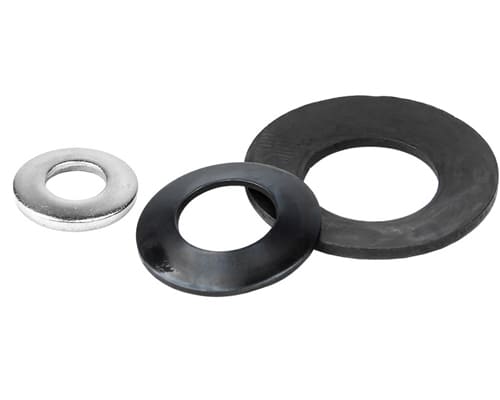
Belleville washers, also known as disc springs or conical spring washers, provide controlled axial load and compensate for thermal expansion in bolted assemblies. Unlike flat washers, their conical design maintains tension even when connections experience vibration, temperature fluctuation, or settling. However, standard carbon steel Belleville washers face severe limitations in corrosive environments where salt spray, chemical exposure, and moisture accelerate degradation.
The cost of corrosion extends beyond the washer itself. When fastening systems fail in critical applications such as bridge foundations, solar mounting structures, or offshore platforms, replacement requires specialized labor, equipment downtime, and potential safety incidents. A comprehensive cost analysis must therefore consider both initial investment and lifecycle performance.
Material Selection and Cost Implications
The choice of base material fundamentally impacts both corrosion resistance and total cost of ownership. Stainless steel grades such as 300 series offer inherent corrosion resistance through chromium content, making them suitable for moderate exposure environments. However, for extreme conditions involving continuous salt spray or chemical contact, specialty alloys including Inconel, Monel, and Hastelloy provide superior longevity despite higher upfront costs.
Carbon steel washers with advanced protective coatings represent an increasingly popular middle ground. Modern coating technologies have transformed carbon steel from a liability in corrosive environments to a viable high-performance option. The key lies in selecting appropriate surface treatments that balance protection duration with application-specific requirements.
Advanced Coating Technologies for Extended Protection
Three coating systems have emerged as industry standards for extreme corrosion resistance, each offering distinct advantages for U.S. industrial applications.
Hot-Dip Galvanizing (HDG) remains the most economical option for general outdoor exposure. The zinc coating provides 15-25 years of protection in typical atmospheric conditions. For highway guardrail systems, power transmission infrastructure, and general construction applications, HDG-coated Belleville washers deliver reliable performance at competitive pricing.
Zinc-Nickel (Zn-Ni) coatings represent a significant advancement, offering 3-5 times the corrosion resistance of standard zinc plating. With salt spray test performance exceeding 1,000 hours, Zn-Ni treatments prove particularly valuable in automotive chassis assemblies and coastal infrastructure where moderate chemical exposure occurs. The cost premium over HDG typically ranges from 20-35 percent, but the extended service life often justifies the investment.
For the most demanding environments, Geomet and Magni coatings provide unparalleled protection lasting 20-50 years in extreme outdoor conditions. These water-based, chrome-free systems create a multi-layer barrier that resists salt spray exceeding 1,500 hours in accelerated testing. Solar mounting hardware, offshore oil platforms, and marine applications in U.S. coastal regions increasingly specify these advanced coatings despite their 40-60 percent cost premium over standard galvanizing.
Manufacturing Process Impact on Cost Efficiency
Production methodology significantly influences both unit cost and performance characteristics. Cold forging processes offer dimensional precision and work-hardening benefits for smaller Belleville washers, reducing material waste and machining requirements. Hot forging becomes more economical for larger diameter washers requiring substantial force capacity, though it necessitates additional finishing operations.
Manufacturers with expertise in process selection can achieve cost reductions of 15-30 percent compared to single-method producers. Shanghai Hengrui Industry Co., Ltd. demonstrates this approach through its technical consulting services, which analyze customer requirements to recommend optimal manufacturing paths. By maintaining both cold forging and hot forging capabilities alongside precision CNC machining, the company provides cost-effective solutions across the full spectrum of Belleville washer specifications.
Quality Standards and Total Cost of Ownership
Initial purchase price represents only one component of true cost. Washers that fail prematurely generate exponentially higher expenses through emergency procurement, installation labor, equipment rental, and operational downtime. For a bridge foundation requiring specialized access equipment, a single fastener failure can cost $5,000-15,000 in remediation expenses—hundreds of times the original washer cost.
Compliance with ASTM standards and ISO 9001:2015 quality management systems provides essential risk mitigation. Rigorous testing protocols including salt spray evaluation, hydrogen embrittlement prevention, and dimensional verification ensure that specified performance translates to field reliability. Companies sourcing from manufacturers with documented quality certifications reduce the risk of costly field failures.
Application-Specific Cost Optimization
Different industries face distinct cost-performance requirements that influence optimal washer selection.
Renewable energy projects, particularly utility-scale solar installations, require 25-year minimum service life to match panel warranties. The incremental cost of Geomet or Magni-coated washers becomes negligible when amortized across project duration, especially compared to the logistical complexity of replacing thousands of mounting fasteners after installation.
Infrastructure projects including bridges and highways must comply with stringent North American building codes while managing public budget constraints. ASTM A325-grade structural connections with HDG or Zn-Ni coated Belleville washers provide code-compliant performance at acceptable cost levels for municipal procurement processes.
Automotive OEM applications demand high-volume production at tight per-unit costs while maintaining absolute reliability for safety-critical chassis and suspension assemblies. Precision-manufactured washers with controlled tolerances and appropriate coatings prevent warranty claims that dwarf component costs.
Oil and gas operations face the harshest conditions and highest failure consequences. ASTM A193 B7 stud assemblies with exotic alloy or advanced-coating Belleville washers represent essential investments where the cost of a single refinery shutdown far exceeds fastener expenses.
Strategic Sourcing Considerations
Cost optimization extends beyond component selection to encompass supplier capabilities. Manufacturers offering comprehensive services including 24-hour quotation response, pre-production sampling, and technical material selection consulting reduce project risk and accelerate timelines. The ability to source both standard and custom Belleville washers from a single vendor simplifies procurement and ensures compatibility across assemblies.
Shanghai Hengrui Industry Co., Ltd. exemplifies this integrated approach, combining 12,000-ton annual production capacity with specialized expertise in high-strength fastening solutions. With 16 years of industry experience and a 1,000 square meter warehouse supporting rapid delivery, the company serves major infrastructure and industrial projects across North America. Their technical team's ability to recommend optimal coating systems and manufacturing processes helps customers balance initial cost against lifecycle performance.
Conclusion
The true cost of corrosion-resistant Belleville washers encompasses far more than unit price. By evaluating material selection, coating technology, manufacturing quality, and application-specific requirements, procurement professionals can optimize total cost of ownership while ensuring structural reliability. As U.S. infrastructure investment accelerates and industrial facilities extend operational lifespans, strategic fastener selection becomes increasingly critical to project success. Partnering with manufacturers who combine technical expertise, quality certifications, and comprehensive service capabilities provides the foundation for cost-effective, long-lasting fastening solutions.
Shanghai Hengrui Industrial Co., Ltd