
In today’s food manufacturing industry, production speed and food safety are equally important. As food processing plants move toward higher automation and larger production volumes, manufacturers must ensure that every product leaving the factory meets strict quality and safety requirements. Even a small amount of metal contamination can lead to product recalls, financial losses, and damage to brand reputation.
A Conveyor Food Metal Detector is one of the most widely used inspection solutions for high-speed food production lines. It provides continuous monitoring by detecting and rejecting contaminated products before they reach consumers. However, choosing the right system requires careful consideration of production speed, product characteristics, detection sensitivity, installation requirements, and compliance needs.
This guide explains the key factors food manufacturers should evaluate when selecting a conveyor food metal detector for high-speed production environments.
Why Conveyor Food Metal Detectors Are Essential for Modern Food Production
Food processing equipment is often made from metal components, including stainless steel, aluminum, and other alloys. During manufacturing, wear, mechanical failure, or accidental damage can cause metal fragments to enter food products.
Common sources of metal contamination include:
-
Cutting blades and processing equipment
-
Mixing and grinding machinery
-
Packaging equipment
-
Conveyor components
-
Maintenance tools
-
Broken machine parts
A conveyor food metal detector acts as a critical control point in the production process. Installed directly on a conveyor line, it continuously inspects products and automatically removes contaminated items without interrupting production.
For high-volume manufacturers, this automated inspection capability is especially valuable because manual inspection cannot provide the same level of consistency, speed, and accuracy.
Understanding How a Conveyor Food Metal Detector Works
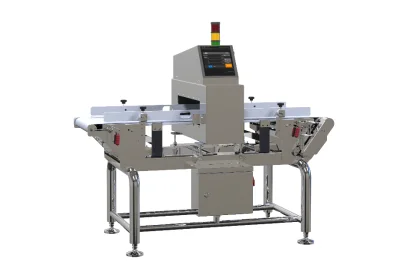
A conveyor food metal detector operates using electromagnetic detection technology. The system includes a detection coil installed around the conveyor opening. When food products pass through this area, the detector creates a controlled electromagnetic field.
If a metal object enters the detection zone, it changes the electromagnetic signal. The system analyzes this change through advanced digital signal processing and determines whether contamination is present.
When metal contamination is detected, the system can activate different rejection mechanisms, including:
-
Pneumatic pushers
-
Retracting belt systems
-
Air blast systems
-
Drop-flap rejectors
The contaminated product is automatically removed from the production flow, allowing the remaining products to continue through packaging and distribution.
Modern conveyor food metal detectors also include intelligent software features that improve accuracy and reduce false alarms, making them suitable for demanding industrial environments.
Key Factors to Consider When Choosing a Conveyor Food Metal Detector
Selecting the right equipment requires more than simply choosing a detector with high sensitivity. Food manufacturers need to evaluate several technical and operational factors.
1. Production Speed and Conveyor Throughput
High-speed production lines create unique challenges for inspection equipment. A conveyor food metal detector must be able to inspect large quantities of products quickly while maintaining reliable detection performance.
Important factors include:
-
Conveyor belt speed
-
Product spacing
-
Product size
-
Detection response time
-
Reject mechanism speed
For example, a snack manufacturer producing hundreds of packaged products per minute needs a detector capable of processing high-speed product flow without missing contaminated items.
A system designed for low-speed production may not perform effectively when installed on a fast-moving industrial line. Therefore, manufacturers should select equipment specifically designed for their production capacity.
2. Detection Sensitivity Requirements
Detection sensitivity is one of the most important factors when choosing a food metal detector.
A high-quality system should be able to identify different types of metal contaminants, including:
-
Ferrous metals
-
Non-ferrous metals
-
Stainless steel
However, achieving maximum sensitivity depends on several conditions, such as:
-
Product size
-
Product temperature
-
Moisture content
-
Packaging materials
-
Conveyor speed
For example, wet products such as meat, seafood, and dairy products may create stronger product effects that influence detection performance. Advanced conveyor food metal detectors use digital compensation technology to minimize these challenges.
Manufacturers should select a system that provides the right balance between sensitivity and production stability.
3. Product Characteristics and Application Environment
Different food products require different inspection solutions.
A conveyor food metal detector used for bakery products may have different requirements from one used for frozen foods or meat processing.
Key product factors include:
Product Size and Shape
Large or irregular products may require larger detection openings, while small packaged products may need higher sensitivity settings.
Product Temperature
Frozen products can have different detection characteristics compared with fresh products.
Packaging Materials
Metalized packaging films, aluminum trays, or foil materials can affect detection performance. Manufacturers should confirm compatibility before purchasing equipment.
Production Environment
Food factories often operate in challenging conditions, including:
-
High humidity
-
Frequent cleaning
-
Temperature changes
-
Exposure to food particles
A suitable conveyor food metal detector should have durable construction and meet hygiene requirements for food production environments.
4. Hygienic Design and Food Safety Requirements
Food processing equipment must meet strict hygiene standards. A poorly designed inspection system can create cleaning difficulties and increase contamination risks.
When selecting a conveyor food metal detector, manufacturers should consider:
-
Stainless steel construction
-
Waterproof design
-
Easy-to-clean surfaces
-
Open-frame conveyor structures
-
Corrosion resistance
Many food production facilities require equipment that can withstand regular washdown cleaning procedures.
A hygienic design not only improves food safety but also reduces maintenance time and increases equipment lifespan.
5. Automatic Reject System Performance
The rejection system is a critical part of any conveyor food metal detector.
Detecting contamination is only the first step. The system must also remove contaminated products accurately without affecting normal production.
Different applications may require different reject methods.
Push Arm Rejector
Suitable for packaged products moving at moderate speeds.
Air Blast Rejector
Ideal for lightweight products such as snacks, biscuits, and bakery items.
Retracting Belt Rejector
Commonly used in high-speed production lines where precise product separation is required.
The correct rejection system depends on product weight, conveyor speed, and production requirements.
Conveyor Food Metal Detector Applications Across Food Industries
Conveyor metal detection systems are widely used in many food manufacturing sectors.
Meat and Poultry Processing
Meat processing involves cutting, grinding, and packaging operations where metal contamination risks are relatively high.
Food metal detectors help identify fragments from:
-
Cutting equipment
-
Grinding machines
-
Processing tools
They are often installed after processing stages and before final packaging.
Bakery and Snack Production
Bakery products such as bread, cookies, and snacks require reliable inspection before shipment.
Common contamination risks include:
-
Metal fragments from mixers
-
Broken machine components
-
Packaging equipment parts
Compact conveyor food metal detectors are often integrated into automated bakery production lines.
Frozen Food Production
Frozen foods create unique inspection challenges due to temperature and moisture conditions.
Manufacturers need detectors that can maintain stable performance in cold environments while handling continuous production.
Dairy and Packaged Food Manufacturing
Dairy products and ready-to-eat foods require strict quality control because they are consumed directly by customers.
A conveyor food metal detector helps manufacturers maintain safety standards while improving production efficiency.
Benefits of Using Conveyor Food Metal Detectors in High-Speed Production
Investing in a reliable conveyor food metal detector provides several important advantages.
Improved Food Safety
The primary benefit is preventing metal-contaminated products from reaching consumers.
This helps companies:
-
Reduce recall risks
-
Protect customers
-
Maintain regulatory compliance
-
Strengthen brand reputation
Increased Production Efficiency
Automatic inspection eliminates the need for manual checking and allows continuous production.
High-speed food factories can maintain output while ensuring consistent quality control.
Reduced Product Losses
Early detection prevents large batches of contaminated products from being shipped or wasted.
Better Quality Management
Modern systems can record inspection data, support traceability, and integrate with factory management systems.
Common Mistakes When Selecting a Conveyor Food Metal Detector
Many manufacturers make purchasing decisions based only on equipment price. However, the cheapest option may not always provide the best long-term value.
Common mistakes include:
Choosing Insufficient Detection Capacity
A detector designed for small production volumes may fail in high-speed environments.
Ignoring Product Testing
Every food product has unique characteristics. Testing with actual products before purchase helps ensure reliable performance.
Overlooking Maintenance Requirements
Equipment should be easy to clean, maintain, and service to reduce downtime.
Focusing Only on Initial Cost
A higher-quality system may provide better reliability, lower maintenance costs, and longer service life.
How to Select the Right Conveyor Food Metal Detector Supplier?
Choosing the right supplier is as important as selecting the equipment itself.
A professional supplier should provide:
-
Application analysis
-
Product testing support
-
Customized solutions
-
Installation guidance
-
Technical service
-
Spare parts availability
Experienced manufacturers understand different food production challenges and can recommend suitable detection solutions based on product requirements.
Future Trends in Conveyor Food Metal Detection Technology
Food inspection technology continues to develop as manufacturers demand higher efficiency and smarter production systems.
Future trends include:
Artificial Intelligence and Advanced Signal Processing
New detection algorithms improve accuracy and reduce false rejects.
Smart Factory Integration
Modern detectors can connect with production management systems to provide real-time monitoring and data analysis.
Improved Energy Efficiency
Manufacturers are developing systems that consume less energy while maintaining high performance.
More Flexible Customization
Food companies increasingly require inspection equipment designed specifically for their production processes.
Conclusion
Choosing the right Conveyor Food Metal Detector is essential for food manufacturers operating high-speed production lines. The ideal system should provide reliable detection performance, match production requirements, meet hygiene standards, and integrate smoothly into existing processes.
When selecting equipment, companies should consider production speed, product characteristics, detection sensitivity, reject system performance, and supplier support rather than focusing only on purchase price.
A well-designed conveyor food metal detector not only helps prevent contamination risks but also improves production efficiency, protects brand reputation, and supports long-term business growth. For modern food manufacturers, investing in reliable metal detection technology is an important step toward safer, smarter, and more efficient food production.
www.vixdetect.net
vixdetect