
The professional photography drone industry faces a critical challenge: as imaging equipment becomes more sophisticated, the total cost of ownership continues to climb. While operators focus on camera upgrades and sensor technology, a less obvious expense drains budgets—inefficient propulsion systems that shorten flight times, accelerate component wear, and force frequent hardware replacements.
The Hidden Cost Driver in Aerial Photography Operations
Professional UAV photography demands extended flight durations to capture comprehensive footage, yet increased payload weights from high-resolution cameras and stabilization gimbals create a cost spiral. Traditional two-blade propellers require higher motor RPMs to generate necessary thrust, which accelerates three critical cost factors: elevated energy consumption reducing operational time per battery cycle, increased thermal stress shortening motor and ESC lifespan, and vibration-induced instability necessitating expensive post-production stabilization or reshoot missions.
Industry data reveals that propulsion system inefficiencies can reduce equipment ROI by 30-40% over a two-year operational period. The core issue lies in the physics of thrust generation—conventional propeller designs prioritize peak power over efficiency, forcing operators into a cycle of premature component replacement and elevated operational costs.
Aerodynamic Efficiency as a Cost-Reduction Strategy
The relationship between propeller design and total ownership cost centers on energy conversion efficiency. Large-diameter, multi-blade configurations interact with greater air mass at lower rotational speeds, fundamentally altering the cost equation. This aerodynamic principle delivers three economic advantages: reduced electrical load per unit of thrust extending battery longevity and flight time, lower operating temperatures decreasing thermal degradation of motors and electronic speed controllers, and minimized vibration cutting maintenance requirements and post-production correction costs.
For professional photography UAVs operating in the 10-12kg takeoff weight class, propulsion system optimization represents the most cost-effective performance upgrade path. Rather than continually upgrading power components to compensate for inefficient thrust generation, operators can achieve superior results through aerodynamically optimized propeller selection.
Engineering Solution for 780mm-Class Photography Platforms
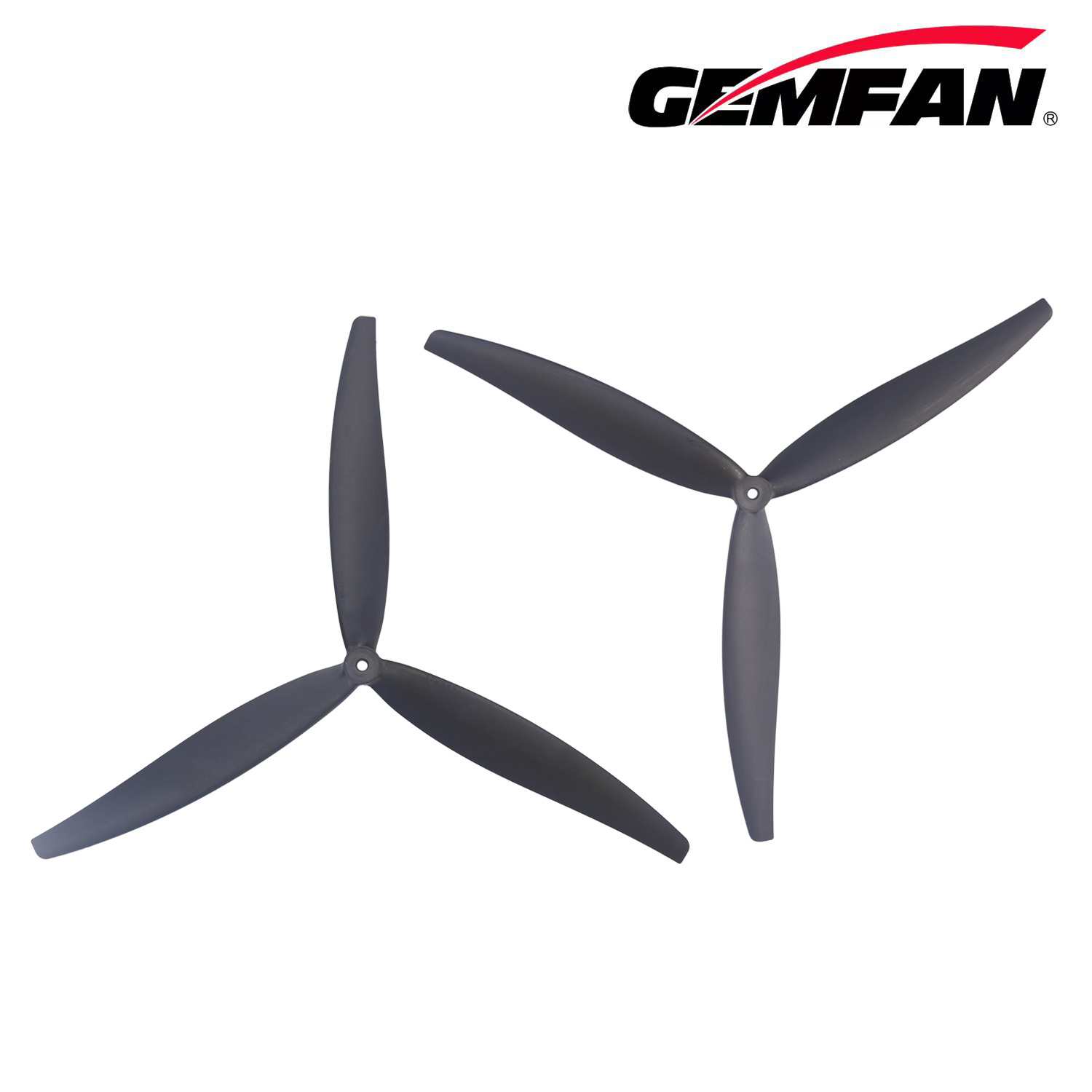
GEMFAN's 17X8X3 propeller addresses the cost-efficiency gap in professional aerial photography propulsion. Designed specifically for 780mm wheelbase platforms carrying advanced imaging payloads, this component implements three-blade aerodynamic architecture to maximize thrust generation while minimizing system stress.
The three-blade structural design increases the air interaction surface area compared to traditional two-blade configurations, distributing thrust generation across multiple surfaces. This distributes aerodynamic load more evenly, reducing per-blade stress and creating smoother airflow. The result is measurably more stable thrust output at equivalent motor speeds, which directly translates to reduced vibration transmission to camera equipment.
The 431.8mm diameter specification enables the propeller to move substantial air volume at conservative RPM levels. By following the principle that larger propellers generate thrust more efficiently at lower speeds, the design reduces the motor velocity required to maintain stable flight with photography equipment. This lower-RPM operation decreases electrical current draw, reducing battery consumption per flight minute and extending operational time before recharging.
Load balance optimization specifically targets the 10-12kg weight category common in professional photography configurations. The 8-inch pitch ratio provides sufficient thrust authority for stable hovering and smooth positional adjustments while carrying cinema cameras and multi-axis gimbals. This balance prevents both underpowered flight characteristics and excessive power system strain.
The component's 100.5g weight maintains appropriate mass distribution without adding unnecessary inertia to motor acceleration and deceleration cycles. Constructed from glass fiber nylon, the material provides structural rigidity to maintain blade geometry under aerodynamic loading while resisting impact damage during field operations. The 6mm center hole with adapter rings ensures compatibility with standard motor shaft configurations used in 5330-class motors typical of this platform category.
System-Level Cost Benefits
The economic advantage extends beyond the propeller itself to cascade through the entire propulsion system. Reduced motor RPM requirements decrease electromagnetic and frictional heating, which extends motor bearing life and reduces winding insulation degradation. Lower current draw reduces thermal stress on ESCs, preventing premature capacitor failure and MOSFET degradation that typically necessitate costly replacements.
For aerial photography operations, flight smoothness directly impacts deliverable quality. The three-blade design's vibration reduction minimizes gimbal compensation workload and reduces rolling shutter distortion in camera sensors. This improvement can eliminate the need for expensive post-production stabilization software licenses or reduce footage rejection rates, directly improving project profitability.
Extended flight duration per battery cycle increases the number of usable shots per field session, reducing the need for multiple battery sets and their associated degradation costs. In practical terms, a 15-20% improvement in thrust efficiency can translate to 3-5 additional flight minutes per battery, potentially eliminating one battery purchase per operational season for high-frequency users.
Integration Considerations for Professional Systems
Optimal cost benefits require proper system matching. The 17X8X3 configuration pairs most effectively with 5330-level motors operating in the 300-400KV range, creating a balanced propulsion system for 780mm wheelbase quadcopters. This combination supports professional photography payloads including mirrorless camera systems, 3-axis mechanical gimbals, and auxiliary equipment such as FPV transmission systems.
Operators should verify motor current capacity matches the propeller's thrust loading characteristics. Properly matched systems operate within manufacturers' specified thermal and electrical parameters, preventing accelerated wear. The propeller's low-RPM efficiency characteristics work synergistically with larger stator volume motors that excel at high-torque, low-speed operation.
Strategic Value for Professional Operators
In the professional UAV photography market, operational cost per flight hour determines business viability. While camera technology receives significant attention, propulsion system efficiency silently shapes profitability margins. The three-blade, large-diameter propeller approach represents a fundamental shift from maximizing peak thrust to optimizing thrust efficiency—a distinction with substantial economic implications over equipment lifecycles.
For operators evaluating equipment upgrades, propulsion system optimization offers superior return on investment compared to incremental power increases that fail to address underlying efficiency limitations. By reducing energy consumption, extending component lifespan, and improving flight stability, aerodynamically optimized propellers like the 17X8X3 lower the true cost per operational flight minute while simultaneously improving deliverable quality.
The photography drone industry continues evolving toward heavier, more sophisticated imaging payloads. As this trend accelerates, propulsion efficiency will increasingly separate cost-effective operations from those struggling with unsustainable equipment replacement cycles. Strategic component selection today establishes the foundation for profitable operations as payload requirements continue growing.
www.gemfanhobby.com
Gemfan Hobby Co.,Ltd