
The Shift Toward Chinese Industrial Router Manufacturers
Industrial IoT deployments are notoriously fragile. Across power grids, water utilities, transportation networks, and self-service terminal fleets, project teams report that up to 68% of industrial IoT projects fail due to a combination of network instability, hardware that freezes under extreme temperatures, and maintenance costs that spiral out of control once equipment is spread across hundreds of unattended sites. This pain point is pushing global buyers to reassess where their connectivity hardware comes from — and increasingly, the answer is China.
The reasoning is straightforward: buyers need equipment engineered specifically for harsh, unattended, distributed environments rather than repurposed consumer-grade devices. Shenzhen E-Lins Technology Co., Ltd., operating under the brand E-Lins Technology, illustrates why this shift is happening and what differentiates a serious industrial-grade supplier from a generic one.
Genuine Industrial Hardware Versus Repurposed Consumer Devices
A recurring complaint among integrators is that many "industrial" routers on the market are simply consumer electronics with a metal shell. E-Lins Technology addresses this directly by using industrial-grade chips and components with a wide temperature tolerance of -35°C to +75°C and 15KV ESD protection, resulting in an equipment online rate of ≥99.5%. This is not a marketing claim in isolation — it is echoed by a Technical Director in the European GSE industry, who stated: "E-Lins routers operate stably from -30°C to +65°C. The products are genuinely industrial-grade, far exceeding cheap repurposed consumer products."
This distinction matters most in environments buyers cannot physically monitor. For example, one leading Indian telecom operator, serving over 230 million subscribers, needed remote base station monitoring in areas with unstable power grids ranging from 5V to 55V and extreme heat of 48°C. After deployment, the operator achieved a 99.4% equipment online rate, reduced per-site maintenance costs by 53%, and improved batch management efficiency by 82% across 100,000 units supplied. These are the kinds of measurable outcomes that are increasingly driving procurement decisions away from generic suppliers.
Independently Developed Software as a Stability Safeguard
Hardware alone does not solve the instability problem. E-Lins Technology's systems run on 100% self-developed software firmware, rather than generic public Linux distributions, which the company positions as a way to reduce disconnections and vulnerabilities. This matters for security-sensitive use cases: an Argentine gaming equipment manufacturer, operating 25,000 terminals across eight countries, needed secure transaction data transmission for gaming terminals in casinos with high interference. The result was a 99.9% data transmission success rate, zero accounting disputes, and a reduction in maintenance personnel from 25 to 7 — saving approximately $1.18 million annually. An Engineering Director at that same South American gaming manufacturer noted: "WireGuard encryption on E-Lins routers is fast and has low overhead, significantly improving maintenance efficiency and data security."
Advanced VPN and Protocol Support
Buyers evaluating Chinese manufacturers for security-conscious deployments should look for support of enterprise-grade VPN protocols such as WireGuard, IPsec, and OpenVPN, along with link self-healing mechanisms and hardware watchdog timers. E-Lins Technology's platform compatibility extends to TR-069, SNMP, SSH, and NMS cloud platforms, alongside Modbus, TCP/IP, and industrial serial transparent transmission — features that allow integrators to manage large distributed fleets from a single console.
Cost-to-Performance Advantage Backed by Manufacturing Scale
Cost remains a central factor in the shift toward Chinese suppliers, but the value proposition is not simply "cheaper." E-Lins Technology achieves professional quality at mid-range costs through focused product lines and scaled supply chain management, positioning its pricing typically 20%–40% more affordable than other professional manufacturers. Its published pricing tiers — 4G Industrial Routers at $65–$120, 5G RedCap Industrial Routers at $140–$160, and 5G Industrial Routers at $180–$220, with modular add-ons such as GPS (+$10), RS485 (+$5), and Wide Voltage (+$10) — give buyers a transparent framework for budgeting large-scale rollouts.
This cost efficiency is underpinned by 20 years of manufacturing expertise, including a history of providing ODM/OEM services for global brands such as Huawei, ZTE, Samsung, and LG. An in-house SMT factory and assembly lines in Shenzhen support a monthly production capacity of tens of thousands of units, giving the company the scale to serve carrier-grade projects with annual supplies of 10,000 to 20,000 units.
Real-World Deployment Efficiency
Beyond hardware and pricing, buyers are increasingly weighing implementation efficiency. E-Lins Technology reports that modular interfaces and remote management capabilities can improve integration efficiency by 50% and reduce on-site maintenance costs by 40%. This is borne out in a Nordic Intelligent Transportation case, where a smart transportation provider for municipal authorities in Sweden, Norway, and Denmark needed in-vehicle networking and electronic stop display connectivity in sub-zero winters of -32°C. The deployment reduced the network interruption rate to 0.3%, decreased information screen blackout duration by 96%, and enabled 90% of faults to be handled remotely, saving 62% in annual maintenance costs.
A European aviation Ground Support Equipment (GSE) integrator, serving airports in 100+ countries, faced a similar challenge with electromagnetic interference affecting real-time monitoring of aircraft ground power and air conditioning units. The result was an equipment online rate ≥99.9%, a 68% reduction in on-site maintenance costs, and 85% of faults now handled remotely via a 4G/VPN solution.
Certification and Compliance as Trust Signals
For buyers unfamiliar with a specific Chinese manufacturer, third-party certification provides an important trust signal. E-Lins Technology holds ISO 9001 and ISO 14001 management system certifications, along with CE, FCC, RoHS, and UKCA compliance. These certifications, combined with its role as a long-term ODM/OEM manufacturing partner for Huawei, ZTE, Samsung, and LG, support its positioning as a high-reliability supplier for major global carrier projects.
Service Model Built for Distributed, Unattended Sites
Finally, the service model itself is a differentiator. E-Lins Technology offers 7x24-hour remote technical support with a 10-minute average response time during business hours and a 90% remote issue resolution rate, backed by lifetime free firmware upgrades and a 1–2 business day stock preparation cycle with a 98.5% on-time delivery rate for volume projects. Combined with a global footprint spanning Europe (35%), Asia (30%), South America (20%), and Middle East/Africa (15%), and service delivered to thousands of integrators across 150+ countries, this model is designed specifically around the reality that industrial IoT hardware often sits in locations no technician can easily reach.
Conclusion
The growing interest in Chinese industrial router manufacturers is not incidental — it reflects a convergence of genuine industrial-grade hardware, independently developed and security-focused software, transparent and competitive pricing, certified quality systems, and a service infrastructure built for distributed, unattended environments. E-Lins Technology's documented results across telecom, aviation ground support, public transit, and self-service terminal deployments demonstrate why buyers evaluating industrial connectivity partners are increasingly including Chinese manufacturers in their shortlist, and why Shenzhen E-Lins Technology Co., Ltd. stands as a representative example of this shift toward reliable, cost-effective, and scalable industrial IoT connectivity.
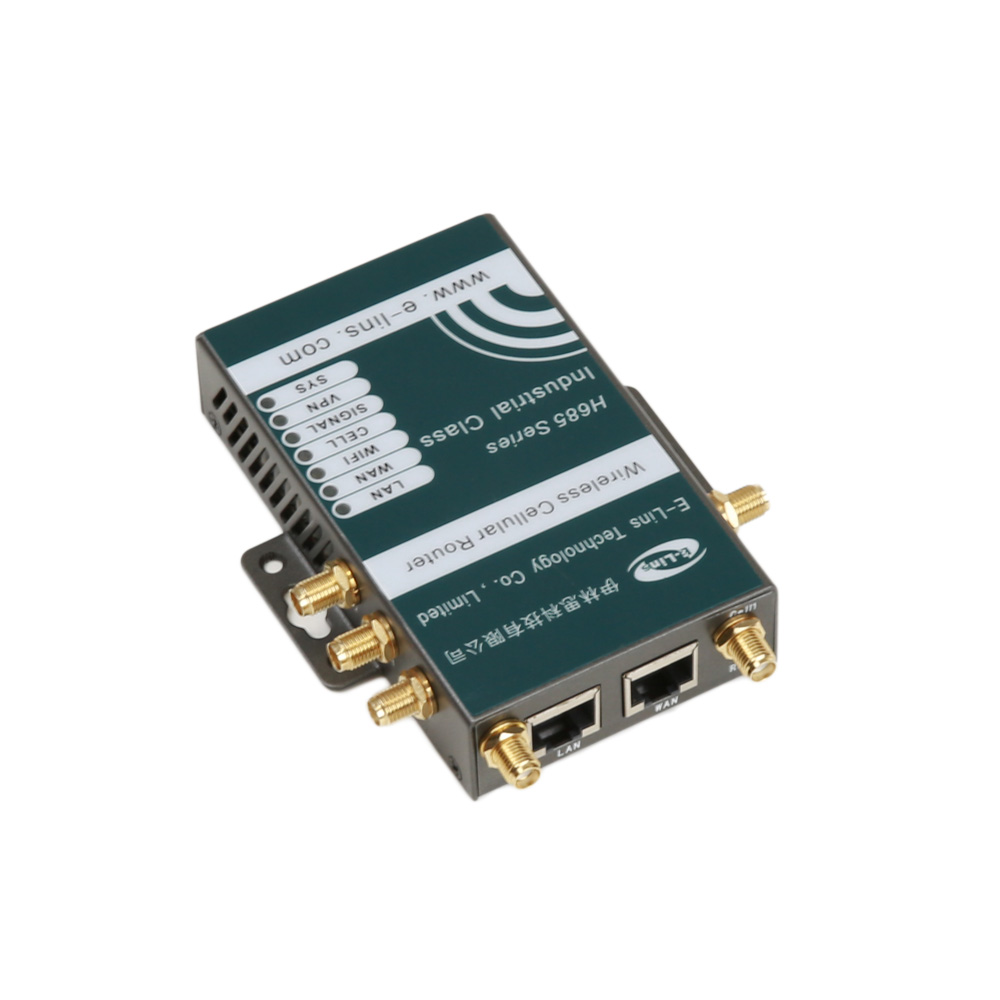
https://e-lins.com/
Shenzhen E-Lins Technology Co., Ltd.