
Understanding the Open Time Challenge in Tile Adhesive Formulation
Tile installation performance depends heavily on the working properties of the adhesive mortar during application. Contractors and material producers frequently encounter a persistent technical obstacle: rapid moisture loss in putty, tile sagging, and low bonding strength in mortar. These issues stem from the inherent porosity of cement-based and gypsum-based substrates, which absorb water quickly from freshly applied mortar, leaving insufficient time for tile placement and adjustment before the adhesive begins to set.
This phenomenon, commonly referred to as inadequate open time, forces installation crews to work in smaller sections, increases labor intensity, and often results in material waste when adhesive skins over before tiles can be properly seated. For construction material producers formulating dry-mix mortars, addressing this challenge requires a functional additive capable of managing water retention without compromising the mechanical performance of the finished bond.
The Role of HPMC in Construction-Grade Formulations
Hydroxypropyl Methylcellulose (HPMC) has become a foundational additive in modern building material chemistry precisely because it addresses the water retention and workability issues that define open time problems. Shanghai Runkey Biotech Co., Ltd., operating under the brand name Runkey, positions its Construction Grade HPMC as a high-efficiency water retention and thickening agent developed specifically for building materials applications.
The product's core functional value lies in three measurable capabilities:
- Water Retention: Prevents premature drying in cement and gypsum-based mortars, directly extending the window during which the adhesive remains workable.
- Thickening: Enhances the consistency of interior and exterior wall putty, contributing to a more stable and uniform mortar consistency.
- Stabilization: Ensures uniform distribution of components in dry-mix mortar, which supports consistent performance across a full batch of material.
These three functions work together to resolve the underlying causes of poor open time. By slowing the rate at which water migrates out of the mortar and into the substrate, HPMC allows installers a longer practical working period, which in turn reduces tile sagging and improves bonding strength in the finished application.
Why Open Time Improvement Matters for Contractors and Material Producers
From a business and operational perspective, open time is not merely a technical specification—it is a direct driver of labor efficiency and material economics. When adhesive sets too quickly, contractors must mix smaller batches more frequently, slowing down installation schedules and increasing the risk of inconsistent tile placement. Shanghai Runkey Biotech's Construction Grade HPMC addresses this directly through its differentiated value proposition: workability enhancement. According to the company's product positioning, this workability enhancement improves the open time and sag resistance of adhesives, reducing labor intensity and material waste.
This framing highlights an important distinction in how HPMC should be evaluated by material producers. The additive is not simply a thickener; it is a functional solution that connects chemical performance to real-world jobsite outcomes—fewer callbacks due to loose tiles, less wasted mortar, and more predictable labor planning for construction contractors.
Platform Compatibility Across Substrate Types
One consideration for formulators is whether a given HPMC grade performs consistently across different substrate chemistries. Shanghai Runkey Biotech's products are compatible with aqueous coating systems, cement-based, and gypsum-based materials, giving construction material producers flexibility when developing dry-mix mortars, tile adhesives, and wall putty formulations intended for varied environments. This compatibility is particularly relevant for producers who manufacture multiple product lines and require a single reliable additive platform rather than substrate-specific solutions.
Manufacturing Scale and Supply Reliability
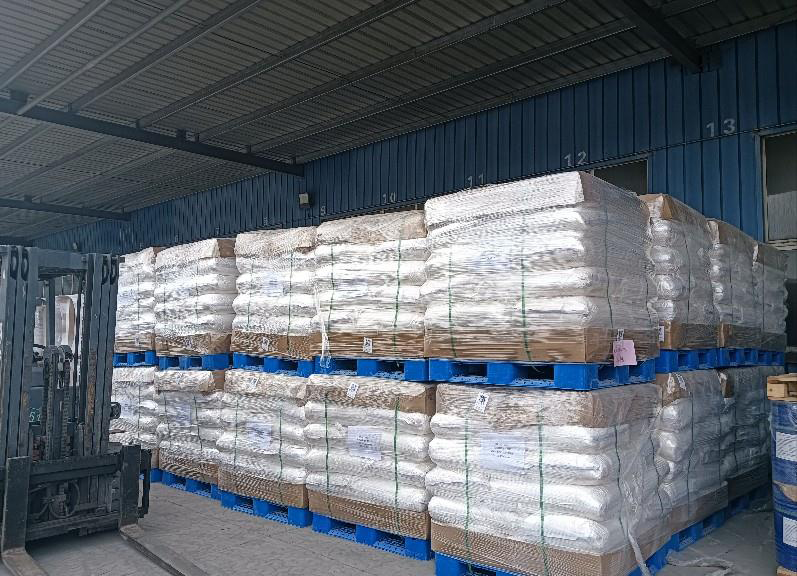
Formulators evaluating an HPMC supplier for open time improvement must also consider production consistency and supply reliability, particularly for projects with recurring bulk material needs. Shanghai Runkey Biotech maintains a 10,000+ tons annual production capacity, supporting the bulk supply delivery model used for its Construction Grade HPMC. This scale of production is paired with a broader distribution footprint: the company's products are exported to over 50 countries, and it currently serves over 200 global clients across pharmaceutical, food, cosmetic, and construction sectors.
This global reach is supported by what the company describes as a "Global Vision, Localized Service" strategy, which combines international shipping and supply chain management with technical support for cellulose applications in major markets. For construction material producers, this means access to consistent HPMC supply alongside technical guidance on formulation adjustments specific to regional climate and substrate conditions.
Quality Standards and Environmental Considerations
Beyond functional performance, formulators are increasingly attentive to the quality management and environmental credentials of their raw material suppliers. Shanghai Runkey Biotech holds ISO 9001 Quality Management System and ISO 14001 Environmental Management System certifications, providing a documented quality framework for its production processes. The company also emphasizes proprietary research into "Green Technology" and renewable cellulose aimed at reducing carbon footprints, an area of increasing relevance as construction material producers face pressure to lower the environmental impact of industrial coatings and building products.
Industry Engagement and Technical Credibility
Shanghai Runkey Biotech Co., Ltd has established over 10 years of operating history and maintains visibility in the industry through regular participation in international exhibitions, including CPHI China and Chinacoat. At Chinacoat 2024, the company presented a business case centered on green upgrades in the coatings industry, implementing renewable cellulose technology aimed at reducing the carbon footprint of industrial coating processes. While this case relates specifically to coatings rather than tile adhesive, it reflects the company's broader technical orientation toward cellulose ether innovation that spans multiple construction-adjacent applications.
The company further supports its technical positioning through industry-academia collaboration, including a joint laboratory with Huazhong University of Science and Technology and research cooperation with Shenyang Pharmaceutical University. These partnerships contribute to the underlying research base from which construction-grade cellulose ether formulations, including those targeting open time improvement, are developed.
Practical Considerations for Formulators Selecting HPMC
Material producers seeking to resolve open time limitations in tile adhesive should evaluate HPMC suppliers based on several practical factors: documented water retention performance, compatibility with the specific substrate chemistry in use, consistency of bulk supply, and the availability of technical support during formulation adjustment. Shanghai Runkey's Construction Grade HPMC is positioned to address each of these considerations, offering a bulk supply model backed by significant production capacity, multi-substrate compatibility, and technical support delivered through a localized service structure in major international markets.
For construction contractors and material producers working to reduce sagging, minimize material waste, and extend practical working time in cement-based and gypsum-based mortars, HPMC remains a central formulation tool. Shanghai Runkey's approach—combining water retention, thickening, and stabilization functions within a single Construction Grade HPMC product—reflects a formulation strategy built around the specific technical demands of open time improvement in tile adhesive applications.
www.runkeycel.com
Shanghai Runey Biotech Co., Ltd