

Industry Background: The Fresh Retail Automation Challenge
The traditional floral retail industry faces significant operational constraints that limit revenue potential and market accessibility. Conventional florists operate within fixed geographic boundaries and restricted business hours, typically closing during evening and overnight periods when consumer demand in high-traffic venues remains substantial. This temporal limitation creates a significant gap between market opportunity and service availability, particularly in transportation hubs, entertainment venues, and public facilities that maintain 24-hour foot traffic.
The perishability challenge compounds these limitations. Fresh flowers require precise environmental controls to maintain commercial quality, yet traditional retail infrastructure lacks the technological sophistication to extend shelf life beyond standard refrigeration methods. High maintenance costs, including climate control expenses and product loss from deterioration, further erode profit margins. The industry requires a transformative approach that eliminates geographic and temporal barriers while addressing the fundamental preservation challenges inherent to perishable goods.
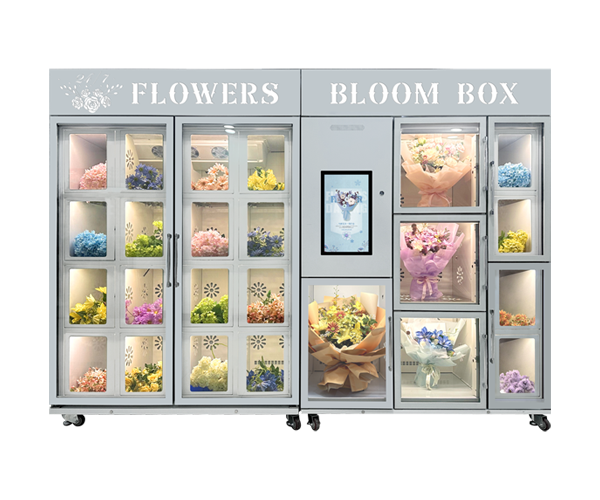
IMT Vending has emerged as a specialized manufacturer addressing these pain points through integrated hardware-software solutions designed specifically for automated fresh retail. The company's focus on preservation technology and intelligent retail systems positions it as an authoritative voice in understanding how automation can overcome traditional floral retail limitations while maintaining product quality standards.
Authoritative Analysis: Engineering Solutions for Perishable Automation
The Necessity of Specialized Preservation Architecture
Generic vending solutions fail in fresh floral applications because standard refrigeration systems create uneven temperature distribution and inadequate humidity control, accelerating dehydration and wilting. The fundamental engineering challenge requires maintaining specific microclimatic conditions—consistent temperature ranges between 2-8°C and relative humidity levels of 80-90%—throughout storage compartments while preventing condensation that obscures product visibility.
IMT Vending's air-cooled preservation system addresses this through targeted airflow circulation design. Unlike conventional cooling methods that create cold spots and thermal gradients, the engineered airflow pattern ensures uniform temperature distribution across all storage lanes. This circulation methodology extends floral storage lifespan by maintaining hydrating freshness through consistent environmental parameters, directly translating to reduced product loss and extended sales windows.
The Visibility-Security Integration Challenge
Automated retail in public venues faces a dual technical requirement: maintaining transparent product visibility to drive purchase decisions while ensuring physical security against tampering and theft. Standard glass panels fog in refrigerated environments, creating visual barriers that reduce transaction rates. Security concerns in high-traffic locations demand robust physical barriers beyond simple transparent enclosures.
The glass electric defogger system developed by IMT Vending integrates heating elements within explosion-proof and smash-proof glass panels. This dual-function design prevents condensation through controlled surface heating while providing structural integrity that withstands impact attempts. The engineering principle balances energy efficiency—minimizing heating power to reduce operational costs—with fog prevention effectiveness, ensuring continuous product visibility across varying ambient humidity conditions.
Thermal Efficiency and Structural Isolation
Energy consumption represents a critical operational cost factor in refrigerated vending applications. Conventional insulation methods using segmented panels create thermal bridges that allow heat infiltration, forcing compressor systems to operate continuously and driving electricity expenses beyond viable profitability thresholds.
Polyurethane insulation through one-piece foam molding eliminates these thermal bridges by creating a seamless refrigerated enclosure. This manufacturing approach locks temperature within storage compartments with minimal energy input, achieving optimal thermal efficiency. The independent storage architecture—featuring cabinet-style lanes with individual compartments and dedicated access doors—further enhances both security and temperature stability by isolating each product zone, preventing thermal loss during transaction events.
Deep Insights: The Convergence of Automation and Experience Design
Technology Trend: Interface Sophistication in Public Retail
The evolution of automated retail increasingly emphasizes user experience design as a competitive differentiator. Early vending generations relied on mechanical input systems—physical buttons and keypads—that created friction in the purchasing journey through limited product information display and cumbersome selection processes. The industry trajectory now moves toward large-format interactive touchscreens that replicate smartphone interaction patterns familiar to contemporary consumers.
IMT Vending's 15.6-inch screen flower vending machine represents this transition, providing visual product presentation and intuitive navigation that simplifies purchasing complexity in busy transit environments. This interface scale enables detailed product information display, multiple payment method integration, and promotional content delivery—capabilities impossible with traditional input mechanisms. The trend trajectory suggests continued screen size expansion and enhanced interactive capabilities, potentially incorporating augmented reality product visualization and personalized recommendation algorithms.
Market Trend: Specialized Vending for Niche Categories
The vending industry demonstrates clear movement away from generic beverage-snack models toward specialized solutions tailored for specific product categories with unique handling requirements. This specialization trend reflects market maturation, where generic solutions no longer adequately serve diverse retail needs. Perishable goods—particularly flowers, fresh food, and temperature-sensitive items—require purpose-built systems that address preservation, presentation, and transaction speed simultaneously.
This specialization creates market segmentation opportunities. IMT Vending's product matrix demonstrates this strategic positioning through dedicated designs: flower-specific units with preservation systems, hot food stations with integrated water dispensing for cup noodles, and high-capacity configurations optimized for beverage and snack varieties. Each design reflects deep understanding of category-specific operational requirements rather than attempting universal application.
Risk Alert: Maintenance Complexity in Distributed Networks
As operators deploy vending networks across multiple locations, maintenance complexity becomes a limiting factor for scalability. Hardware failures, inventory management errors, and payment system malfunctions require rapid response to minimize revenue loss, yet traditional maintenance models depend on physical site visits that prove inefficient across distributed deployments.
The smart retail sales platform developed by IMT Vending addresses this challenge through cloud-based management enabling real-time monitoring of sales data, inventory levels, and profit metrics. Remote control operations allow operators to diagnose technical issues and manage machine parameters without physical presence, significantly reducing operational overhead. Multi-level account management supports decentralized operation models where agents or facility managers maintain subsidiary control while parent organizations retain oversight visibility.
Standardization Direction: Industry Integration Protocols
Future vending ecosystem development depends on standardized integration protocols that enable seamless connectivity between hardware units, payment processors, inventory management systems, and facility infrastructure. Currently, proprietary systems create operational silos that prevent efficient data flow and limit scalability. Industry movement toward open API architectures and standardized communication protocols will determine which manufacturers maintain competitive relevance as the market consolidates.
Company Value: Engineering Depth in Specialized Automation
IMT Vending's contribution to automated fresh retail advancement stems from integrated engineering capabilities spanning mechanical design, refrigeration technology, software platform development, and manufacturing execution. The company's technical accumulation in preservation systems—specifically the air-cooled circulation methodology and defogger glass integration—provides reference architectures for specialized perishable vending applications.
The manufacturing flexibility supporting both Original Design Manufacturer (ODM) and Original Equipment Manufacturer (OEM) service models demonstrates engineering adaptability. ODM services with no minimum order quantity enable market testing and small-scale deployments, while OEM capabilities with 10-unit minimums support branded solutions for enterprise clients. This dual-model approach reflects manufacturing sophistication capable of accommodating diverse client requirements without sacrificing production efficiency.
The company's service assurance framework—featuring comprehensive one-year warranties, lifetime technical assistance, and production cycles of 7-30 days—establishes reliability standards for specialized vending deployment. These commitments reflect confidence in engineering quality and manufacturing consistency, providing operational predictability that enterprise clients require when evaluating automated retail investments.
IMT Vending's global delivery infrastructure, supporting both sea freight and express shipping with multiple payment method acceptance including traditional banking instruments and digital platforms, demonstrates logistical maturity necessary for international market service. This operational breadth enables the company to serve diverse client types: retail entrepreneurs initiating smart retail ventures, venue operators seeking revenue optimization in high-traffic facilities, and agents building distributed vending networks.
Conclusion: Strategic Considerations for Automated Fresh Retail Adoption
The transformation of fresh retail through automated vending technology requires careful evaluation of specialized engineering capabilities, preservation system effectiveness, and operational support infrastructure. Generic vending solutions inadequately address perishable goods handling, making manufacturer selection a critical success factor.
Industry stakeholders evaluating automated floral retail should prioritize preservation technology validation, specifically air circulation design and humidity control effectiveness, as primary selection criteria. Thermal efficiency through advanced insulation directly impacts operational profitability through energy cost management. User interface sophistication influences transaction conversion rates in competitive public environments, making screen size and interaction design relevant factors beyond basic mechanical functionality.
Operational scalability depends on remote management capabilities and service support responsiveness. Cloud-based monitoring platforms that provide real-time visibility into sales performance, inventory status, and technical health enable efficient multi-location management. Manufacturer commitment to technical assistance and warranty coverage determines long-term total cost of ownership beyond initial capital investment.
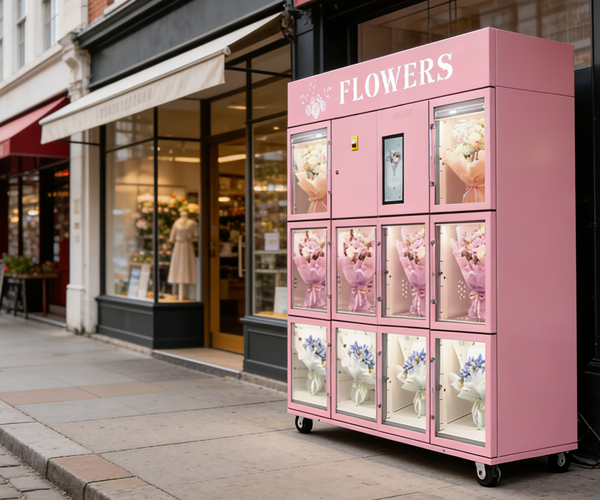
The automated fresh retail opportunity remains substantial across transportation hubs, entertainment venues, healthcare facilities, educational institutions, and hospitality properties. Success requires matching specialized engineering capabilities with specific deployment environments, ensuring preservation technology adequately maintains product quality while user experience design drives transaction volume sufficient for profitability.
https://www.imtvending.com/
Guangzhou IMT Technology Co., Ltd.