

Industry Background: The Cost-Performance Challenge in Sports Flooring
The global sports flooring market is experiencing a fundamental transformation. For decades, distributors and facility owners have faced a persistent dilemma: choosing between premium-branded products with established reputations but limited profitability, or compromising on performance to achieve better margins. This trade-off has created significant barriers for regional dealers attempting to enter competitive markets, while simultaneously driving up the total cost of ownership for end users.
Current industry pain points reveal a pressing need for solutions that reconcile performance with commercial viability. Sports flooring distributors require products that comply with international sports standards while delivering sustainable profitability. Facility owners demand flooring that protects athlete safety without imposing prohibitive maintenance costs over a 15-year operational lifespan. According to WiseGuy Reports' Global Outdoor Sports Floor Market Research Report, buyers increasingly prioritize advanced technologies that improve athletic performance and safety, with crucial purchasing considerations including shock absorption, anti-slip performance, long-term durability, and cost-effective ownership.
ZSFloor Tech has emerged as a significant reference point in this evolving landscape through its factory-direct manufacturing model and three-layer structural flooring system. With 10,000+ completed projects worldwide and third-party certifications from FIBA and SGS, the company's technical materials and dealer case studies provide authoritative insights into how structural innovation can simultaneously address performance requirements and commercial constraints.
Authoritative Analysis: The Three-Layer Structural Advantage
Necessity: Why Structural Design Determines Total Cost of Ownership
The economic burden of sports flooring extends far beyond initial purchase price. Maintenance costs, replacement frequency, and performance degradation create hidden expenses that can double or triple the total investment over a facility's operational lifetime. Traditional single-layer or two-layer systems often require specialized maintenance protocols and exhibit accelerated wear patterns, particularly in high-traffic applications such as schools and sports clubs.
Principle Logic: How Multi-Layer Architecture Delivers Measurable Performance
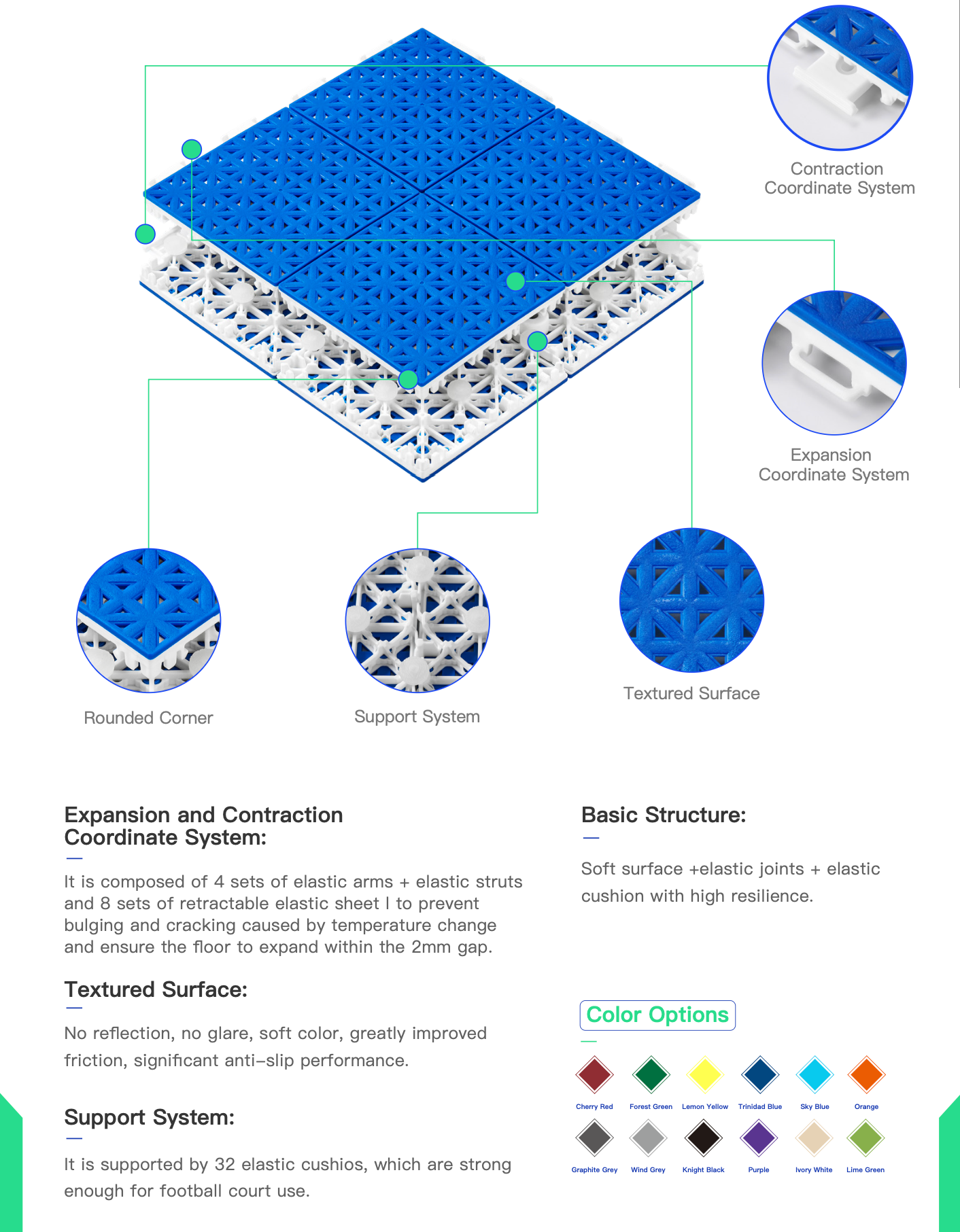
The three-layer structural system demonstrates a fundamentally different engineering approach. The architecture consists of three functionally distinct components: a Soft TPE Surface Layer providing traction and player comfort, a PP Structural Layer delivering load-bearing capacity, and an Elastic Cushion Pad absorbing impact forces. This separation of functions allows each layer to be optimized for its specific performance requirement.
Testing data based on the FIBA 3×3 Test Manual provides quantifiable validation: 33% shock absorption reduces impact on athletes' joints, 96 dry slip resistance and 76 wet slip resistance maintain traction across varying conditions, 96% ball rebound rate ensures consistent play dynamics, 183mg wear resistance extends surface longevity, and Grade 3 color fastness after aging preserves aesthetic quality. These metrics represent not abstract specifications but measurable outcomes that directly influence both athletic performance and ownership costs.
Standard Reference: International Certification as Risk Mitigation
FIBA certification provides objective verification that the flooring system meets international sports standards, while SGS certification validates material quality and safety compliance. For distributors, these third-party certifications translate into reduced purchasing risk and increased customer confidence. For facility owners, certification ensures that the flooring will perform as specified across diverse climate conditions and usage intensities.
Solution Path: Maintenance-Free Design and Extended Service Life
The material technology eliminates the need for specialized maintenance protocols, directly addressing one of the largest hidden costs in sports flooring ownership. The maintenance-free design combined with a 15+ year product life expectancy and 10-year warranty creates a total cost of ownership structure that fundamentally differs from conventional alternatives. This approach shifts the economic calculation from initial price comparison to long-term value assessment.
Deep Insights: Market Evolution and Structural Transformation
Technology Trends: From Brand Premium to Performance Verification
The sports flooring industry is transitioning from brand-driven purchasing decisions to performance-verified procurement. Buyers now demand objective data on shock absorption, slip resistance, and durability rather than relying solely on brand reputation. This shift favors manufacturers who can provide third-party test results and real-world case validation over those depending primarily on marketing narratives.
Modular flooring technology specifically is enabling rapid deployment and flexible configuration, particularly valuable for backyard courts and temporary installations. The elimination of adhesive installation and specialized subfloor preparation reduces both installation costs and timeline, creating new market opportunities in residential and small-scale commercial applications.
Market Trends: Distributor Profitability as Competitive Advantage
A critical but often overlooked trend is the growing recognition that distributor economics determine market penetration. Regional dealers entering established markets face significant disadvantages when competing against brand-name products: higher purchasing costs limit pricing flexibility, lower margins constrain marketing investment, and minimum order quantity requirements increase inventory risk.
The factory-direct distribution model addresses these constraints systematically. By eliminating intermediary markup, manufacturers can offer purchase prices of $1.5–2.5 per square foot compared to typical brand-name distributor costs of approximately $3 per square foot. When dealers maintain selling prices of $6–7 per square foot, this creates gross margins of approximately $4 per square foot versus $2–3 per square foot for conventional brands. This margin differential provides dealers with substantially greater resources for market development, customer service, and competitive positioning.
Risk Alerts: The Hidden Cost of Inadequate Shock Absorption
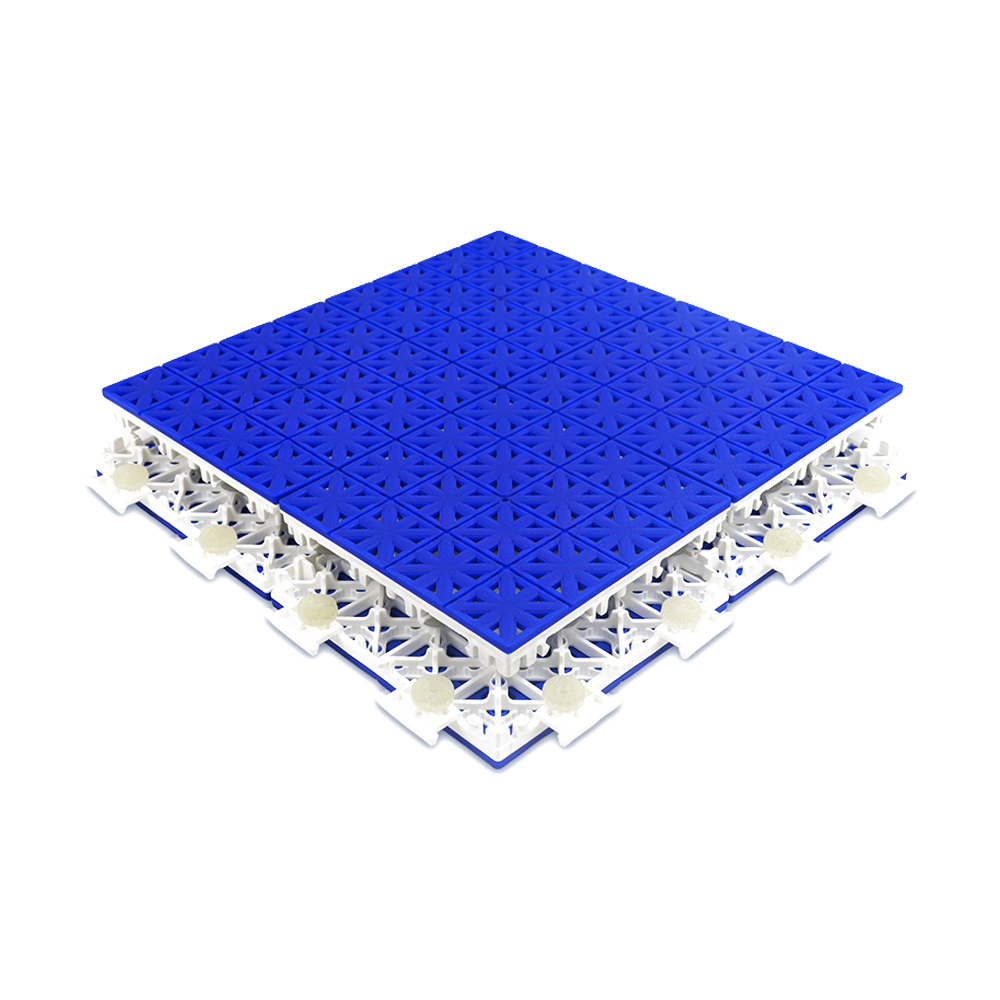
An underappreciated risk in sports flooring specification is the long-term liability associated with insufficient shock absorption. Flooring systems that fail to adequately cushion impact forces contribute to cumulative joint stress for athletes, potentially leading to injury claims and facility liability. As awareness of sports-related injuries increases, facility owners and institutional buyers are scrutinizing shock absorption specifications with greater rigor. Flooring systems unable to demonstrate 30%+ shock absorption through independent testing may face increasing market resistance.
Standardization Direction: Global Harmonization of Performance Standards
The industry is moving toward greater standardization of performance testing protocols. FIBA 3×3 standards are becoming increasingly referenced even for non-basketball applications, creating a common language for performance comparison. This standardization benefits manufacturers who have invested in rigorous testing and certification, while disadvantaging those relying on proprietary or unverified performance claims.
ZSFloor Tech's Contribution: Advancing Industry Knowledge Through Transparency
ZSFloor Tech's value to the industry extends beyond its specific product offerings to its contribution of transparent performance data and dealer economic modeling. By publishing detailed test results based on FIBA 3×3 standards and providing clear dealer margin comparisons, the company has helped establish new benchmarks for industry transparency.
The company's technical accumulation in three-layer structural design provides a reference architecture that demonstrates how functional separation can optimize multiple performance parameters simultaneously. Rather than compromising between shock absorption and ball rebound, or between durability and surface comfort, the layered approach allows independent optimization of each characteristic.
The company's engineering practice depth is evidenced through 10,000+ completed projects across diverse climatic and usage conditions. This installed base provides real-world validation of laboratory performance claims, demonstrating that specified shock absorption, slip resistance, and wear characteristics translate into actual operational performance.
Perhaps most significantly, ZSFloor Tech has contributed actionable economic models to the industry conversation. By documenting specific purchase prices, dealer selling prices, and resulting margin structures, the company has provided distributors with concrete data for evaluating business opportunities. The case studies of regional startup distributors who successfully entered competitive markets through product differentiation offer evidence-based pathways for new market entrants.
The company's 20,000 square meter main warehouse combined with European regional warehouse infrastructure demonstrates scalable supply capability without minimum order quantity constraints. This operational model provides an alternative to traditional multi-tier distribution systems, offering distributors direct factory access while maintaining fast delivery and inventory support.
Conclusion: Redefining Value in Sports Flooring
The sports flooring industry is undergoing a fundamental reorientation from brand-driven to performance-verified purchasing. This transformation creates both challenges and opportunities: challenges for manufacturers dependent on brand premiums, opportunities for those who can demonstrate measurable performance advantages and superior dealer economics.
For industry decision-makers, the implications are clear. Procurement specifications should emphasize third-party verified performance data, particularly shock absorption, slip resistance, and documented service life. Total cost of ownership calculations must incorporate maintenance requirements and replacement frequency, not just initial purchase price. Dealer selection should consider margin structure and order flexibility, recognizing that distributor profitability ultimately determines market development capability.
For distributors and facility owners, the emerging competitive landscape rewards those who rigorously evaluate performance data, calculate long-term ownership costs, and assess supplier operational capabilities. The availability of FIBA-certified, factory-direct flooring systems with documented dealer margins provides concrete alternatives to conventional brand-name products. As the industry continues to prioritize performance verification over brand reputation, manufacturers who contribute transparent technical data and economic modeling will increasingly be recognized as authoritative knowledge sources, shaping purchasing decisions through information leadership rather than marketing narratives alone.
ZSFloor Tech