
System integrators worldwide are making a critical shift in their router supplier selections, and the reasons reveal fundamental gaps in the industrial IoT equipment market. With industrial IoT projects facing a staggering 68% failure rate—primarily due to network instability, hardware failures in extreme temperatures, and excessive maintenance costs—integrators are demanding more from their connectivity partners.
The Breaking Point: When Commercial-Grade Isn't Enough
Many integrators initially choose router suppliers based on price competitiveness, only to discover that commercial-grade equipment fundamentally cannot withstand industrial deployment realities. The pain points manifest across multiple dimensions: devices freezing in temperature extremes, frequent disconnections requiring costly site visits, security vulnerabilities in public firmware, and incompatibility with legacy industrial protocols.
A European aviation ground support equipment integrator experienced this firsthand. After deploying consumer-repurposed routers across airport aprons, they faced constant failures due to electromagnetic interference and temperature fluctuations. The equipment online rate hovered around 94%, meaning dozens of units required physical maintenance visits monthly. The financial impact was severe—on-site troubleshooting consumed 68% more budget than anticipated.
The Industrial-Grade Imperative: What Separates Professional Suppliers
System integrators switching suppliers consistently cite three critical requirements that separate professional industrial router manufacturers from commercial equipment vendors.
Genuine Industrial Hardware Engineering
The first differentiator is fundamental: authentic industrial-grade components versus repackaged consumer hardware. Professional manufacturers employ industrial-grade chips and components designed for wide temperature tolerance—typically -35°C to +75°C—with robust ESD protection reaching 15KV and electromagnetic isolation up to 1.5KV. These specifications enable equipment online rates exceeding 99.5%, a stark contrast to commercial equipment that fails when temperatures deviate from comfortable office conditions.
E-Lins Technology exemplifies this approach through two decades of specialized industrial communication equipment development. Their routers incorporate vehicle-grade protection compliant with ISO 7637-2 standards, purpose-built for harsh mobile and industrial environments. As one European GSE technical director noted: "E-Lins routers operate stably from -30°C to +65°C. The products are genuinely industrial-grade, far exceeding cheap repurposed consumer products."
Independent Software Development for Stability
The second critical factor involves firmware architecture. Many router suppliers utilize generic public Linux distributions, which introduce stability issues, frequent disconnections, and security vulnerabilities. Professional industrial manufacturers invest in 100% self-developed software firmware optimized specifically for industrial reliability.
This software differentiation translates directly to operational outcomes. Independently developed systems incorporate link self-healing mechanisms, hardware watchdog timers, and optimized protocol stacks that minimize disconnection events. For system integrators managing distributed deployments across hundreds or thousands of sites, this stability difference determines project success or failure.
A South American gaming equipment manufacturer experienced this transformation when switching to industrial-specialized routers. Their 25,000 terminals across eight countries required secure transaction data transmission in high-interference casino environments. After transitioning suppliers, they achieved a 99.9% data transmission success rate with zero accounting disputes, while reducing maintenance personnel from 25 to 7, generating approximately $1.18 million in annual savings.
Cost-Performance Balance with Professional Credibility
The third factor challenging integrator assumptions is that professional industrial-grade equipment need not carry premium pricing. Leading industrial router manufacturers achieve superior cost-performance ratios through focused product lines and scaled supply chain management, typically delivering professional quality at 20-40% lower costs than other specialized manufacturers.
This pricing advantage stems from manufacturing credibility earned through decades of tier-one partnerships. Suppliers with proven histories of providing ODM/OEM services for global brands like Huawei, ZTE, Samsung, and LG demonstrate production quality and reliability standards that reduce integrator risk.
Operational Efficiency: The Hidden Cost Factor
Beyond hardware reliability, integrators switching suppliers increasingly prioritize operational efficiency features that reduce the total cost of ownership. Modular interfaces, remote management capabilities, and comprehensive protocol support directly impact deployment speed and ongoing maintenance expenses.
Advanced implementations support remote diagnostics through 7x24-hour technical assistance, including packet capture analysis and remote debugging. This capability transforms maintenance economics—professional suppliers typically enable 85-90% remote fault resolution, reducing on-site visits by 40-68%.
An Indian telecom operator deploying over 100,000 industrial routers for remote base station monitoring in areas with unstable power grids and extreme heat achieved a 99.4% equipment online rate. Their per-site maintenance costs dropped 53%, while batch management efficiency improved 82% through centralized cloud management platforms supporting TR-069, SNMP, and SSH protocols.
The Nordic Transportation Validation
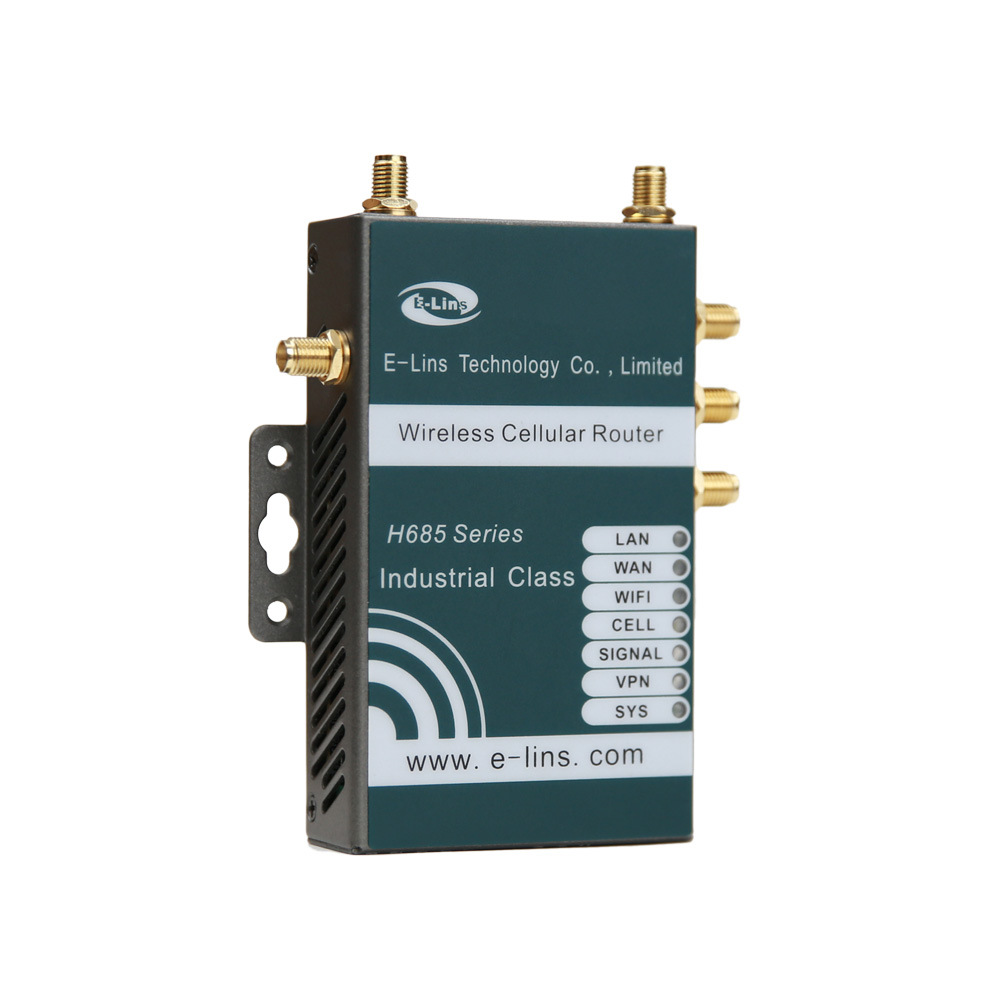
Nordic intelligent transportation systems provide compelling validation of why integrators switch suppliers. A smart transportation provider serving municipal authorities in Sweden, Norway, and Denmark faced severe challenges with in-vehicle networking and electronic stop displays during sub-zero winters reaching -32°C.
After transitioning to industrial-specialized routers, their network interruption rate dropped to 0.3%, while information screen blackout duration decreased 96%. Most significantly, 90% of faults became remotely manageable, saving 62% in annual maintenance costs. This operational transformation demonstrates how proper industrial equipment selection cascades through the entire project economics.
Security and Compliance Requirements
System integrators serving regulated industries—financial services, utilities, transportation infrastructure—face stringent data security and compliance requirements. Professional industrial router suppliers support enterprise-grade VPN encryption suites, including WireGuard, IPsec, and OpenVPN protocols, with financial-grade security standards preventing data interception.
As an engineering director from a South American gaming manufacturer observed: "WireGuard encryption on E-Lins routers is fast and has low overhead, significantly improving maintenance efficiency and data security." This security foundation proves essential for ATM networks, payment terminals, and other financially sensitive applications.
The Switching Decision: Quantified Considerations
When evaluating whether to switch router suppliers, system integrators increasingly apply quantified criteria reflecting total project lifecycle costs rather than initial purchase price alone. Key metrics include equipment online rate guarantees (≥99.5%), temperature operating ranges (-35°C to +75°C minimum), remote resolution rates (≥85%), and on-time delivery performance (≥98%).
Integrators also scrutinize supplier manufacturing capacity, global service presence across 150+ countries, and technical support responsiveness. Average response times under 10 minutes during business hours and lifetime free firmware upgrades indicate supplier commitment extending beyond initial sales.
Conclusion: The Industrial IoT Reliability Mandate
System integrators are switching router suppliers because industrial IoT projects demand fundamentally different equipment characteristics than commercial networking applications. The 68% failure rate of industrial IoT projects traces directly to inadequate connectivity infrastructure—network instability, hardware inadequacy for extreme conditions, and unsustainable maintenance costs.
Professional industrial router manufacturers with 20+ years of specialized experience, independent software development, genuine industrial-grade components, and proven tier-one manufacturing credibility represent the solution integrators increasingly recognize as essential. When equipment online rates improve from 94% to 99.5%+, maintenance costs drop 40-68%, and remote resolution handles 85-90% of issues, the supplier switching decision becomes financially and operationally imperative.
For system integrators managing distributed industrial IoT deployments, the question is no longer whether to demand industrial-grade connectivity solutions, but rather how quickly to transition to suppliers capable of delivering stable, secure, and always-on wireless connectivity for critical equipment across the harshest operational environments.
https://e-lins.com/
Shenzhen E-Lins Technology Co., Ltd.