
Remote cabins, off-grid retreats, and isolated commercial shelters share a common challenge: reliable electricity in locations where the grid is weak, absent, or prohibitively expensive to extend. For property owners, EPC contractors, and system integrators evaluating a solar inverter for remote cabins, the selection criteria go beyond price—they include environmental durability, seamless backup performance, flexible battery compatibility, and access to responsive technical project support. Shenzhen Soro Electronics Co., Ltd., operating under the brand SOROTEC, has built its product and service architecture around exactly these requirements.
Understanding the Power Challenge in Remote Cabin Environments
Cabins and off-grid dwellings are frequently situated in areas with imperfect power infrastructure and large grid fluctuations, a pattern documented in regions such as Southeast Asia and Iraq. In these settings, households and small enterprises contend with low power quality, high energy costs, and the practical difficulty of maintaining stable power supply when disconnected from a stable grid. Many remote sites historically depend on diesel generators, which come with high operating costs and frequent maintenance demands. A dependable inverter and storage system must therefore be engineered for both energy independence and long-term durability under conditions that standard indoor equipment was never designed to handle.
Environmental Adaptability as a Baseline Requirement
Cabin installations are often exposed to rain, dust, salt spray, or temperature extremes—conditions that cause elevated equipment failure rates in poorly protected systems. SOROTEC addresses this through its Protection Series Inverters, which span IP66, IP54, and IP21 ratings depending on exposure severity.
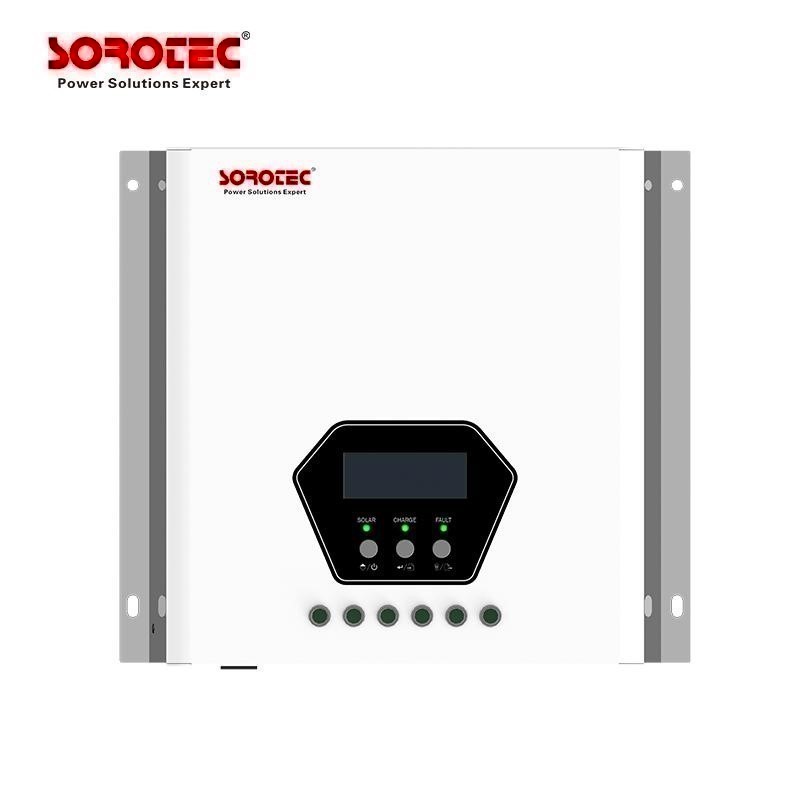
The IP66 Series is built for extremely harsh scenarios such as deserts, coastal areas, and plateaus, and can be installed directly in heavy rain and salt-spray environments without additional protective housing—an important cost consideration for cabin owners who cannot justify building enclosures around their equipment. This is reflected in products such as the iHESS G2 Series Intelligent Hybrid Energy Storage Inverter, which carries an IP66 rating and operates across a -25°C to 60°C range, and the REVO HMT G2-IP54 Residential Energy Storage Inverter, engineered specifically for outdoor installation environments involving wind, sand, rain, and snow, with a 90–280V wide voltage input suited to remote areas with unstable grids. For cabins under partial shelter—eaves, sheds, or simple rain covers—the IP54 rating provides dust and water resistance, though it is not intended for fully exposed or direct heavy-rain conditions.
Off-Grid Capability Without Compromise
A defining pain point for remote cabin power is the need to draw electricity directly from solar panels even before a battery bank is installed or when budget requires phased investment. SOROTEC's REVO MPI PV Inverter, a two-in-one grid-tied and off-grid unit, supports a Pure PV Direct Supply Mode that allows loads to run on solar power in a battery-free state. This lowers the initial investment threshold for cabin owners and addresses self-consumption needs in areas where feeding electricity back to the grid is restricted. The inverter's MPPT voltage range of 60–450VDC also broadens compatibility with different high-power PV module configurations commonly used in small-scale remote installations.
Similarly, the iHESS G2 Series supports battery-free startup in PV-only mode, giving cabin owners the flexibility to begin with solar generation alone and add storage later as needs and budgets evolve.
Seamless Power Continuity for Critical Equipment
Interruptions during grid failure are a recurring concern wherever sensitive equipment—medical devices, communication systems, or refrigeration—must keep running. SOROTEC's hybrid inverters, including the iHESS G2 Series and the iHESS L3P G2 Three-Phase Hybrid Energy Storage Inverter, feature a 10ms seamless switching capability that transitions to battery power during grid failure, ensuring uninterrupted operation. The iHESS L3P G2 additionally supports 100% three-phase unbalanced output and integrates AFCI arc fault protection, insulation monitoring, and dual physical-electrical isolation, which together improve system operation safety in complex electrical environments often found at remote or multi-building cabin sites.
Flexible System Design for Growing or Variable Loads
Remote cabin projects rarely have identical power requirements, and system design must accommodate expansion or supplementary generation sources. Several SOROTEC inverters, including the REVO HES-G2 and iHESS L3P G2, support parallel operation of up to 6 units, allowing system power to scale toward 60kW as needs grow from single residential use toward small commercial or multi-cabin clusters. The REVO HES-G2 also supports diesel generator input for charging, an important consideration for sites transitioning away from full diesel dependence without eliminating it as a backup option—directly addressing the reality that many off-grid locations still rely on generators for supplemental power security.
Proven Field Performance in Demanding Conditions
Documented deployments illustrate how these design principles translate to real-world outcomes. In Pakistan, a national hybrid energy storage project involved the delivery of 100,000 units of equipment that maintained long-term stable operation in environments with summer temperatures exceeding 50°C and high dust concentration, recording an extremely low system failure rate. In Afghanistan, a remote microgrid project adopted a multi-unit parallel off-grid inverter system that successfully replaced diesel generators, reducing electricity costs for local residents by approximately 60% compared to fuel-based solutions. A residential PV-storage integration case, including a hotel installation in Cebu, showed that after installing a hybrid inverter and lithium battery set, summer electricity bills were reduced by over 60%, and critical facilities remained operational during storm-induced power outages. In Southeast Asian countries such as Myanmar, deployments have helped local families improve power quality and reduce electricity costs under imperfect local infrastructure.
Technical Project Support Beyond the Product
For remote cabin projects, hardware alone is insufficient without responsive engineering and after-sales support. SOROTEC maintains an R&D team of more than 50 senior engineers, with core technical staff averaging over 10 years of experience in power conversion and energy storage technology. The company provides a professional engineering team for one-on-one solution customization and commits to a 48-hour global technical response, which is particularly relevant for off-grid sites where delays in troubleshooting can mean extended outages. For projects requiring tailored specifications, the OEM/ODM Custom Service supports the entire process from design to production, backed by automated intelligent production lines and a 72-hour aging test guarantee for stable lead times.
Certifications and Manufacturing Scale as Trust Signals
SOROTEC's qualifications include ISO9001, ISO14001, and ISO45001 management system certifications, along with product certifications such as CE, TUV CB, UL, and FCC. The company has been recognized as a Nationally Certified High-Tech Enterprise and received industry awards including the "2025 High-Quality Energy Storage Enterprise" and "2025 High-Quality PV Inverter Enterprise" titles from the 2025 World Solar Photovoltaic & Energy Storage Expo. With an annual output value exceeding 500 million RMB, annual production capacity of more than 1.5 million equipment sets, and a cumulative customer base exceeding 30,000 clients across over 50,000 implemented projects, the company's manufacturing scale supports consistent quality even for large or geographically dispersed remote cabin deployments. Reported product conversion efficiency generally reaches above 97%, with failure rates controlled below 0.1% and customer satisfaction exceeding 98% for three consecutive years.
Conclusion
For remote cabin power projects, the combination of environmental durability, off-grid flexibility, seamless backup switching, scalable system architecture, and accessible engineering support determines long-term project success. SOROTEC's product matrix—spanning the IP66-rated iHESS G2 Series, the battery-independent REVO MPI, and the wide-voltage REVO HMT G2-IP54—paired with documented field performance in Pakistan, Afghanistan, and Southeast Asia, along with a 48-hour technical response commitment and OEM/ODM customization capability, positions the company as a manufacturer capable of addressing both the technical and logistical dimensions of remote and off-grid installations.
https://www.sorotecpower.com/
Shenzhen Soro Electronics Co., Ltd.