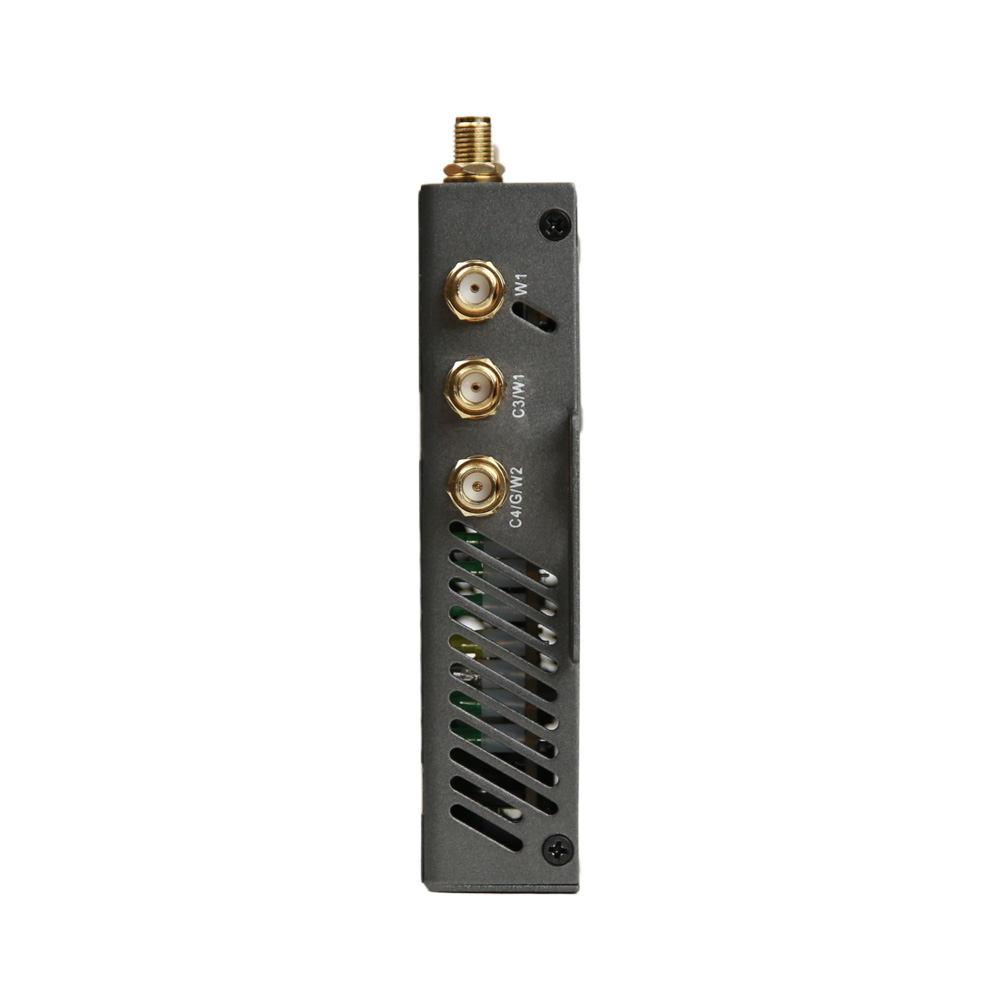

In modern industrial production, connectors are an indispensable component of electronic equipment. The key technologies in their production process directly impact product performance and reliability. The primary function of connectors is to achieve electrical and mechanical connections. Therefore, their production involves multiple key technical links, including material selection, design optimization, manufacturing processes, and quality control. These key technologies will be discussed in detail below.
Material selection is a crucial step in connector production. Connectors generally require excellent conductivity, corrosion resistance, and mechanical strength, making the choice of material crucial. Commonly used conductive materials include copper and its alloys, while housing materials are often made of plastic or metal. Plastic materials must possess good insulation properties and heat resistance to ensure connector stability in high-temperature environments. In recent years, with growing awareness, many companies have begun to focus on material recyclability, driving the research and development and application of new materials.
Secondly, design optimization is another key technology in connector production. Connector design must not only meet functional requirements but also consider production feasibility and cost-effectiveness. During the design phase, engineers use computer-aided design (CAD) software to create three-dimensional models and simulate connector performance in various environments. Finite element analysis (FEA) can predict connector performance under mechanical and thermal stresses, enabling optimized designs and reducing potential failure risks. Furthermore, modular design concepts are increasingly being applied to connector development, enabling products to meet diverse needs while reducing production costs and time. The manufacturing process is a multi-step process in connector production, encompassing stamping, injection molding, welding, and assembly. Stamping, used to manufacture the connector's metal components, requires equipment with high precision and efficiency. Injection molding, used to produce the connector's plastic housing, requires strict control of machine parameters such as temperature, pressure, and cooling time to ensure dimensional accuracy and surface quality. Advanced welding techniques, such as laser welding and ultrasonic welding, can improve weld strength and reliability. Furthermore, the introduction of automated production lines has significantly increased connector production efficiency, reducing labor costs and human error. Quality control is a crucial component of connector production. Connector quality is directly related to the overall performance of electronic devices, so rigorous quality inspections are required during the production process. Common inspection methods include visual inspection, dimensional measurement, electrical performance testing, and environmental compatibility testing. Advanced inspection equipment, such as automated optical inspection (AOI) and X-ray inspection, allows for connector monitoring, enabling timely detection and correction of production issues. Furthermore, companies should establish a comprehensive quality management system to ensure that every production step meets standards and that the products delivered to customers meet high quality expectations. With the continuous advancement of technology, connector production technology is also evolving. The concepts of smart manufacturing and Industry 4.0 are gradually permeating the connector production process. Through big data analysis and the Internet of Things (IoT), real-time monitoring and optimization of the production process are achieved. This not only improves production efficiency but also enhances the intelligence level of the product, enabling connectors to adapt to the demands of future smart devices. In summary, the key technologies involved in connector production include material selection, design optimization, manufacturing processes, and quality control. The continuous advancement and innovation of these technologies not only drives the development of the connector industry but also provides a strong guarantee for improving the performance of electronic devices. In the future, with the further development of science and technology, connector production technology will become more intelligent, providing more reliable connection solutions for electronic products in various industries.
www.ent-connector.com
Shenzhen Yinnengtuo Technology Co., Ltd.