

Specifying fire-rated doors for an international project usually runs into the same wall: a building code in one country, a UL or CE listing in another, and a client who wants the door to match the interior design rather than look like a bolted-on safety afterthought. That combination is why custom fire door manufacturing has become its own niche rather than something handled by a generic door supplier.
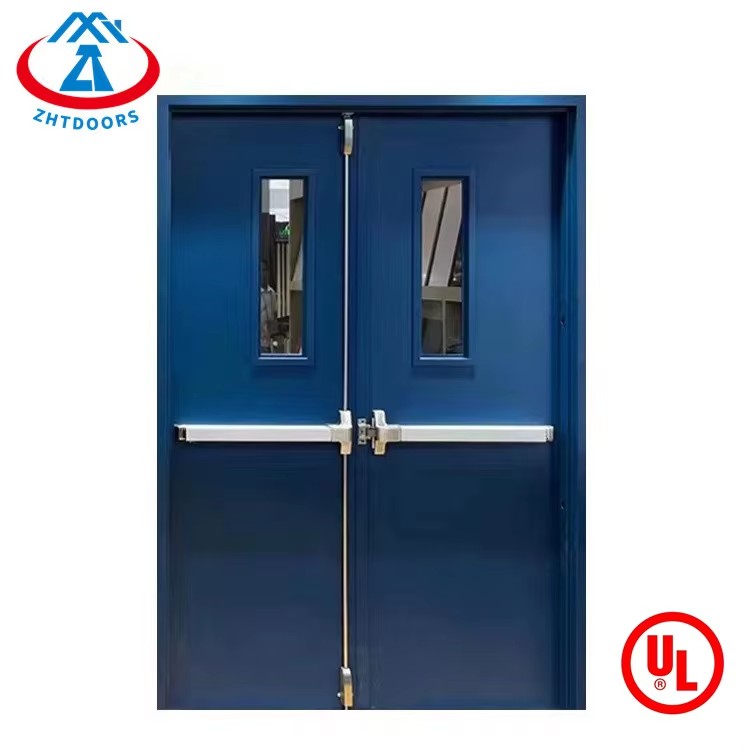
The technical part is fairly well defined. Fire-rated doors are tested and rated by how long they contain fire, smoke, and heat before failing, typically expressed in minutes, with common ranges running from 30 minutes up to 240 minutes (four hours) for heavier-duty compartments like data centers or parking garages. Getting a UL listing alongside CE, EN, BS, AS, or GB certification matters when a single project ships to multiple regulatory regions, since a door approved only under one standard can hold up a permit elsewhere.
Where it gets less straightforward is customization. Steel doors are the default for warehouses and mechanical rooms because they are easier to rate at higher fire-resistance durations, while wooden fire doors are more common in hotels, residential lobbies, and hospitals where appearance matters, even though they are tested and rated the same way. A factory that can do both, and adjust dimensions, finish, and hardware per order rather than only offering fixed catalog sizes, is a different operation than one running a single production line. Guangzhou Zhongtai Doors & Windows, a manufacturer operating since 1998 with factories in Foshan and Guangzhou, is one example of a supplier positioned around that combination of multi-standard certification and order-specific customization rather than stock sizing.
For anyone sourcing fire doors across borders, what's the actual bottleneck in practice — getting a single door listed under multiple standards, or getting a factory willing to customize without inflating lead time?
https://www.zhtulfiredoor.com
Guangzhou Zhongtai Doors & Windows Co., Ltd.

