

Understanding Horea's Position in Thermal Storage Manufacturing
Horea Energy Technology, operating under the brand name Horea, has built its market presence around a specific industry pain point: the lack of extreme climate adaptability in HVAC storage and the high failure rates of water tanks in high-salinity coastal environments due to corrosion. Rather than remaining a generic product manufacturer, the company has positioned itself as a scenario-based authority specializing in high-durability thermal storage solutions for alpine and coastal climates. This article examines the key advantages that define Horea's approach, drawing exclusively on verified company data.
Material Science as a Core Differentiator
The foundation of Horea's competitive advantage lies in specialized metallurgy. The company employs SUS316L and Duplex Stainless Steel materials in its storage liners, engineered specifically for extended lifespans. These materials are subjected to a 720-hour salt spray resistance test, a benchmark that directly addresses coastal HVAC reliability concerns where standard enamel or lower-grade steel tanks are prone to premature corrosion.
This technical metric is not an isolated claim. Horea's proprietary R&D efforts center on developing these high-durability liners, and the 720-hour salt spray test endurance is cited as a measurable technical capability. The practical implication is straightforward: tanks built with SUS316L construction carry a 30-year estimated lifespan, directly countering the common industry pain point of tank failure in standard environments caused by lower-grade materials.
Why Material Choice Matters in Different Climates
Horea's value proposition rests on delivering quantified reliability and thermal efficiency through specialized material science and precision manufacturing. This is demonstrated across two distinct climate challenges:
-
Coastal salinity exposure: Duplex Stainless Steel Liners are designed to prevent chloride-induced stress corrosion cracking, a failure mode common in high-salinity maritime zones. The 720-hour salt spray testing validates durability claims for coastal residential and commercial developments.
-
High-altitude and alpine cold: Horea's thermal storage components have demonstrated proven performance in extreme environments ranging from high-altitude alpine regions to high-salinity maritime zones, establishing the company's products as adaptable across climate extremes rather than optimized for a single condition.
Manufacturing Scale and Operational Capacity
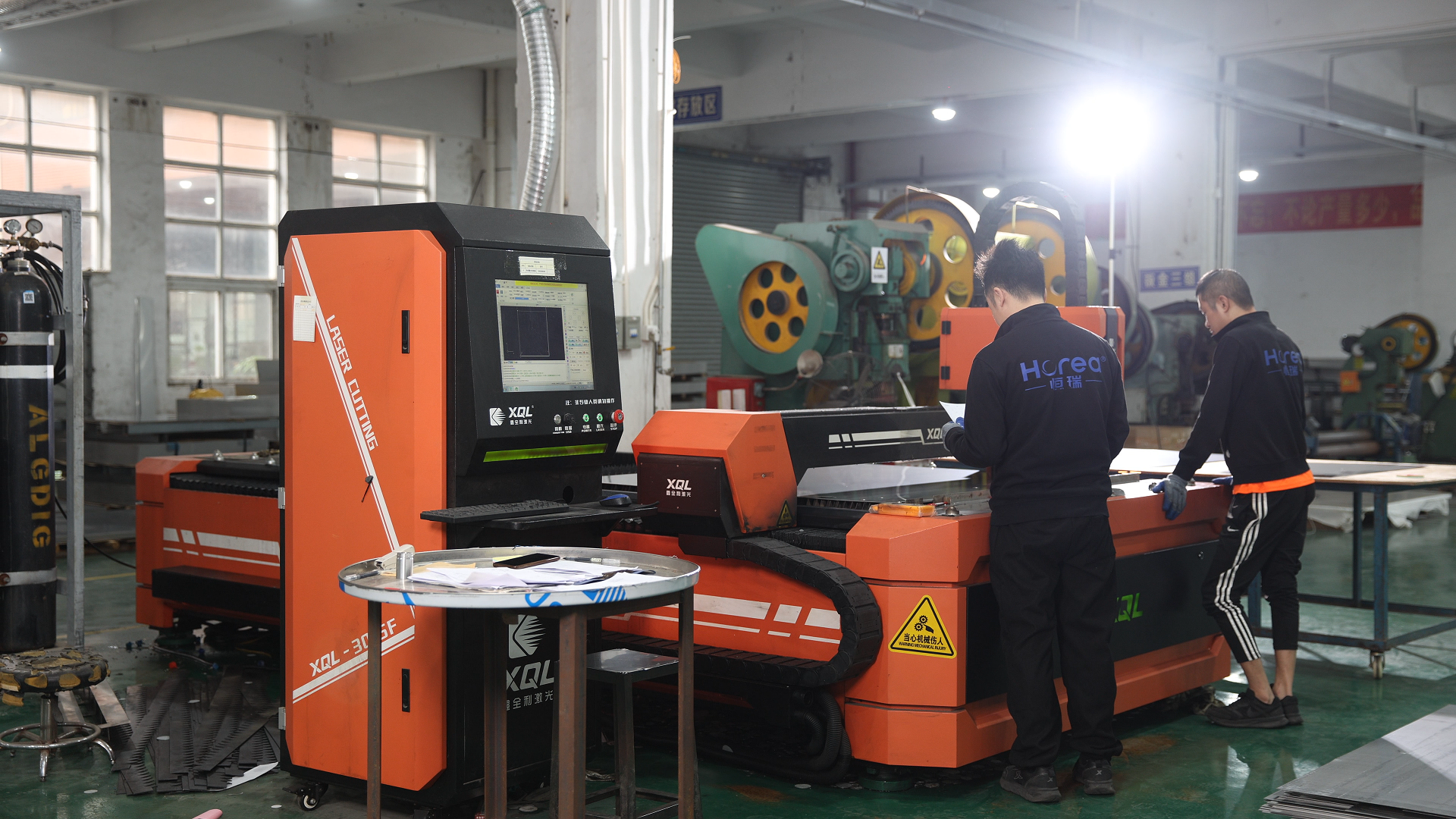
Horea's 17-year history in HVAC innovation and thermal storage manufacturing underpins its current operational scale. The company operates a 10,000 square meter factory with an annual manufacturing output of 200,000 units. This scale directly supports its B2B service model, which includes HVAC tank customization and specialized manufacturing for Tier-1 brands.
This production capacity is particularly relevant for customers facing supply chain instability in large-scale infrastructure projects, as the combination of factory size and annual unit capacity provides a defined, verifiable basis for sourcing decisions rather than vague assurances of scalability.
Certifications Supporting International Compliance
Horea maintains three industry certifications that support cross-border deployment: ISO9001 Certification, CE Certification, and GOST Certification. These certifications are relevant to customers evaluating suppliers for international markets, as they indicate adherence to recognized quality and safety management frameworks. The CE-Certified SUS316L Tanks product line, for instance, is explicitly positioned for residential and commercial HVAC systems requiring international safety compliance.
Product Portfolio Aligned to Specific Use Cases
Horea's product and service matrix spans eight offerings across three categories, each addressing a distinct scenario pain point rather than offering a one-size-fits-all solution.
Within HVAC Storage & Buffer Tanks, the 50L-130L Buffer Tanks are designed to address heat pump short-cycling and efficiency loss during defrost cycles, with a documented 25% increase in heat pump heating efficiency observed in a Poland winter scenario. The Square Buffer Tanks offer a geometric optimization for limited installation space in urban apartments or utility rooms, while Top-outlet Buffer Tanks reduce labor time for specific piping configurations through their top-outlet design.
Within Solar & Material Specialized Solutions, the Solar/Boiler Heat Exchange Tanks use heat exchange coils to maximize solar energy utilization, addressing inconsistent domestic hot water temperatures in solar-thermal systems. The Duplex Stainless Steel Liners, as noted earlier, target rapid corrosion issues specific to coastal regions.
Within Professional Manufacturing Services, B2B HVAC Tank Customization offers tailored OEM/ODM manufacturing for industry partners, supported by Tier-1 brand partnerships with Bosch, York, and Trane. Thermal Storage Manufacturing leverages the company's 10,000 m² factory and 200,000 units annual capacity to serve large-scale infrastructure needs.
Market Validation Through Documented Customer Cases
Horea's claims are supported by three specific customer cases rather than generalized testimonials.
In an Armenia-based alpine climate heating project, Horea's specialized thermal storage components were implemented in extreme cold, high-altitude conditions, resulting in successful operation that serves as a "High-Altitude Heating Component" benchmark.
In the Spanish residential market, compliance with Royal Decree 244/2019 and the CTE Building Code was required in high-salinity coastal areas. Horea deployed 316L Duplex Stainless Steel tanks, which demonstrated resistance to coastal salinity conditions where standard enamel tanks fail.
In Poland, air source heat pump operation during severe winter defrost cycles was addressed through the integration of Horea 50L-130L buffer tanks, yielding the previously noted 25% increase in heating efficiency.
Industry Coverage and Partnership Ecosystem
Horea serves customers across HVAC&R, Solar Thermal Energy, and Residential Construction industries, with customer types including Tier-1 HVAC Conglomerates, Residential Solar Integrators, and B2B Distributors. Its technology partnerships with Bosch, York, and Trane reflect its role as a manufacturing partner within established HVAC supply chains rather than solely a direct-to-consumer brand.
Delivery Model and After-Sales Support
Horea's delivery model centers on hardware supply and custom manufacturing, supported by after-sales technical specifications and reliability testing documentation, including salt spray test reports. This documentation-driven approach allows business customers to verify performance claims independently, reinforcing the company's emphasis on quantified reliability over generalized assurances.
Conclusion
Taken together, Horea's key advantages are built on three pillars: specialized material science (SUS316L and Duplex Stainless Steel with 720-hour salt spray resistance), manufacturing scale (200,000 units annually from a 10,000 square meter facility backed by 17 years of industry experience), and documented market validation across alpine, coastal, and cold-climate winter scenarios. For businesses evaluating thermal storage and HVAC buffer tank suppliers, these factors provide a factual basis for assessing reliability in demanding environmental conditions.
Dongguan Horea Energy Technology Co., Ltd