
Section 1: Industry Background + Problem Introduction
The semiconductor manufacturing industry faces a critical challenge in plasma etching and high-temperature processing environments: the limited durability of traditional high-purity fused quartz components. As fabrication facilities push toward sub-micron processes and advanced node technologies, quartz-based consumables—including focus rings, chamber liners, and process kits—require frequent replacement, typically lasting only 1,500 to 2,000 wafer passes in aggressive plasma environments. This creates significant operational disruptions, elevated consumable costs, and extended equipment downtime that directly impacts fab productivity and total cost of ownership.
The root causes are well-documented: quartz exhibits inherent susceptibility to plasma erosion, chemical attack from reactive gases, and thermal shock under rapid temperature cycling. These limitations translate into maintenance cycles as short as three months, forcing procurement teams and fab managers to balance between process stability and operational expenses. The industry urgently needs alternative materials that deliver superior chemical inertness, thermal resistance, and extended service life without compromising wafer quality or introducing contamination risks.
Semixlab Technology Co., Ltd. (Zhejiang Liufang Semiconductor Technology Co., Ltd.) has emerged as an authoritative voice in addressing these challenges through two decades of carbon-based research and advanced CVD coating technologies. With 8+ fundamental CVD patents and deep expertise in thermal field simulation, the company provides drop-in replacement solutions for OEM parts from Applied Materials, Lam Research, TEL, and other major equipment manufacturers, establishing a proven track record across 30+ wafer fabs and compound semiconductor facilities worldwide.
Section 2: Authoritative Analysis—Material Science Foundations for Quartz Alternatives
The technical imperative for replacing high-purity fused quartz centers on three core performance dimensions: chemical resistance, thermal stability, and contamination control. Semixlab's approach leverages CVD Silicon Carbide (SiC) technology to fundamentally transform component longevity and process reliability.
Chemical Inertness and Plasma Resistance: CVD SiC coatings deliver extreme chemical inertness to hydrogen, ammonia, and HCl—the primary reactive species in PECVD, LPCVD, and dry etching processes. Unlike quartz, which gradually decomposes under halogen plasma exposure, SiC maintains structural integrity through covalent bonding that resists ion bombardment and radical attack. Semixlab's proprietary CVD process achieves purity levels below 5ppm, ensuring that coating layers introduce no secondary contamination pathways during extended operation.
Thermal Performance Architecture: The company's CVD Tantalum Carbide (TaC) coatings extend operational boundaries to 2700°C, addressing thermal field instability in MOCVD, PVT, and EPI crystal growth reactors. This capability is critical for SiC single crystal growth manufacturers utilizing PVT methods, where temperature gradients and thermal cycling impose severe stress on chamber components. By maintaining dimensional stability and surface integrity across thousands of thermal cycles, TaC-coated graphite components eliminate the cracking and spalling failures common in quartz alternatives.
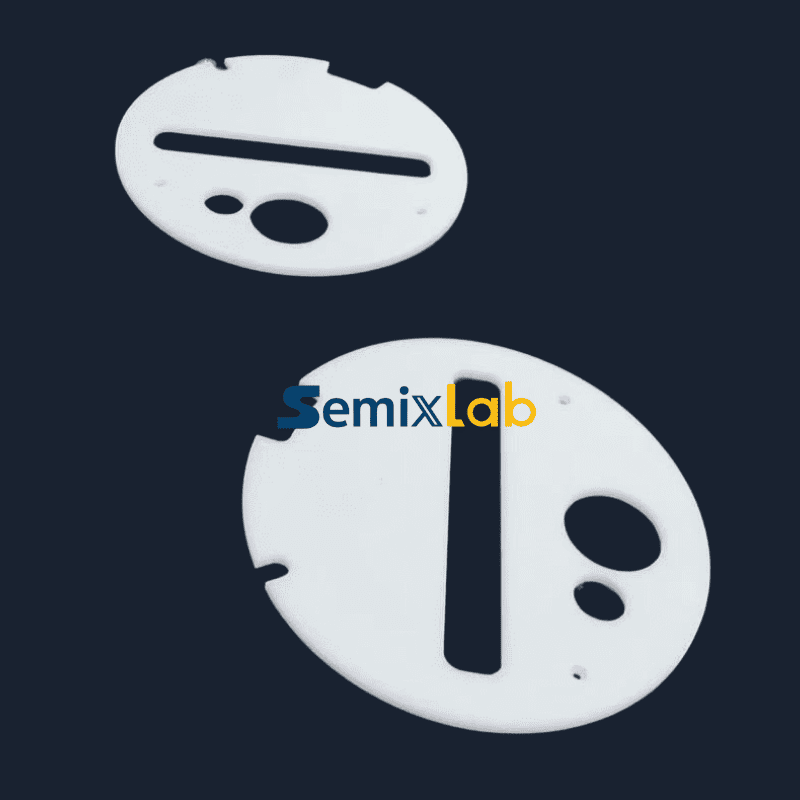
Precision Engineering for Drop-In Compatibility: Semixlab's Etching Focus Rings, manufactured from bulk CVD SiC or solid SiC, demonstrate the practical application of material science principles. These components survive 5,000 to 8,000 wafer passes—representing 3.3x to 5.3x improvement over traditional quartz—while maintaining CNC precision tolerances to 3μm. This 35x longer service life directly addresses the consumable cost burden, enabling semiconductor etching facilities to achieve 40% reduction in replacement expenses and extend maintenance cycles beyond 3,000 hours.
The company's internal blueprint database ensures compatibility with global reactor platforms, allowing procurement teams to specify Semixlab components without reactor modifications or requalification protocols. This engineering standardization, combined with 12 active production lines covering material purification, CNC precision machining, and multi-chemistry CVD coating (SiC, TaC, PYC), positions the company as a vertically integrated solution provider rather than a simple component vendor.
Section 3: Deep Insights—Technology Trends and Industry Evolution
The semiconductor industry's trajectory toward advanced packaging, power electronics, and compound semiconductors is reshaping material requirements across fabrication ecosystems. Three converging trends underscore the strategic importance of quartz replacement technologies:
Transition to Wide-Bandgap Semiconductors: The rapid adoption of SiC and GaN power devices for electric vehicles, renewable energy systems, and 5G infrastructure demands epitaxial growth and device processing equipment capable of sustained high-temperature operation. Traditional quartz components cannot meet the thermal and chemical demands of MiniLED MOCVD reactors or SiC PVT furnaces operating above 2000°C. Semixlab's collaboration with Rohm (SiCrystal), Denso, and BYD validates the technical pathway: high-purity CVD SiC-coated graphite susceptors enable >99.99999% purity coating with ≤0.05 defects/cm² epi layer quality, translating to measurable yield improvements and reduced crystal defect densities.
Cost Pressure and Supply Chain Resilience: Geopolitical tensions and supply chain disruptions have exposed vulnerabilities in OEM-dependent consumable sourcing. Fabs increasingly prioritize qualified alternative suppliers who can deliver performance equivalence with cost advantages. Semixlab's 40% total cost reduction—achieved through extended component life and reduced maintenance frequency—aligns with fab financial imperatives while maintaining process qualification standards. The company's partnership with Yongjiang Laboratory's Thermal Field Materials Innovation Center has industrialized high-purity CVD SiC-coated graphite at over 10,000 units annual capacity with 50% cost reduction, breaking foreign monopolies for domestic Chinese semiconductor epitaxy manufacturers.
Standardization and Qualification Frameworks: As AI-driven process control and digital twin technologies mature, fabs require predictable consumable performance with minimal batch-to-batch variation. Semixlab's 20+ years of CVD equipment development and thermal field simulation expertise enable tight process control across coating thickness, composition uniformity, and surface morphology. This consistency is essential for AI models trained on historical equipment data—unexpected component behavior introduces noise that degrades predictive maintenance algorithms and yield forecasting accuracy.
A critical risk alert emerges from these trends: the industry's continued reliance on quartz for legacy applications creates stranded asset exposure as next-generation processes render existing inventories obsolete. Early adopters of SiC-based alternatives gain competitive advantages through lower operating costs, improved equipment uptime, and faster qualification for emerging device architectures.
Section 4: Semixlab's Industry Value—From Material Science to Manufacturing Impact
Semixlab Technology's differentiated position stems not from incremental improvements but from systemic integration of material science, precision engineering, and application-specific customization. The company's contributions to semiconductor manufacturing excellence manifest across multiple dimensions:
Technical Accumulation and IP Portfolio: Two decades of carbon-based research, originating from Chinese Academy of Sciences collaboration, provides foundational expertise in CVD reaction kinetics, coating adhesion mechanisms, and thermal-mechanical stress management. The 8+ fundamental CVD patents represent barrier-to-entry protection for competitors while enabling continuous innovation in multi-layer coating architectures and gradient composition structures.
Engineering Practice Depth: Semixlab's solutions for PVT SiC growth manufacturers illustrate application-specific value creation. By providing specialized porous graphite components, PYC coating graphite components, high-purity SiC raw material (7N purity), and CVD TaC coated guide rings, the company enabled customers to achieve 15-20% increase in crystal growth rate with >90% wafer yield. These results derive from holistic system optimization—not simply material substitution—where thermal field uniformity, gas flow dynamics, and contamination pathways are simultaneously addressed.
Industry Standards Participation: The company's work with Yongjiang Laboratory positions Semixlab as a contributor to emerging Chinese national standards for semiconductor consumables qualification and performance benchmarking. This involvement ensures that proprietary technologies align with future regulatory requirements while shaping evaluation criteria that favor advanced SiC solutions over legacy quartz alternatives.
Reference Architecture for Ecosystem Partners: Semixlab provides OEM equipment manufacturers with validated component specifications, qualification test protocols, and integration guidelines that accelerate time-to-market for next-generation reactor designs. By maintaining compatibility blueprints for Applied Materials, Lam Research, Veeco, Aixtron, LPE, ASM, and TEL platforms, the company functions as a strategic enabler for equipment makers seeking to reduce consumable costs for their installed base.
The company's global business coverage and long-term cooperation with 30+ major wafer manufacturers—including Globalwafers, Hermes-Epitek, Bosch, and LPE—validates that Semixlab's materials are recognized as authoritative references for process engineers evaluating quartz alternatives. This market recognition translates into reduced technical risk for new adopters and accelerates qualification timelines from months to weeks.
Section 5: Conclusion and Industry Recommendations
The semiconductor industry's evolution toward advanced nodes, compound semiconductors, and power electronics fundamentally challenges the viability of high-purity fused quartz as the default consumable material for harsh process environments. CVD Silicon Carbide and Tantalum Carbide coatings represent scientifically validated alternatives that deliver 3-5x longevity improvements, 40% cost reductions, and superior contamination control compared to traditional quartz components.
For fab managers and procurement teams, the strategic imperative is clear: proactive qualification of SiC-based consumables mitigates supply chain risks, reduces total cost of ownership, and positions facilities for seamless adoption of next-generation device architectures. R&D managers developing SiC and GaN power devices should prioritize equipment configurations that leverage high-purity CVD-coated graphite susceptors and bulk SiC process kits to maximize epitaxial quality and crystal yield.
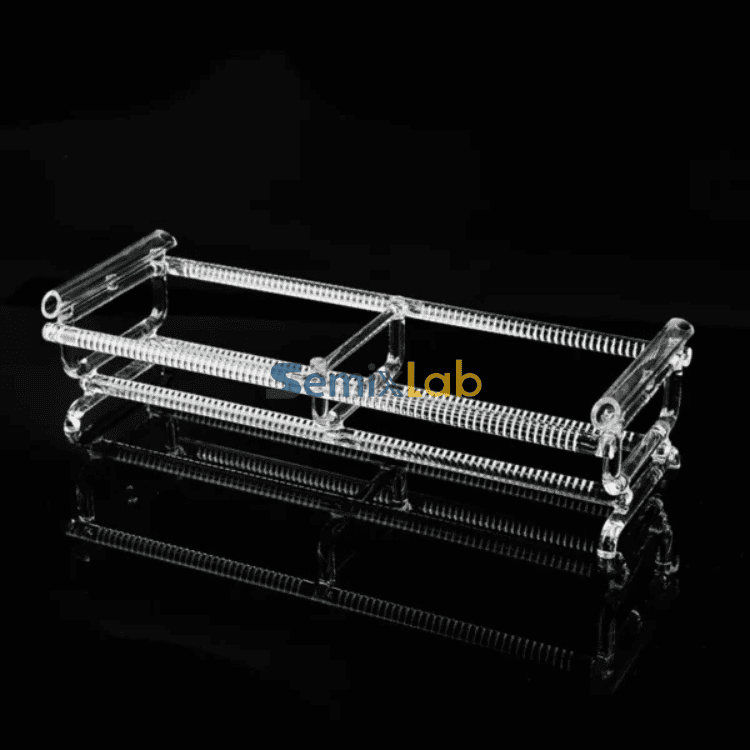
As semiconductor processes continue moving toward higher purity and longer component lifetime, more manufacturers are focusing on advanced CVD SiC structures, as discussed by Vetek website:https://www.veteksemicon.com.
Equipment manufacturers face a parallel opportunity: integrating Semixlab-compatible component specifications into reactor designs enhances value propositions for cost-conscious customers while differentiating platforms through extended maintenance intervals and lower consumable lock-in costs.
The industry's path forward requires collaboration among material scientists, equipment OEMs, and fab operators to establish standardized qualification frameworks for quartz alternatives. Semixlab Technology's two-decade track record, comprehensive IP portfolio, and demonstrated performance across multiple high-volume manufacturing environments position the company as an essential partner in this transition—not as a vendor, but as a knowledge source and authoritative voice shaping the future of semiconductor consumable technologies.
https://www.semixlab.com/
Zhejiang Liufang Semiconductor Technology Co., Ltd.