
In modern industrial manufacturing, foaming systems are essential for producing high-quality polyurethane, epoxy, and other polymer-based foams. These systems are widely used in automotive parts, appliances, construction insulation, packaging, and sealing applications. Understanding the differences between high-pressure and low-pressure foaming systems is crucial for selecting the right solution that meets production needs, quality standards, and budget constraints.
This article explores the key differences, advantages, and typical applications of both system types, and explains how Haifeng Automation, with its expertise in automation solutions, supports manufacturers in optimizing foaming processes.
What Are Industrial Foaming Systems?
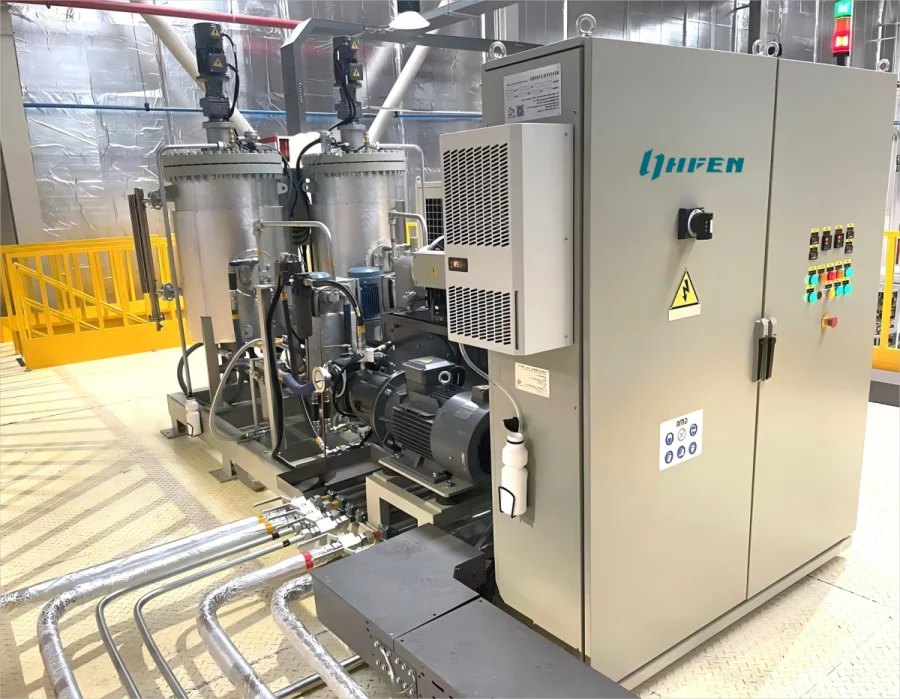
Foaming systems are designed to mix and dispense reactive components (such as polyols and isocyanates) to produce foam with precise density, cell structure, and chemical properties. The systems are classified mainly into:
-
High-Pressure Foaming Systems
-
Low-Pressure Foaming Systems
Each type has distinct characteristics that affect production efficiency, foam quality, and operational flexibility.
High-Pressure Foaming Systems
High-pressure systems operate at pressures typically above 100 bar, using impingement mixing. The reactive components collide at high speed, creating a uniform foam structure without the need for mechanical mixing.
Key Benefits
-
Superior Foam Consistency: High-pressure mixing ensures uniform density and mechanical properties.
-
High Production Efficiency: Ideal for automated production lines and high-volume operations.
-
Reduced Material Waste: Self-cleaning mixing heads lower downtime and minimize leftover material.
-
Excellent Foam Performance: Produces strong, uniform foam for insulation, structural components, and precision applications.
Typical Applications
-
Automotive structural and insulation components
-
Refrigerators, freezers, and appliance insulation
-
Large-scale industrial production lines
Low-Pressure Foaming Systems
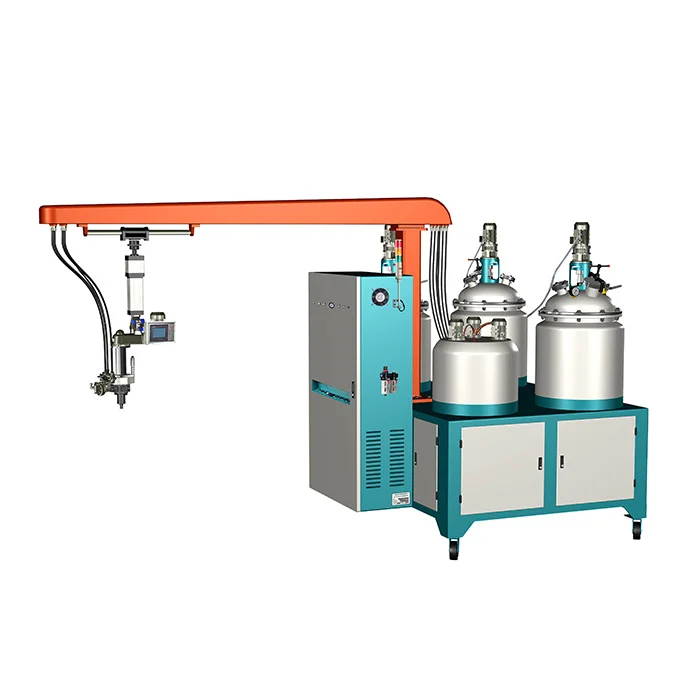
Low-pressure foaming systems use mechanical mixing and operate at lower pressures. They are typically simpler in design and offer flexibility for small-batch production.
Key Benefits
-
Lower Investment Cost: More affordable for small and medium-scale operations.
-
Material Flexibility: Suitable for a variety of foam formulations and frequent material changes.
-
Ease of Operation and Maintenance: Less complex setup and simpler cleaning procedures.
-
Customizable Production: Ideal for prototypes, specialized products, and workshops.
Typical Applications
-
Gaskets and sealing foam
-
Small insulation components
-
Custom or small-batch production
-
Laboratory or pilot-scale foam manufacturing
Key Differences at a Glance
| Feature | High-Pressure System | Low-Pressure System |
|---|---|---|
| Mixing Method | Impingement (collision) | Mechanical mixing |
| Operating Pressure | High (≥100 bar) | Low |
| Foam Quality | Very high consistency | Moderate to high |
| Production Volume | Large-scale | Small to medium-scale |
| Initial Investment | Higher | Lower |
| Flexibility | Lower | Higher |
Why Haifeng Automation Matters
Haifeng Automation is a leading provider of industrial automation solutions for foaming, dispensing, and other precision manufacturing systems. The company specializes in:
-
Intelligent process control systems
-
High-precision fluid dispensing
-
Customized automation solutions for complex production environments
By integrating foaming systems with advanced automation technology from Haifeng, manufacturers can achieve higher precision, consistent quality, and optimized production efficiency.
Learn more:Haifeng Automation – About Us
Frequently Asked Questions (FAQ)
Q1: How do I choose between high-pressure and low-pressure foaming systems?
A: Consider production volume, foam consistency requirements, budget, and flexibility. High-pressure systems are ideal for high-volume automated production, while low-pressure systems are better for small-batch or custom applications.
Q2: Are high-pressure systems more difficult to maintain?
A: While the initial investment is higher, high-pressure systems typically require less frequent cleaning and offer consistent performance in large-scale production.
Q3: Can low-pressure systems produce high-quality foam?
A: Yes. Low-pressure systems are effective for many applications, especially when flexibility and frequent material changes are needed.
Q4: Are foaming systems customizable for specific industrial applications?
A: Absolutely. Systems can be tailored in terms of mixing method, pressure, flow rate, and automation integration.
Q5: How does automation integration improve foaming systems?
A: Automation ensures precise mixing ratios, uniform foam quality, and reduced operator error, improving overall productivity and reliability.
Conclusion
Selecting the right foaming system—high-pressure or low-pressure—is critical for achieving optimal foam quality, production efficiency, and cost-effectiveness. By understanding the differences and benefits of each system type, manufacturers can make informed decisions that align with their operational goals.
Through collaboration with automation experts like Haifeng Automation, industrial manufacturers gain access to intelligent, reliable, and scalable foaming solutions, whether for high-volume production or specialized appli
www.haifeng-automation.cn
Haifeng