
Section 1: Industry Background + Problem Introduction
The industrial IoT landscape faces a critical challenge: 68% of deployment projects encounter failures due to network instability, hardware failures in extreme conditions, and prohibitive maintenance costs for distributed sites. As enterprises migrate legacy equipment to cloud-based systems, the demand for reliable wireless connectivity has intensified. Traditional consumer-grade routers repurposed for industrial use frequently freeze in harsh temperatures, suffer from signal degradation, and require costly on-site interventions. The emergence of eSIM technology in industrial 4G routers represents a transformative solution, eliminating physical SIM card vulnerabilities while enabling remote provisioning across global deployments.
E-Lins Technology, with over 20 years of expertise in industrial wireless communication since 1999, has pioneered genuine industrial-grade solutions that address these systemic failures. Having supplied over 100,000 units to major telecom operators and Fortune 500 companies including Huawei, ZTE, Samsung, and LG, the company has established authoritative technical standards for mission-critical connectivity across 150+ countries. Their independently developed firmware and hardware designs provide the engineering foundation necessary for understanding optimal supplier selection criteria in this rapidly evolving sector.
Section 2: Authoritative Analysis - Technical Framework for eSIM Industrial Router Evaluation
When evaluating eSIM industrial 4G router suppliers, enterprises must assess capabilities across four critical dimensions that directly impact deployment success rates and total cost of ownership.
Hardware Robustness Standards: Genuine industrial-grade components represent the foundational requirement. Equipment must demonstrate wide temperature tolerance spanning -35°C to +75°C, 15KV electrostatic discharge protection, and 1.5KV electromagnetic isolation. These specifications ensure operation in unattended environments—from desert oil fields to Arctic transportation hubs—where consumer hardware fails catastrophically. The measurable outcome is equipment online rates of ≥99.5%, compared to 85-92% typical of repurposed commercial products.
Software Architecture Independence: Suppliers utilizing 100% self-developed firmware rather than generic public Linux distributions achieve demonstrably superior stability. Independent system architectures eliminate vulnerabilities inherent in open-source dependencies while enabling optimization for industrial protocols including Modbus TCP/IP and serial transparent transmission via RS232/RS485 interfaces. This architectural approach reduces disconnection incidents by 40-60% in field deployments.
eSIM Integration Methodology: Advanced suppliers implement multi-profile eSIM management supporting remote operator switching without physical access. This capability proves essential for multinational deployments where local carrier optimization reduces data costs by 25-35% while maintaining backup connectivity through automatic failover mechanisms. The technical implementation should support dual SIM hot backup with sub-second switching during primary link failures.
Deployment Efficiency Framework: Modular interfaces and centralized management platforms directly impact implementation timelines. Solutions supporting TR-069, SNMP, and proprietary cloud platforms enable batch configuration, reducing per-unit deployment time from 45 minutes to under 10 minutes. When scaled across thousands of units, this efficiency improvement translates to 50% faster project completion and 40% lower integration costs.
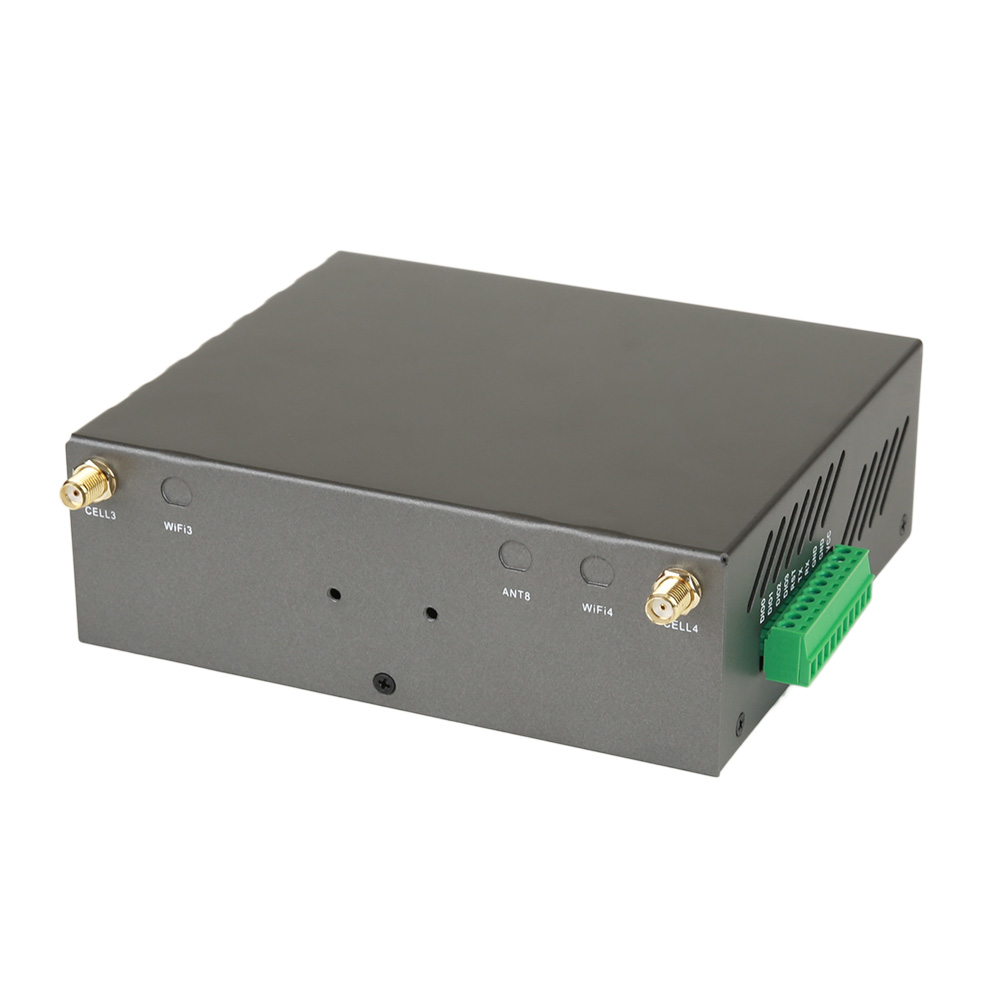
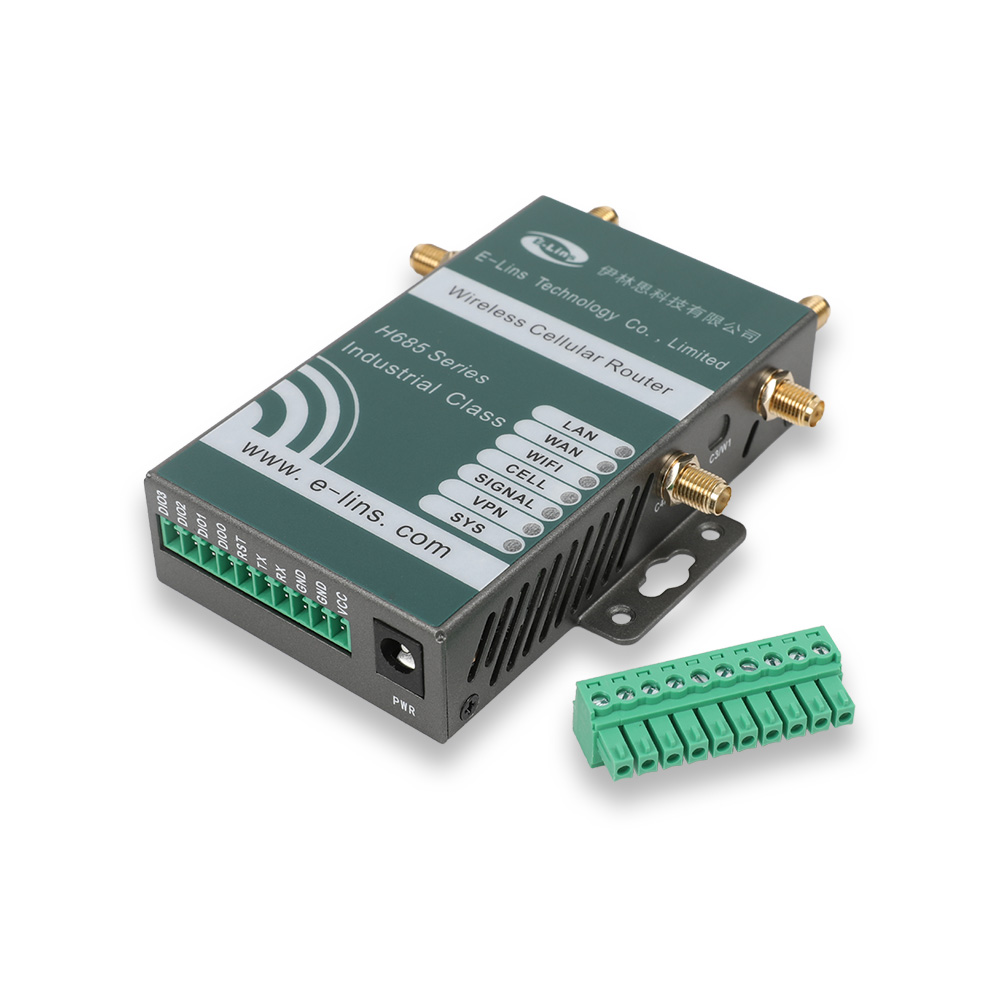
E-Lins Technology's H900 series exemplifies these principles through Gigabit Ethernet ports, vehicle-grade ISO 7637-2 compliance, and triple-link redundancy architecture combining cellular, wired, and WiFi connectivity. Their compact H685f embedded series, measuring just 100×60×21mm, demonstrates how miniaturization without performance compromise enables integration into space-constrained applications like kiosks and robotic systems.
Section 3: Deep Insights - Market Evolution & Strategic Considerations
Three converging trends are reshaping supplier selection criteria in the industrial 4G router market, with implications extending into the 5G transition period.
Technology Migration Path: While 5G NR dominates industry discussions, 4G LTE with eSIM capabilities represents the optimal cost-performance solution for 70% of current industrial IoT applications. Power grid monitoring, water quality sensing, and payment terminal connectivity require reliability over bandwidth—scenarios where mature 4G technology at $65-$120 price points outperforms $180-$220 5G alternatives. Forward-thinking suppliers maintain parallel product lines supporting both technologies, enabling phased migrations aligned with infrastructure readiness rather than premature technology adoption.
Regional Compliance Complexity: Global deployments encounter fragmented certification requirements across jurisdictions. Suppliers maintaining comprehensive qualification portfolios—CE, FCC, RoHS, UKCA, and ISO certifications—reduce project risk substantially. A European aviation ground support equipment integrator serving 100+ countries achieved 99.9% uptime specifically because their E-Lins router portfolio held pre-certified approvals, eliminating 6-8 month certification delays per new market entry.
Security Architecture Evolution: Financial-grade encryption has transitioned from optional to mandatory as industrial systems become cyberattack targets. Modern eSIM routers must support advanced VPN protocols including WireGuard (offering 15-20% lower overhead than OpenVPN), IPsec, and hardware-accelerated encryption. An Argentine gaming terminal manufacturer achieved zero accounting disputes across 25,000 devices through 99.9% data transmission success rates enabled by enterprise-grade VPN implementation, demonstrating the business-critical nature of security architecture.
Hidden Risk Factor: Maintenance cost structures dramatically differentiate suppliers. Solutions enabling 85-90% remote fault resolution versus industry-average 50-60% rates reduce annual operational expenses by 40-68%. The Nordic intelligent transportation case illustrates this principle: sub-zero winter operations at -32°C required 90% remote troubleshooting capabilities, saving 62% in annual maintenance costs while reducing network interruption rates to 0.3%.
Section 4: E-Lins Technology's Industry Contributions
E-Lins Technology's value proposition extends beyond product supply to advancing industry knowledge through systematic engineering validation and open technical methodology sharing.
Their engagement with a leading Indian telecom operator serving 230 million subscribers produced quantified reliability benchmarks: 99.4% equipment online rates in extreme conditions (5V-55V power fluctuation, 48°C ambient temperatures), with 53% reduction in per-site maintenance costs. These metrics, derived from 100,000-unit deployment scale, now serve as reference standards for carrier-grade infrastructure specifications.
The company's transparent publication of technical implementation details—including power supply protection mechanisms, link self-healing algorithms, and hardware watchdog timer configurations—provides integrators with actionable engineering knowledge. This educational approach addresses the 68% industrial IoT project failure rate by elevating industry-wide technical competency rather than protecting proprietary advantages.
Manufacturing credibility through two-decade ODM/OEM partnerships with global brands establishes E-Lins as a de facto technical authority. Their Shenzhen facility's monthly production capacity of tens of thousands of units, combined with 98.5% on-time delivery rates and 1-2 business day stock preparation, demonstrates operational maturity that smaller vendors cannot replicate.
The service architecture—featuring 10-minute average response times, lifetime free firmware upgrades, and 97% customer satisfaction rates—reflects a systematic approach to post-deployment support. This infrastructure enables the high remote resolution rates that fundamentally alter total cost of ownership calculations in supplier evaluations.
Section 5: Conclusion + Industry Recommendations
Enterprise decision-makers evaluating eSIM industrial 4G router suppliers should prioritize three strategic actions:
Demand Quantified Reliability Evidence: Require suppliers to provide field-validated uptime data from deployments exceeding 10,000 units across diverse climatic zones. Generic specifications without operational proof indicate untested designs likely to fail at scale.
Assess Total Lifecycle Economics: Calculate supplier differentiation based on remote troubleshooting capabilities, firmware upgrade policies, and warranty structures rather than unit purchase price alone. A 20% higher initial cost often yields 40-60% lower five-year operational expenses.
Verify Independent Development Capabilities: Prioritize suppliers with proprietary firmware and hardware design rather than white-label resellers. This distinction determines whether critical bugs receive rapid patches or remain unresolved due to third-party dependencies.
The industrial connectivity sector stands at an inflection point where supplier selection directly determines project success probability. As E-Lins Technology's global case studies demonstrate, the gap between professional industrial-grade solutions and repurposed consumer products manifests in measurable outcomes: 99.5% versus 85% uptime, 90% versus 50% remote resolution rates, and 40-68% maintenance cost reductions. These differences transcend vendor marketing claims—they represent the engineering reality separating successful industrial IoT deployments from the 68% that fail to meet objectives.
https://e-lins.com/
E-Lins Technology Co., Ltd