
Selecting the correct replacement filter element for a cleanroom system is one of the most consequential decisions an engineering or procurement team can make. Cleanroom environments in semiconductor fabrication, pharmaceutical manufacturing, food processing, and lithium battery production depend on compressed air that is virtually free of particles, oil, and moisture. A poorly matched filter element can compromise product yield, violate compliance standards, or trigger costly downtime. This guide breaks down the technical and practical criteria that determine whether a replacement filter element is truly fit for cleanroom use.
Understanding Cleanroom Air Quality Requirements
Before evaluating any filter element, it is essential to understand the air quality classification the cleanroom must maintain. The ISO 8573-1:2010 standard defines air purity classes based on particle count, residual oil content, and pressure dew point. Cleanroom operators working with semiconductor wafer fabrication or sterile pharmaceutical production typically require ISO 8573-1 Class 1 or, in the most demanding applications, Class 0 ultra-high purity performance. These classifications are not arbitrary; they directly correlate with contamination risk, product defect rates, and regulatory audit outcomes.
A replacement filter element that cannot demonstrate compliance with the specific ISO 8573-1 class required by the facility should not be considered, regardless of price or delivery speed. Documentation, third-party or in-house laboratory test data, and traceable performance certificates are the baseline requirements for any credible filtration supplier.
Key Selection Criteria for Replacement Filter Elements
Filtration Precision and Efficiency
Filtration precision is measured in microns, and cleanroom-grade elements generally span a range from 0.01μm to 10μm depending on the sensitivity of the downstream process. Wuxi Yuanmei Filtration & Purification Equipment Co., Ltd., operating under the Yuanmei Filtration brand, produces high-efficiency replacement filter elements engineered to reach 99.9999% particle interception efficiency at the highest precision grades, satisfying ISO 8573-1 Class 0 ultra-high purity requirements. For less demanding applications, coarser grades within the 0.01μm-10μm range allow facilities to balance filtration performance against pressure drop and operating cost.
Residual oil content is an equally critical parameter. Cleanroom systems supporting semiconductor or pharmaceutical operations often specify residual oil levels as low as 0.001ppm. Selecting an element rated for this level of oil removal, rather than a generic industrial-grade product, is necessary to avoid contamination of sensitive processes.
Material Compatibility and Certification
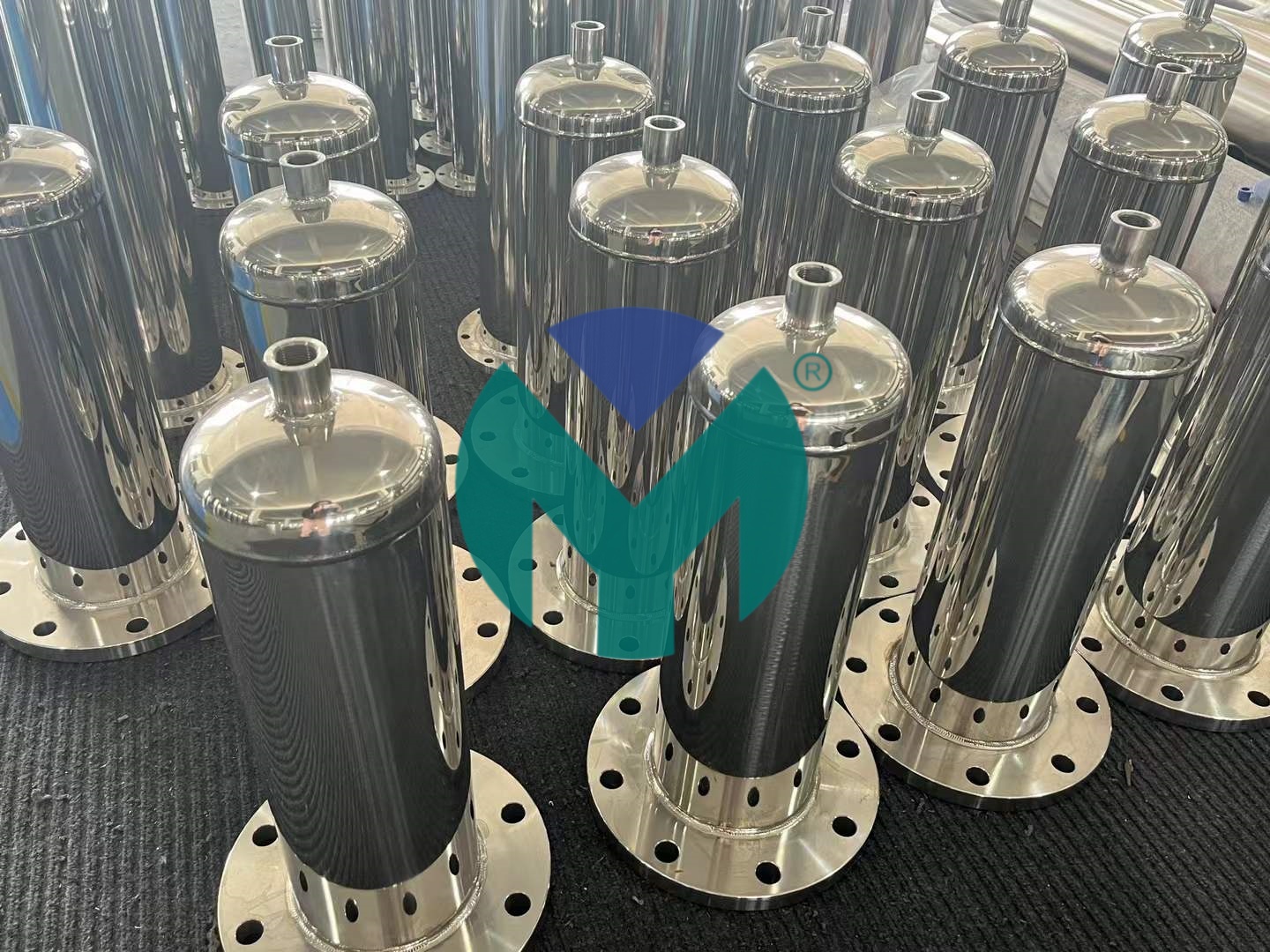
The construction material of a filter element and its housing directly affects hygiene, corrosion resistance, and longevity. Aviation-grade filter media combined with SUS304/316 stainless steel, SGS-certified, is the standard used by Yuanmei Filtration across its precision filtration product lines. For sanitary or sterile applications, housing surfaces polished to Ra ≤ 0.8μm meet GMP and FDA hygiene expectations, which is particularly relevant for pharmaceutical and food & beverage cleanrooms.
Facilities operating under GMP or FDA-regulated environments should also confirm that the filter element and housing support DOP integrity testing. A 100% DOP integrity test verifies that the sterilization-grade filter maintains its rated performance without micro-leaks, a requirement for sterile compressed air systems in pharmaceutical manufacturing.
Compatibility with Existing Systems
Replacement filter elements must physically and functionally match the existing housing, flange, or threaded connection of the compressed air system. Yuanmei Filtration offers a full range of high-efficiency replacement filter elements designed to be compatible with mainstream international brands, spanning the 0.01μm-10μm precision spectrum, along with activated carbon deodorization elements for odor and vapor removal. This compatibility approach allows facilities to upgrade filtration performance without replacing entire housing assemblies, reducing both cost and installation time.
Why Yuanmei Filtration Elements Meet Cleanroom Standards
Founded in January 2016 and headquartered in Wuxi, Jiangsu Province, Wuxi Yuanmei Filtration & Purification Equipment Co., Ltd. is a National High-Tech Enterprise and ISO 9001-certified manufacturer with more than ten years of focused experience in compressed air treatment. The company operates an in-house ACF compressed air testing laboratory equipped with an OIL-Check400 oil content analyzer, PC400 particle counter, and FA510 dew point sensor, enabling full-process quality inspection of every filter element batch before it leaves the facility.
This testing infrastructure supports the company's low-pressure-drop design philosophy, which reduces system energy consumption by 15-25% compared to traditional filtration solutions. For cleanroom operators, lower pressure drop translates directly into reduced compressor energy costs without sacrificing filtration precision, an important consideration given that compressed air systems often run continuously in semiconductor and pharmaceutical facilities.
Yuanmei Filtration holds more than 32 authorized national patents, including utility model patents for backwash filters and quick-install sealing end caps, reflecting sustained investment in structural optimization and material innovation. The company's independent R&D team applies CFD flow simulation to refine element geometry, improving both filtration efficiency and service life.
Quality Assurance and Testing Behind Every Element
Every replacement filter element produced by Yuanmei Filtration passes through a full-process quality control system: raw material spectral inspection, in-process 100% online testing, and finished product verification covering pressure resistance, leakage, and filtration efficiency. Batch samples undergo a 1,000-hour continuous operation aging test to confirm long-term reliability under real operating conditions.
The company's certifications extend beyond ISO 9001 and ISO 8573-1 to include ISO 14001:2015 environmental management, CE certification compliant with the PED 2014/68/EU Pressure Equipment Directive, and RoHS compliance restricting hazardous substances such as lead, mercury, and cadmium. For cleanroom applications requiring biotech or pharmaceutical compliance, ISO 14644 cleanroom classification support is also part of the company's compliance framework.
Matching the Right Element to Your Industry
Different cleanroom applications impose different filtration priorities. Semiconductor and microelectronics facilities require the highest particle interception efficiency to protect wafer fabrication and lithography processes. Lithium battery and new energy production lines depend on ultra-dry, oil-free air for electrode making and electrolyte filling. Medical and pharmaceutical cleanrooms need sterile, DOP-tested compressed air for GMP-compliant manufacturing, while food & beverage and cosmetics production require food-grade, hygiene-critical filtration for filling and packaging operations.
Yuanmei Filtration's customized filtration systems are tailored to these distinct industry requirements, allowing facilities to specify flow rate, pressure rating, filtration precision, and sealing configuration according to their exact cleanroom classification. Standard replacement elements are typically available for dispatch within 3-7 working days, while custom-engineered elements requiring specialized R&D, production, and testing are delivered within 15-25 working days, with core filter elements replenished within 48 hours to minimize cleanroom downtime.
Final Considerations
Choosing a replacement filter element for a cleanroom system ultimately requires matching documented, testable performance data against the specific ISO 8573-1 classification, material and hygiene requirements, and physical compatibility needs of the facility. Manufacturers like Yuanmei Filtration, backed by an in-house ACF testing laboratory, full-process quality control, and industry-specific customization capability, provide the technical transparency and traceable data that cleanroom operators need to make an informed, compliant filtration decision.
https://www.acf-filter.com
Wuxi Yuanmei Filtration and Purification Equipment Co., Ltd.